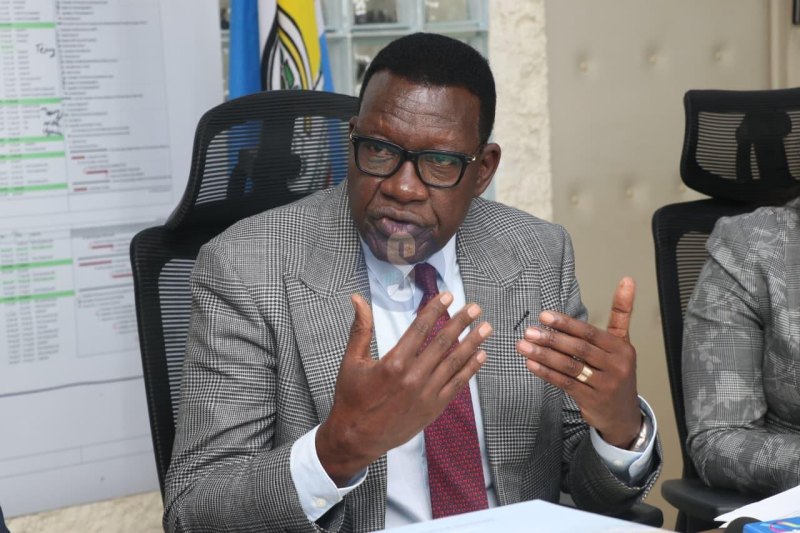
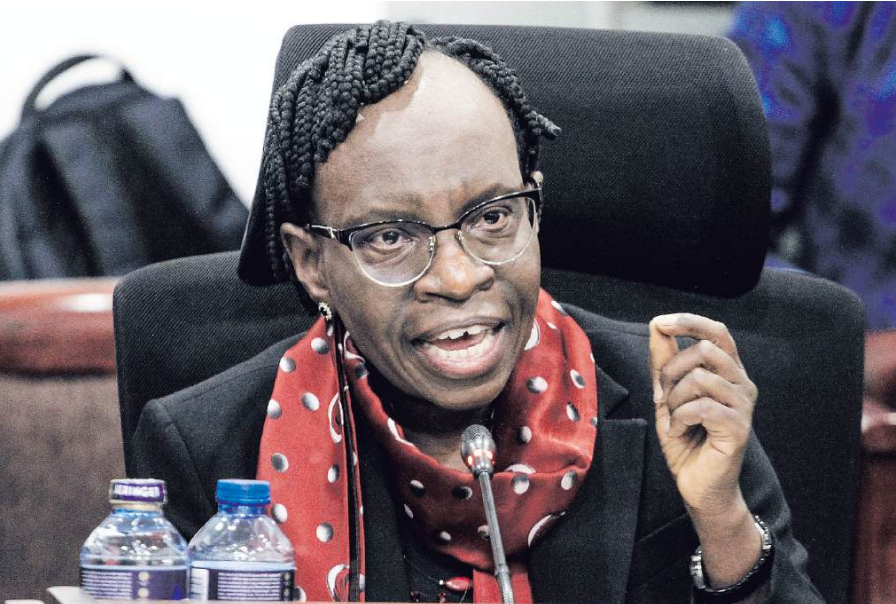
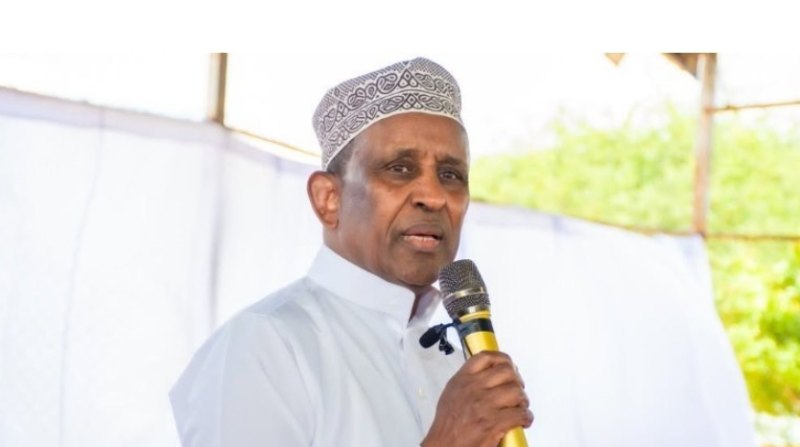
FAO Deputy Director Office of Climate Change, Biodiversity and Environment Dr Zitouni Ould-Dada said it is an irony for Africa to import food worth $50 billion every year yet it has 65 per cent of productive land that has not been cultivated.
“So, you can see the potential is huge and yet Africa still imports around $50 billion per year worth of food,” Ould-Dada said during an interview at the Africa Climate Summit.
Ould-Dada said Africa can emancipate herself from the pangs of hunger only if the continent does a few things.
“One of the things that they are asking for (Africa) is in terms of investments because we have been investing very little on adaptation. All the climate finance around the world has been going to mitigation and about 30 per cent has been going to adaptation,” he said.
The Africa Climate Summit was held September 4-6 at the Kenyatta International Convention Centre.
Ould-Dada said very little resources are allocated to agriculture despite a massive untapped potential.
He said there is a need to increase resources going to agriculture to address adaptation alongside mitigation and also build resilience.
Ould-Dada said small holder farmers must be supported as they produce 80 per cent of food.
“They need to be supported on the information they need on how to tackle climate change. They also need to be supported in terms of the knowledge that they need to have to be aware of the new realities of climate change,” he said.
Ould-Dada said small holder farmers need finance and support in innovation.
“In a broader sense, I am not talking about very expensive innovation. But we have seen in many societies that having a mobile phone makes the difference in terms of information about the weather, price of food among others.”
Ould-Dada said the other thing that is also very pertinent in the case of Africa is to invest more on renewable energy.
Small holder farmers and poor communities with access to electricity, can store food and other things such as medicine.
He challenged countries in Africa to also invest in young people, adding that the region is the youngest continent in the world.
Ould-Dada said Africa has an amazing human resource asset which needs to be invest in.
He said the youth must be attracted to farming.
“Here, you have also the attraction of digital farming and digital technology that can be used to have a new kind of farming that takes into account the use of technological innovations,” he said.
Ould-Dada said there is a lot that needs to be done because Africa has huge potential in terms of the land, renewable energy and human resources as well, particularly the youth.
He said private companies must be encouraged to invest in agriculture, the protection of soil.
“There is a big interest now in carbon markets around the world and Africa is also interested in this because of the huge potential that it has to sequester carbon in forest, in agriculture soils. It has to be done properly and with proper rules for it to succeed,” he said.
Ould-Dada said FAO is assisting developing countries and farmers to access climate finance through the Green Climate Fund and the Global Environmental Facility and also through the adaptation fund.
“These are some of the main avenues for climate finance but also use bilateral donours and support FAO to develop projects on the ground to support farmers including in adaptation.”
He said there is a need to incorporate indigenous knowledge in efforts geared towards addressing the impacts of climate change.
Ould-Dada decried that the number of people who lack food was on the rise.
He said around the world, there are around 830 million who are going hungry every day.
This, he said, was due to the impact of climate change, Covid-19 and the war in Ukraine.
“Climate change is a threat multiplier, it makes the situation worse. We have seen droughts and floods and forest fires particularly this summer that have affected many parts of the world not just in Africa,” he said.
Ould-Dada said climate change in general is affecting global food security and even the intergovernmental panel on climate change warned that the global food security will be affected by climate change unless we take deep action and first.