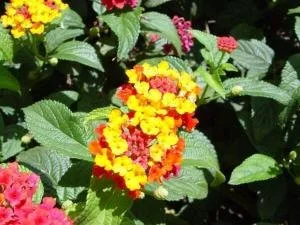
 Cluster
of Lantana camara flowers, a widespread invasive plant in eastern and southern
Africa. Also known as common lantana or tick berry, the plant is valued in
traditional medicine, but its green leaves and unripe berries are toxic to
humans and livestock if ingested./CABI.
Cluster
of Lantana camara flowers, a widespread invasive plant in eastern and southern
Africa. Also known as common lantana or tick berry, the plant is valued in
traditional medicine, but its green leaves and unripe berries are toxic to
humans and livestock if ingested./CABI.
The shrubs and flowers many Kenyans plant as live fences around homes, schools and farms may be doing more harm than good.
A new study has found that some of these popular plants are invasive species that are spreading into natural ecosystems, threatening biodiversity, grazing land and agricultural production.
The research, which surveyed roadside vegetation in Kenya and four other East African countries, found that many of the most commonly used hedge and live fence plants are non-native and invasive, raising concerns over their growing impact on Kenya's ecosystems, agriculture and rural livelihoods.
The study, published in the African Journal of Ecology, found that these species are escaping from gardens and fences into forests, rangelands and farmlands, where they outcompete indigenous vegetation and reduce agricultural productivity.
The study estimates that invasive species cost Africa's agricultural sector about Sh8.5 trillion (USD 65.58 billion) every year through reduced crop and livestock production, degraded grazing land and increased management costs.
Researchers surveyed roadside vegetation in Kenya, Ethiopia, Rwanda, Tanzania and Uganda and recorded 54 non-native hedge plant species.
More than 80 per cent were not native to Africa, while more than 70 per cent were classified as invasive.
The findings come at a time when Kenya is already grappling with the rapid spread of invasive alien species.
According to the Kenya National Biodiversity Strategy and Action Plan (2022–2032), invasive alien species are among the five leading drivers of biodiversity loss in the country.
Kenya has recorded more than 100 invasive alien species, affecting agriculture, forests, freshwater ecosystems and protected areas.
The National Environment Management Authority (Nema) estimates that invasive species are causing significant ecological and economic damage by reducing pasture productivity, clogging waterways, degrading wetlands and increasing the cost of managing natural resources.
Some of Kenya's most problematic invasive plants include Lantana camara, Mathenge (Prosopis juliflora), Water hyacinth (Eichhornia crassipes), Mexican sunflower (Tithonia diversifolia) and Parthenium hysterophorus, all of which have spread widely across different parts of the country.
Lantana camara, one of the species highlighted in the study, has become widespread across Kenya's forests, roadsides and grazing areas, where it suppresses native vegetation and is toxic to livestock.
Dr Arne Witt, senior author of the study, said Lantana camara is among Africa's most problematic invasive plants because it adapts easily to different climates and spreads rapidly.
"Lantana is a problematic invasive species in Africa, and it is widespread. It crowds out agricultural and grazing land, is toxic to humans and animals and is very difficult to remove manually or chemically," he said.
The researchers found that several plants commonly used to establish hedges, including Lantana camara, Mexican sunflower (Tithonia diversifolia), prickly pear cactus (Opuntia ficus-indica), yellow oleander (Cascabela thevetia) and Kei apple (Dovyalis afra), are among the region's worst invasive species.
Witt explained that many of these plants were originally introduced for ornamental purposes because they grow quickly, remain green throughout the year and form dense barriers.
However, he said the same characteristics make them highly invasive.
"The ideal hedge is dense, fast-growing and long-lived. It is easy to cultivate, tolerates a wide range of environmental conditions and is often resistant to pests and diseases. Unfortunately, these are the same characteristics that enable invasive species to spread aggressively," he said.
He noted that many invasive hedge plants are also resistant to browsing by livestock because they possess thorns, prickles or toxic compounds, making them difficult to control once established.
Researchers said the widespread planting of these species in homes, schools, institutions and farms has likely accelerated their spread across Kenya and the wider East African region.
According to the study, once established, invasive plants displace indigenous vegetation, reduce biodiversity, lower pasture quality and interfere with crop production. Some species also affect water availability and increase the cost of land management.
The study warned that the continued use of invasive hedge plants could undermine efforts to conserve Kenya's biodiversity and restore degraded ecosystems.
The researchers called for greater public awareness, tighter regulation of the sale and distribution of invasive ornamental plants and the promotion of indigenous alternatives for fencing and landscaping.
"Without awareness campaigns, many people may simply believe that invasive hedge plants are harmless," the researchers noted.
INSTANT ANALYSIS
While invasive plants are often viewed as an environmental problem, they are increasingly becoming an economic and food security issue for Kenya. The study shows that, as the country invests in restoring degraded landscapes, increasing tree cover and promoting climate-smart agriculture, the unchecked spread of invasive species could undermine these efforts by reducing pasture, lowering crop yields and displacing indigenous plants that support pollinators and wildlife. The study also points out that promoting indigenous species for live fences would help conserve biodiversity while reducing future control costs for farmers, counties and conservation agencies.