As Kenya moves closer to the 2027
General Election, the political inclusion of Persons with Disabilities (PWDs)
remains a contested area of democratic participation.
Recent data from government institutions and civil society organisations shows a mixed picture of progress, with improvements in electoral accessibility occurring alongside persistent structural barriers that continue to limit meaningful representation.
While the Independent Electoral and Boundaries Commission (IEBC) has registered more than two million new voters and introduced accessibility measures in recent by-elections, reports between May and July 2026 indicate that achieving full political representation for PWDs remains a major challenge.
Following the conclusion of the Enhanced Continuous Voter Registration Phase 1 on April 28, IEBC figures showed that 2,345,476 new voters had been registered nationwide.
Through its Disability Inclusion Coordinating Committee (DICC), the commission has improved disability-disaggregated data and addressed physical barriers affecting voter participation.
The IEBC decentralised voter registration services by moving biometric kits to county assembly wards, universities and Huduma Centres, reducing travel challenges for citizens with disability.
The commission also expanded access to voter information by converting civic education materials into braille, simplified visual aids and sign language video formats.
Additionally, IEBC collaborated with the Office of the Registrar of Political Parties (ORPP) to review political party nomination lists and monitor compliance with the inclusion of special interest groups.
While candidate nominations and final registration remain under IEBC jurisdiction, the ORPP is strengthening disability inclusion within political party structures.
The office has introduced targeted capacity-building programmes aimed at equipping PWDs with knowledge on political management and electoral processes to improve their participation.
It has also supported the creation of dedicated PWD leagues within political parties, providing platforms for disability voices.
It facilitated the formation of a Political Parties PWDs Caucus, a leadership group bringing together PWD representatives from different parties to coordinate advocacy and provide strategic direction.
However, these interventions remain largely focused on party structures and have not fully addressed broader barriers affecting political competition.
The Ol Kalou parliamentary by-election on July 16 provided a practical test of the progress made so far.
The election recorded a 56.7 per cent voter turnout, with 41,316 valid votes cast from 73,480 registered voters.
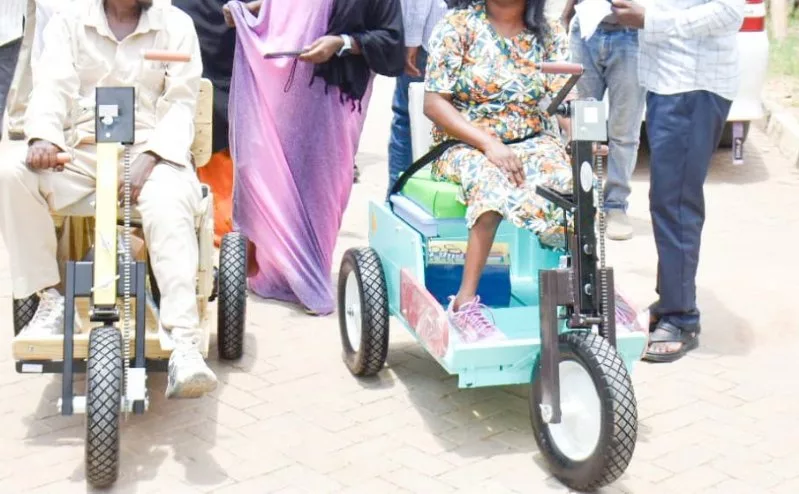
During the exercise, IEBC introduced structural adjustments, including the use of accessible ground-floor classrooms and open tents to improve access for wheelchair users.
The commission also enforced stricter assisted voting regulations.
Voters requiring assistance due to physical disabilities were allowed to choose a person to assist them. To protect ballot secrecy and reduce possible manipulation, an assistant was restricted to helping only one voter.
Despite these improvements, civil society reports highlighted continued challenges in achieving representation of PWD candidates.
Although the Democracy for the Citizens Party (DCP) offered a 50 per cent nomination fee discount for disabled aspirants, no PWD candidates appeared on the ballot.
High campaign costs, political violence and weaknesses in internal party democracy continue to hinder their participation.
In Garissa, PWDs chairperson Adan Bille said financial limitations remain a major challenge for members interested in contesting elective positions, forcing many to depend on nomination slots.
An analysis of government records also indicates that legal and administrative challenges continue to limit representation.
In a July 2026 Senate Report, IEBC raised technical concerns over the implementation of the 2026 Representation Bill, which proposes a mandatory five per cent legislative quota for PWDs in the National Assembly and Senate.
The commission warned that implementing the quota alongside the constitutional two-thirds gender principle could create difficulties during party list allocations.
The proposed five per cent threshold would require an additional Sh462.4 million, according to the report.
Electoral experts and civil society organisations, including the Consortium of Disabled Persons Organisations in Kenya (CDPOK), have called for reforms to address the challenges.
CDPOK executive director Joseph Atella said PWDs continue to face exclusion from important decision-making spaces despite constitutional protections.
"Inaccessible polling stations, limited civic education materials in accessible formats, communication barriers and persistent negative societal attitudes continue to lock out many persons with disabilities from fully participating in democratic processes," Atella said.
He said Articles 27, 54, 99 and 100 of the Constitution provide a strong legal foundation for inclusion but implementation remains inadequate.
Experts have recommended the establishment of joint technical review teams involving PWD legal experts to help develop electoral strategies.
Civil society groups have also called on the ORPP and IEBC to reject nomination lists from political parties that fail to meet disability inclusion requirements within their leadership structures.
They also recommended that the National Treasury support the deployment of sign language interpreters at all 47 county tallying centres to improve access to electoral information.
In June, disability rights advocates and leaders launched a 10-point agenda aimed at addressing systemic exclusion through expanded economic opportunities, stronger legal implementation and improved political representation.
Former UN Committee on the Rights of Persons with Disabilities member Dr Samuel Kabue said Kenya has one of Africa's strongest legal frameworks on disability rights, but enforcement remains inconsistent.
He urged political parties to integrate disability caucuses into their formal structures and ensure accessibility is reflected in party policies and nomination processes.
Kabue also raised concerns over continued underrepresentation, noting that more than 20 counties failed to nominate disability representatives in previous elections.
He called for statutory reforms to enforce minimum disability representation thresholds in Parliament and county assemblies.
Instant analysis