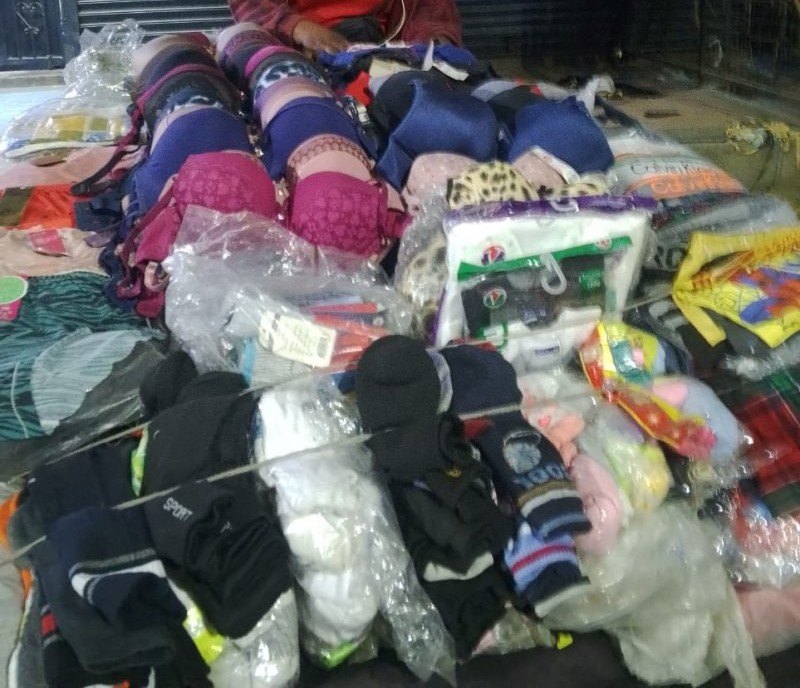
Eunice Nyingi used to sell enough underwear, socks and other essentials from her Eastleigh shop to keep her business running. Although customers still walk in, many leave empty-handed.
Rising transport costs, expensive stock and shrinking consumer spending have squeezed both traders and shoppers, leaving small business owners like Nyingi struggling to stay afloat.
“I sell underwear and such items in Eastleigh. For me, I see things were better four months ago. Things were working. But now even the cost of items has risen. Transport has increased, further pushing stock prices higher,” Nyingi told the Star.
“There’s no money flowing. It’s better to have a little coming in and things like underwear usually sell, but for now, I don’t see business going well at all.”
As Treasury Cabinet Secretary John Mbadi unveiled the Sh4.82 trillion budget for the 2026/27 financial year, Nyingi was among millions of small traders hoping for measures that would ease the pressure on businesses.
Instead, she says, the budget offers little comfort to entrepreneurs already grappling with high operating costs and limited access to affordable credit.
The Finance Bill 2026 seeks to raise Sh120 billion through new tax expansion measures.
Mbadi told Parliament that the budget was informed by
the views of ordinary Kenyans and is anchored on a people-centred approach. The
government projects ordinary revenue will rise by seven per cent from Sh2.78
trillion to Sh2.99 trillion.
Yet for traders like Nyingi, the reality on the ground remains stark.
“I've had to adjust prices. There are bras we sell for Sh500, but for now that can't work so we price them at Sh550. But customer who was buying at Sh500 refused to pay Sh550,” she said.
Some customers pick quality items but leave once the confirm their prices.
Nyingi's experience reflects a wider challenge facing micro and small enterprises despite official figures showing economic growth.
According to the Economic Survey 2026, Kenya’s economy expanded by 4.6 per cent in 2025, supported by recoveries in agriculture and construction. Inflation eased to 4.1 per cent from 7.1 per cent in 2023, while 822,100 new jobs were created, bringing total employment to 21.6 million.
However, annual inflation climbed to 6.7 per cent in May 2026, driven by a 16.5 per cent rise in transport costs and a 9.4 per cent increase in food prices, eroding household purchasing power.
Tax experts have also raised concerns that provisions in the Finance Bill 2026 could further increase operational costs for small businesses.
Mobile money transfers and card settlement services have been moved into the standard 16 per cent VAT bracket, potentially increasing transaction costs for merchants. Software licences, payment gateways and point-of-sale systems have also been reclassified as royalties, attracting withholding taxes that could result in higher subscription fees.
Businesses are expected to face additional costs following the removal of excise duty preferences on East African Community imports, which affects products such as plastics, paper, printing ink and labels.
The Bill also introduces stricter compliance requirements, reducing the filing period for corporate returns from six months to four and requiring nil returns to be submitted within one month.
Beyond taxation, traders are concerned about the rising cost of moving goods.
The transport and storage sector consumed petroleum products worth approximately Sh550.7 billion, costs that continue to filter through supply chains and into retail prices.
While the government has allocated Sh386.1 billion to various Bottom-Up Economic Transformation Agenda clusters, many small traders say they are yet to feel the benefits.
Nyingi is equally unimpressed by the Hustler Fund.
The Treasury says Sh87 billion has been disbursed through the programme since 2022 across 28 million accounts. But she says the amounts available are too small to make a meaningful difference.
“I tried the Hustler Fund, but the amount they were giving is Sh600. Sh600 is only a dozen socks. I need more for a loan. It does not help. I just used it for supper and lunch,” she said.
Asked whether more young people are turning to business, Nyingi said many remain interested but lack the capital to start.
“Some ask me where I buy these things, asking ‘how can I start a business’. But some are waiting for jobs because they have no otherwise, maybe they have no capital.”
As the government celebrates economic stability and growth, the challenge remains whether those gains can translate into meaningful improvements for millions of Kenyans working in the informal economy.
“I would like the government to reduce the taxes and give us funding that would enable us do proper business,” Nyingi said.