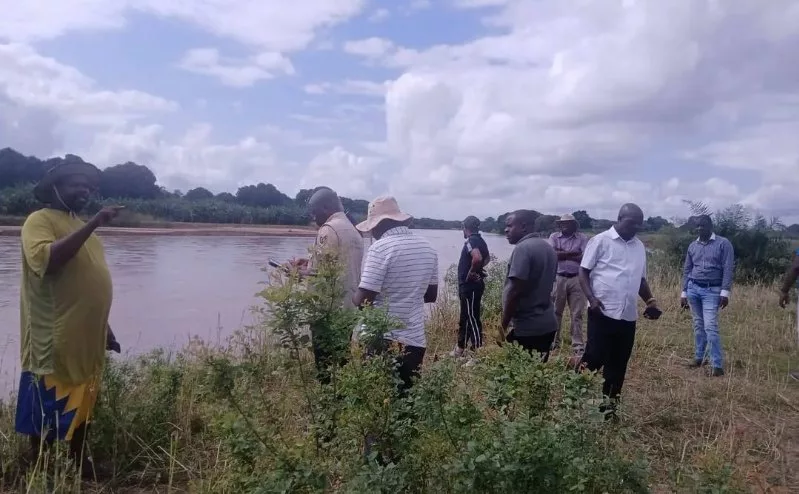
 Joint site inspection for the Lucerne Project by NWHSA, Stella Mundi Ltd, and Tana River County representatives in Tana River on Friday / BRIAN OTIENO
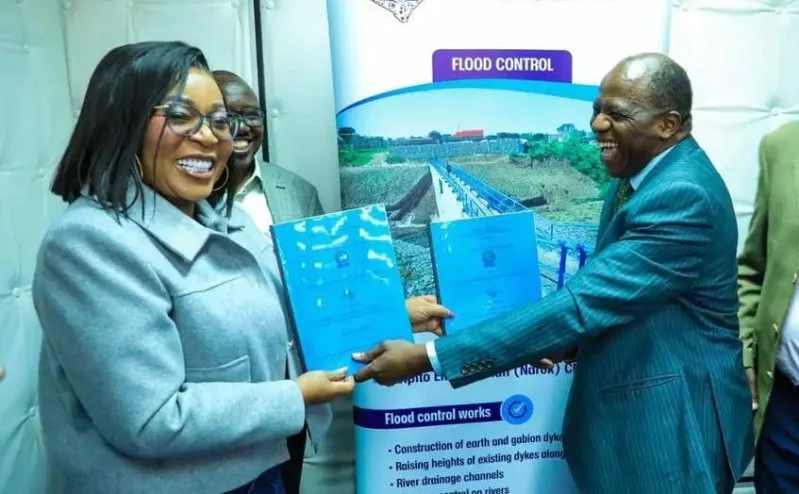 NWHSA chair Jane Mwikali and Tana River governor Dhadho Godhana in Tana River on Friday / BRIAN OTIENO
An
agro-industrial value chain enterprise has unveiled an ambitious large-scale
lucerne fodder production project that is set to put Tana River county on the
regional map as an agricultural hub.
The
project, implemented jointly by Stella Mundi (PVT) Ltd, the National Water
Harvesting and Storage Authority (NWHSA) and Tana River county government, will
harness irrigation to convert the vast stretches of Tana River’s semi-arid land
into productive farmland.
Lucerne farming involves cultivating a perennial
legume widely known as alfalfa, primarily for high-protein livestock feed.
Lucerne, also known as ‘Queen of forages’, is
incredibly valuable for its rapid growth, deep taproot that fixes nitrogen in
the soil, and crude protein content of between 18-24 per cent.
It is highly digestible and rich in vitamin,
minerals, and crude proteins, and is used to fee dairy cattle, goats, sheep,
and rabbits, often reducing the need for expensive commercial concentrates.
Speaking
during the unveiling of the project in Tana River on Friday, Stella Mundi
managing director Mayor Mangeya said the project will rely on the expertise of
the NWHSA in developing water security infrastructure.
Water
will be drawn from the Tana River through an extensive pipeline network to
support irrigation throughout the project.
“The
development will be implemented in four phases, beginning with commercial
lucerne production before expanding into value addition and livestock farming,”
Mangeya said.
In the
second phase, lucerne production will increase to 7,000 hectares alongside the
construction of a modern feed mill to process, blend and fortify livestock feed
locally.
Mangeya
said the third phase will expand production to 12,000 hectares to support
increased exports, while the fourth phase will establish a livestock platform
focusing on beef cattle, goats and dairy production.
The
project is designed to meet the growing demand for quality livestock feed in
Middle Eastern markets, where dairy farmers and livestock producers depend
heavily on imported fodder.
According
to Mangeya, the investment is also expected to generate direct financial
benefits for the local community through a proposed Sovereign Fund Fee
equivalent to two per cent of the project's topline revenue as compensation for
land contributed to the initiative.
“The
county government and local communities are projected to earn about USD2
million (about Sh259 million) in topline revenue during the first five years
and approximately USD4 million (about Sh518 million) within the first 10 years
of operation.
The
project is expected to further attract hundreds of millions in investment,
create jobs for the locals and position Tana River as a key livestock feed
production hub in East Africa.
NWHSA CEO
Julius Mugun and chairperson Jane Mwikali welcomed the investment, saying it will
significantly improve livelihoods in Tana River county.
The two said the project will unlock new economic opportunities through agriculture, create employment for local residents, boost exports and strengthen food security while supporting Kenya's Vision 2030 and the country's broader rural development agenda.
INSTANT
ANALYSIS:
The introduction of commercial lucerne farming in Tana River county will change the semi-arid county into one of the major agricultural hubs in East Africa. The initiative is designed to improve water harvesting and storage, support year-round irrigation, expand commercial fodder production and strengthen the county's resilience to climate change.