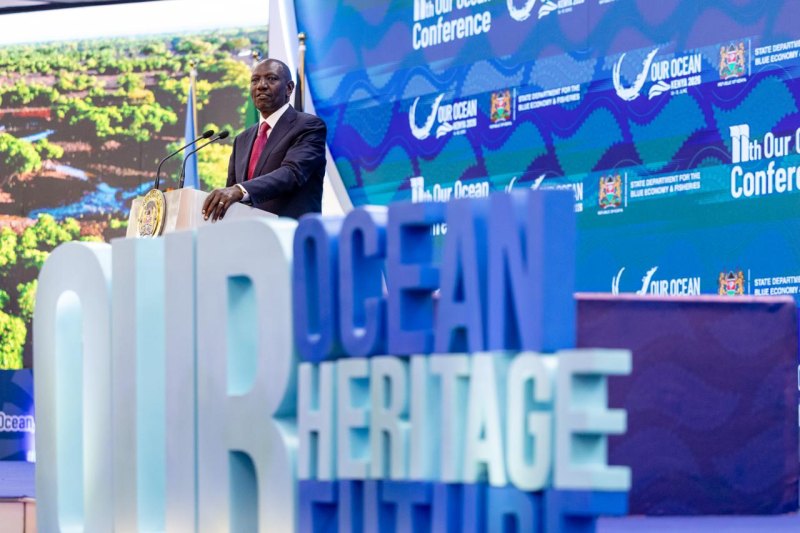
The 11th Our Ocean Conference concluded in Mombasa on a historic note, cementing Kenya’s position as a powerhouse in the global marine conservation space.
Amid a flurry of local commitments totaling Sh20.3 billion ($156 million USD), an ambitious international partnership stole the spotlight; a massive 10-year project to turn barren stretches of the Kenyan seabed into thriving marine sanctuaries.
At the heart of this initiative is the Fish Reef Project, a Santa Barbara, California-based non-governmental organisation.
Speaking on the sidelines of the summit, the organisation's founder and CEO, Christopher Fisher Goldblatt, revealed plans to bring their proprietary "Sea Cave" reef technology to Kenya after eight years of rigorous preparatory groundwork.
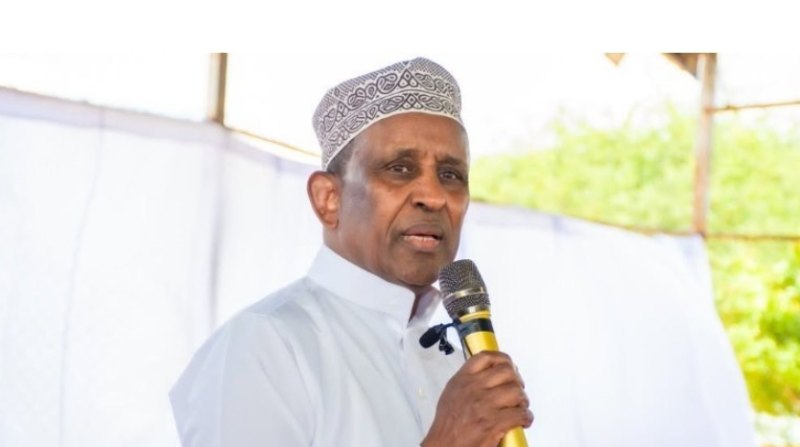
To ensure strong local implementation, the Fish Reef Project has officially partnered with Kenyan firm Horizon Carbon Solution Limited, led by local partner Abdulkadir Mohammed.
This strategic collaboration guarantees that the multi-million shilling conservation project remains firmly anchored in local community leadership, alignment with national policy, and transparent blue economic practices.
Unlike traditional artificial reefs made of discarded tires or scuttled ships, the Fish Reef Project designs "biogenic" structures.
These modular units are chemically engineered from specialised marine concrete designed to match the ambient PH of seawater perfectly, preventing toxic off-gassing and encouraging rapid marine colonization.
"We build what are called biogenic sea cave reefs, which are man-made reef structures that go on the seafloor to stimulate marine life," Goldblatt explained. "It gives the coral a place to live, and it gives the fish and the lobsters a place to thrive."
Weighing over a thousand pounds each, these heavy, stable units are designed with flat-top surfaces to allow corals and marine plants to firmly anchor. Simultaneously, their hollow interior chambers provide natural, storm-resistant caverns where marine life can breed safely.
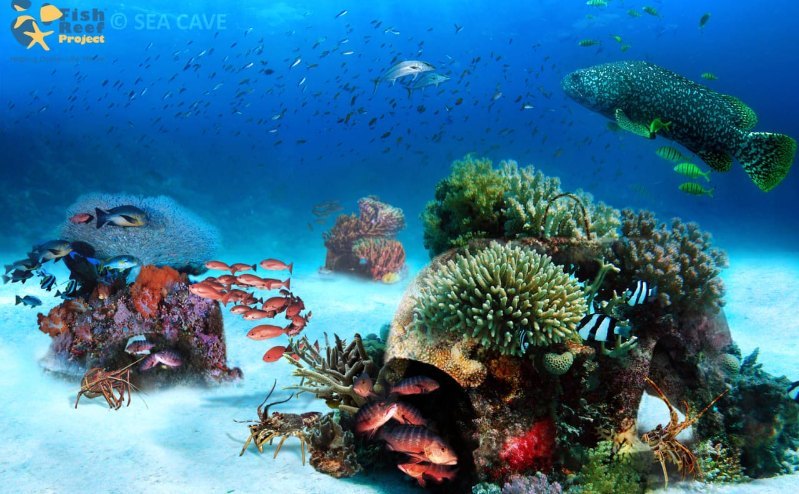
The scale of the Kenyan rollout is unprecedented. Over its 10-year construction lifespan, the project aims to reclaim and convert several hundred hectares of empty, muddy seafloor stretching all the way from Lamu to Mombasa into first-grade coral reef ecosystems.
Lamu County has been selected as the operational launchpad due to its strategic maritime infrastructure.
The project will build a local manufacturing facility requiring several hectares of land in Lamu to cast the concrete units domestically.
The deep-water infrastructure of the Lamu Port provides the necessary depth for heavy operations, while marine assets like barges, cranes, and tugboats will be mobilized from Mombasa.
Beyond ecological restoration, Goldblatt and his local partner, Abdulkadir Mohammed of Horizon Carbon Solution Limited, emphasised that the project acts as a powerful economic engine, directly aligning with national priorities.
The Lamu rollout alone is projected to generate up to several hundred direct, well-paid, permanent jobs in manufacturing, deployment, and monitoring, while supporting thousands more by extension across local artisanal fisheries, ecotourism, and scientific research.
Reviewing the state's aggressive local investments, the President William Ruto highlighted that Kenya has moved away from traditional "brick and mortar" headquarters development, instead routing billions of shillings directly into coastal communities, completing 15 fish landing sites, the Shimoni Fish Port, and distributing hundreds of community boats.
Crucially, the President signaled a hard shift in how Kenya engages with international entities, moving away from old models of dependency toward sovereign equality.
"Going forward, we will reject any engagement that amounts to extraction," the President declared firmly. "It is going to be investments that create growth, that create value, and that create a win-win."