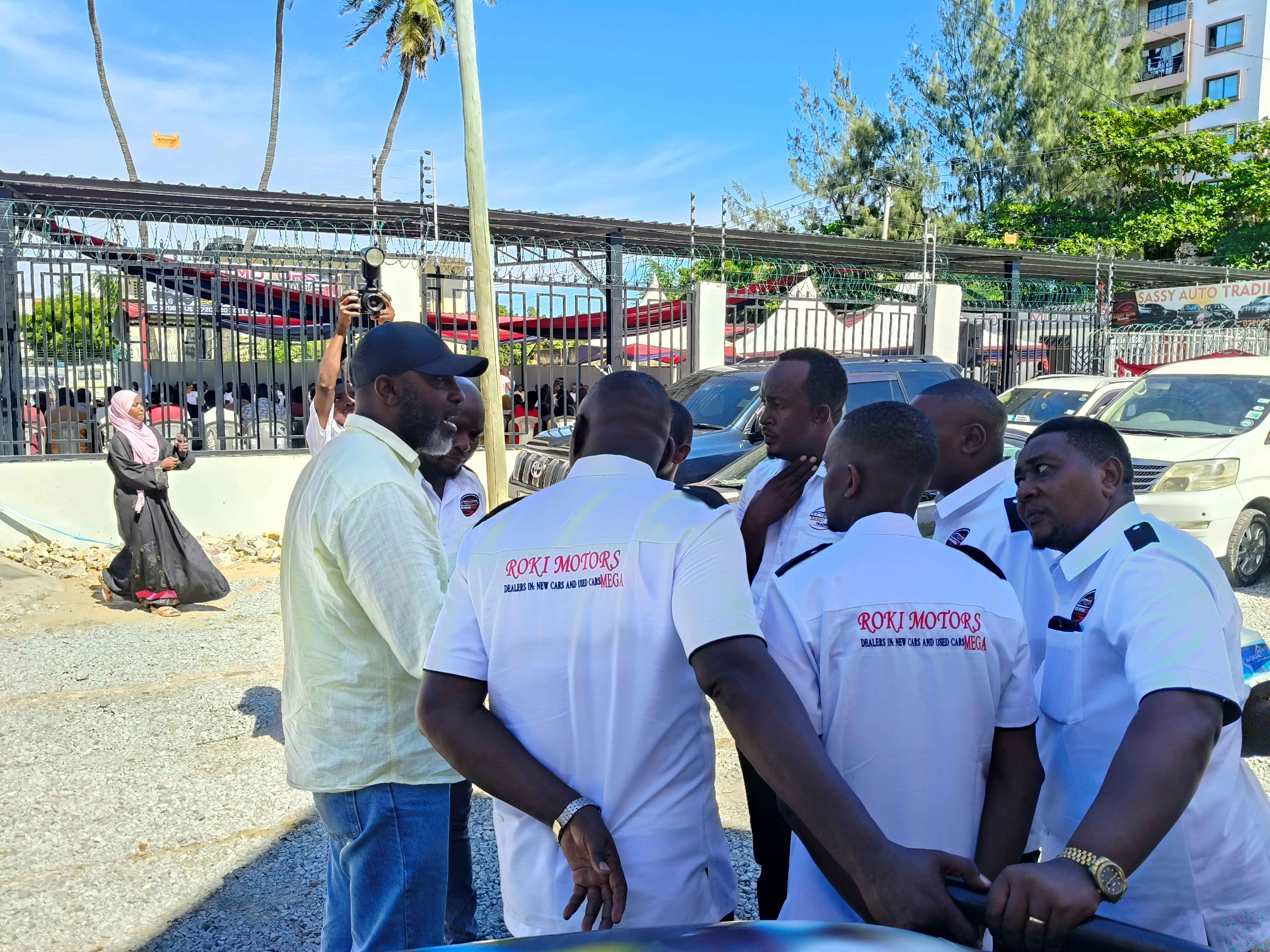
 Hilmy Ali [L]with car dealers at Ganjoni in Mombasa
on Saturday / BRIAN OTIENO
Hilmy Ali [L]with car dealers at Ganjoni in Mombasa
on Saturday / BRIAN OTIENO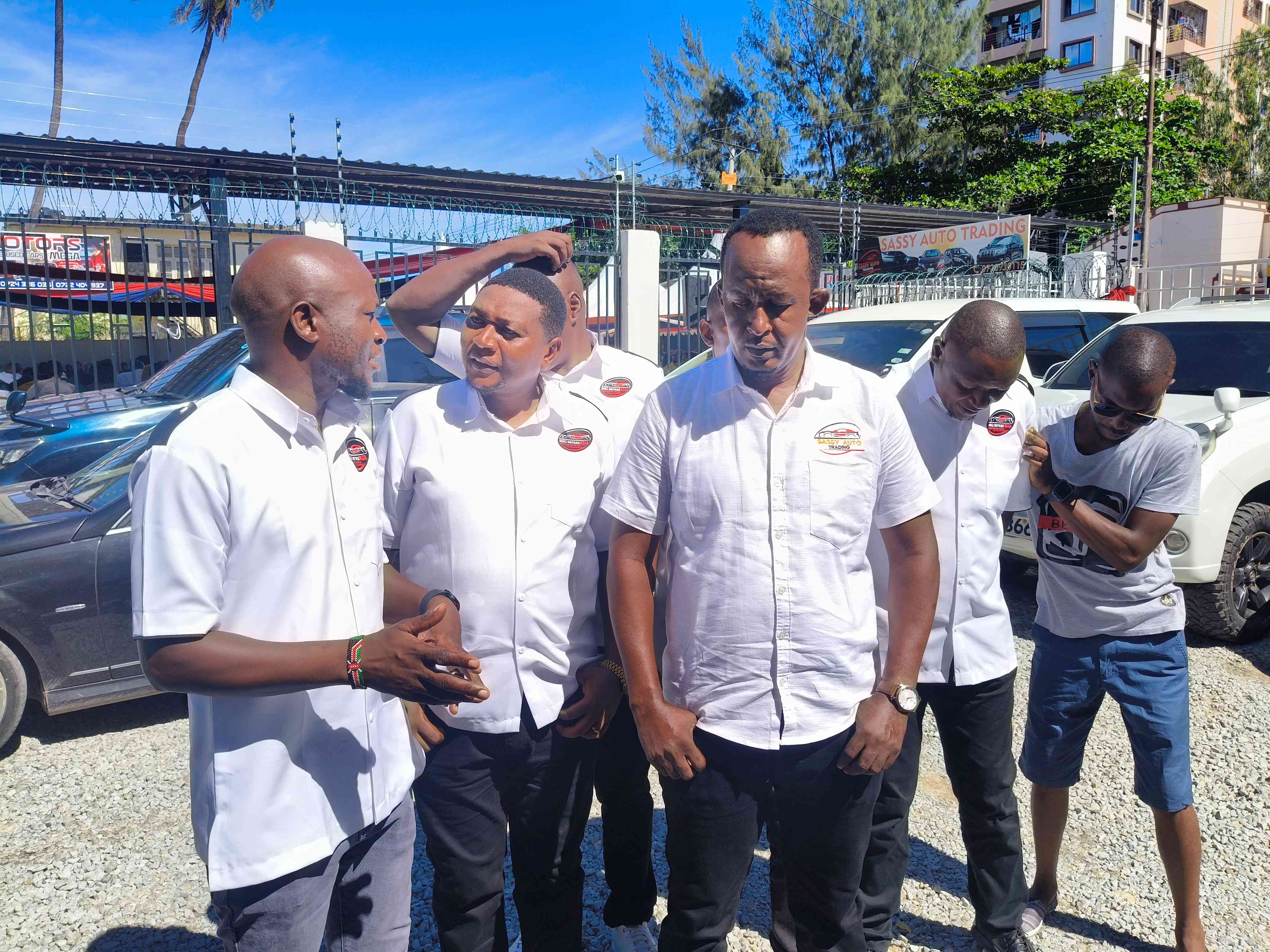 Roki Motors’ Jackson Tevera [L] and Sassy Auto
Traders’ Ken Sassy [C] at Ganjoni, Mombasa on Saturday / BRIAN OTIENO
Roki Motors’ Jackson Tevera [L] and Sassy Auto
Traders’ Ken Sassy [C] at Ganjoni, Mombasa on Saturday / BRIAN OTIENOCar dealers in Mombasa have raised concerns over a worsening business
environment, citing high taxation, insecurity, and global geopolitical tensions
as key factors hurting sales.
The dealers said the situation has been further
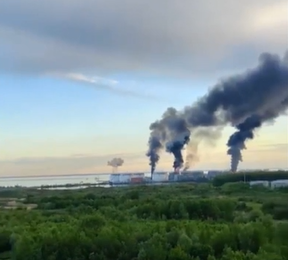
exacerbated by the ongoing Middle East conflict, which they noted is affecting
customers’ purchasing power, particularly for high-end imported vehicles.
“The question is how both national and county
governments can empower businesses so that our clients can afford to buy both
high-end and low-end cars,” said Jackson Tevera, a dealer at Roki Motors.
Tevera spoke during the opening of a new Roki
Motors yard in Ganjoni, bringing the company’s total outlets to seven.
He noted that dealers in Mombasa previously
sold up to 5,000 units monthly, but sales have been declining, with fears the
Iran conflict could worsen the situation.
Some customers who have already placed orders
are worried about delays in shipment, raising concerns about servicing loans
before receiving their vehicles.
“We need both levels of government to engage
us in finding short- and long-term solutions,” Tevera said.
Ken Sassy, another dealer, urged authorities
to improve security, saying vehicles are frequently vandalised by street
urchins.
“Most of our cars are broken into and parts
stolen by street boys,” he said.
In response, county officials said they have
launched a programme targeting street families and vulnerable youth to address
both humanitarian and security concerns.
County transport executive Dan Manyala said
the initiative includes night patrols and increased security presence,
especially within the CBD.
“We are seeing more people sleeping on the
streets and children running after vehicles. This has become a serious security
concern,” he said.
Dealers also decried high taxation, noting
that permit fees in Mombasa are significantly higher than in Nairobi.
Sassy said dealers with more than 10 cars pay
up to Sh165,000 in licence fees, compared to about Sh50,000 in Nairobi.
“There should be a meeting with the county to
review these charges,” he said.
The dealers, who number more than 40 in
Mombasa, said they contribute significantly to the local economy through taxes
and employment.
Tevera noted that the sector employs thousands
of youth, helping reduce crime and boost economic activity.
“We contribute to local revenue and help
reduce social vices by keeping young people employed,” he said.
James Macharia, another dealer, raised
concerns over the high cost of signage, saying businesses are charged Sh5,500
per letter for 3D signage.
“This means if your business name is long, you
pay heavily. A minimum signage costs about Sh30,000,” he said, calling for a
reduction to encourage more installations.
Dealers also expressed concern over new
regulations on imported used vehicles, which have tightened the age limit to
eight years based on the first registration date.
Under the rules, only vehicles first
registered in 2019 or later are now allowed into the country, with older units
being rejected at the port.
The government is also planning to gradually
reduce the age limit to zero by 2030 in a bid to promote local assembly.
However, dealers warned that such measures
could push them out of business and lead to job losses.
“We need consultations before such policies are implemented. We should be given time to clear existing stock and orders,” Tevera said.