

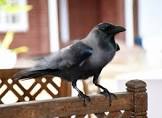
 The Indian House Crow /KWS
Tourism stakeholders at the Coast have raised Sh2.2 million towards a coordinated programme to control the invasive Indian House Crow, marking a significant step in efforts to protect the region’s environment, public health and tourism economy.
The funds were raised on Saturday at the Fort Jesus Oceanfront Garden, where the Mombasa government contributed Sh1 million.
The hotels and private sector stakeholders raised an additional Sh1.2 million.
The amount will serve as part of a targeted Sh10 million seed capital aimed at kick-starting sustained eradication operations.
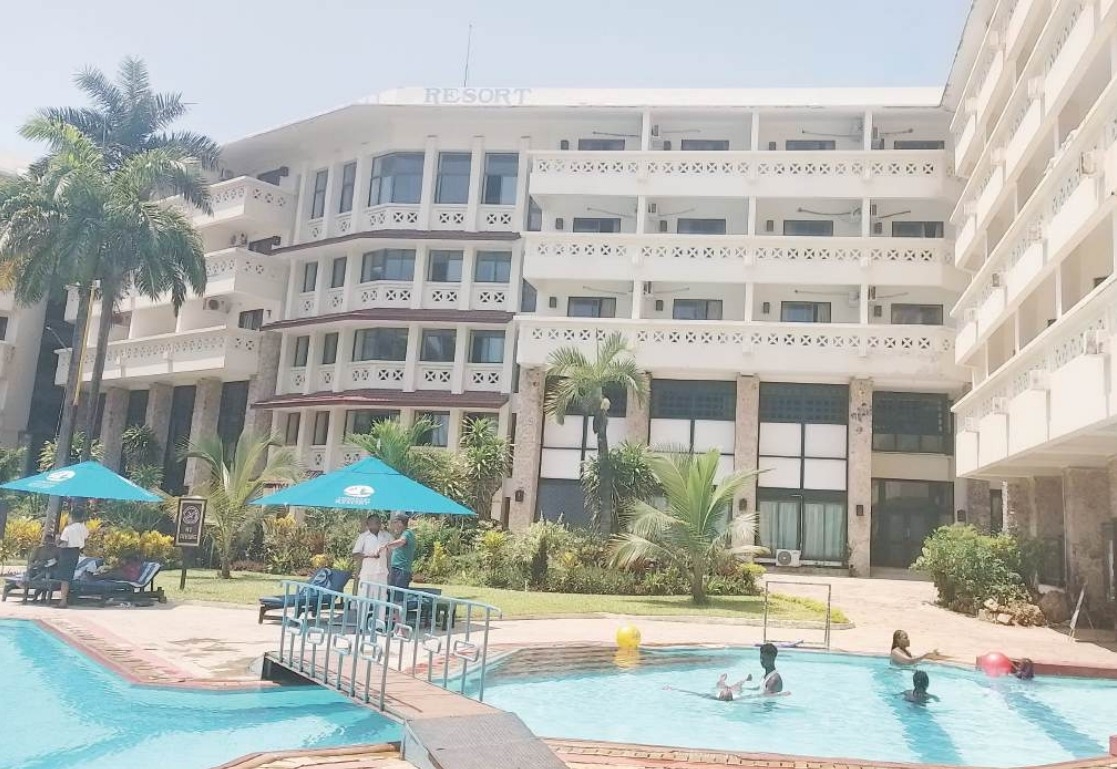
Mombasa Tourism Council (MTC) chairman Sam Ikwaye said the fundraiser was driven by the private sector, following growing concern over the impact of the invasive bird on tourism facilities and urban life.
Mombasa’s tourism industry is losing an estimated Sh200 million every year as a result of the destructive invasive house crow species.
The losses stem from guest complaints, compensation claims, damage to outdoor facilities and escalating pest control measures, and costs that have risen sharply over the past 12 months.
According to MTC, more than 65 per cent of beachfront hotels have recorded guest disruptions linked to the birds, while complaints to tourism stakeholders have jumped by almost 30 per cent in one year.
“We needed urgent action to start the programme and secure seed money to begin elimination operations. We are happy that today we have exceeded the tourism sector’s target contribution,” Ikwaye said.
He said stakeholders had agreed to raise Sh10 million across different sectors, with tourism, aviation, transport, manufacturing and other industries each expected to contribute at least Sh2 million.
Ikwaye said the tourism sector had surpassed its target, with several hotels also contributing in kind through logistics and operational support.
The fundraising campaign, he said, will continue throughout the festive season, with plans to establish donation points in hotels, airports, SGR stations, shopping malls and tourist attractions, encouraging residents and visiting tourists to contribute.
“Scientists have told us this is a marathon, not a sprint. By 2026, we hope to reduce the crow population to manageable levels and restore a healthy environment where indigenous bird species can return,” Ikwaye said.
Beyond poisoning operations, the programme will also focus on waste management and public sensitisation, identified as key drivers of the crow population explosion.
Ikwaye praised the Mombasa government for investing in garbage collection infrastructure and said trained tourism champions would work with communities around hotels to support pre-baiting and baiting beyond hotel compounds.
Mombasa trade and tourism chief officer Khamis Kurichwa said scientific evidence clearly shows the Indian House Crow is not native to Kenya and poses a serious threat to the local ecosystem.
“Every person in Mombasa has been affected by this bird. There is enough scientific data proving it has no ecological significance here. The challenge we face is resources, because the poison used is expensive but necessary since it only targets crows,” he said.
Kurichwa called on more partners to join the initiative, stressing that eradication would require sustained funding and long-term commitment.
KWS Coast regional director Elema Hapicha assured stakeholders that strict protocols were in place to control the handling and use of the specialised Starlicide poison.
Starlicide is a specific chemical avicide (bird poison) used for controlling pest bird populations, particularly starlings, crows and gulls, by being mixed into baits, and it's known for its effectiveness and delayed action, reducing risks of secondary poisoning to non-target animals.
“The poison is under KWS custody and is issued through documented government procedures. There is no room for misuse,” she said, adding that the Indian House Crow is classified as a pest.
A Rocha Kenya director Colin Jackson said the organisation had already demonstrated success in North Coast towns such as Watamu, Malindi and Kilifi, where an estimated 130,000 crows have been eliminated over the past year.
“Some hotels in Watamu have not seen a single crow in over a year. But this is a long-term programme. Even if we eliminate them locally, they can return from neighbouring regions,” he said.
Coordinator of the Crows No More programme Eric Kinoti said operations are guided by scientific understanding of crow behaviour, combining pre-baiting, controlled poisoning and careful monitoring to ensure safety and effectiveness.
Kenya currently holds an estimated 800,000 house crows.
Pest control expert Mwenda Mbaka said the crow problem was entirely man-made, noting that the species has no natural predators in the region.
“It was brought here by human beings, and therefore it is upon us to deal with the problem we created,” he said. Mbaka said the Kenya Wildlife Service (KWS) was rightly leading the programme due to its wildlife management mandate.
Instant analysis
The Sh2.2
million raised by Coast tourism stakeholders signals growing private–public
resolve to confront the invasive house crow, now a proven economic and
ecological threat. While the funds represent only a fraction of the Sh10
million seed capital required, the initiative demonstrates sector leadership
and urgency, especially from tourism, which bears the heaviest losses. The
emphasis on science-led eradication, strict KWS oversight and community
sensitisation strengthens the programme’s credibility.