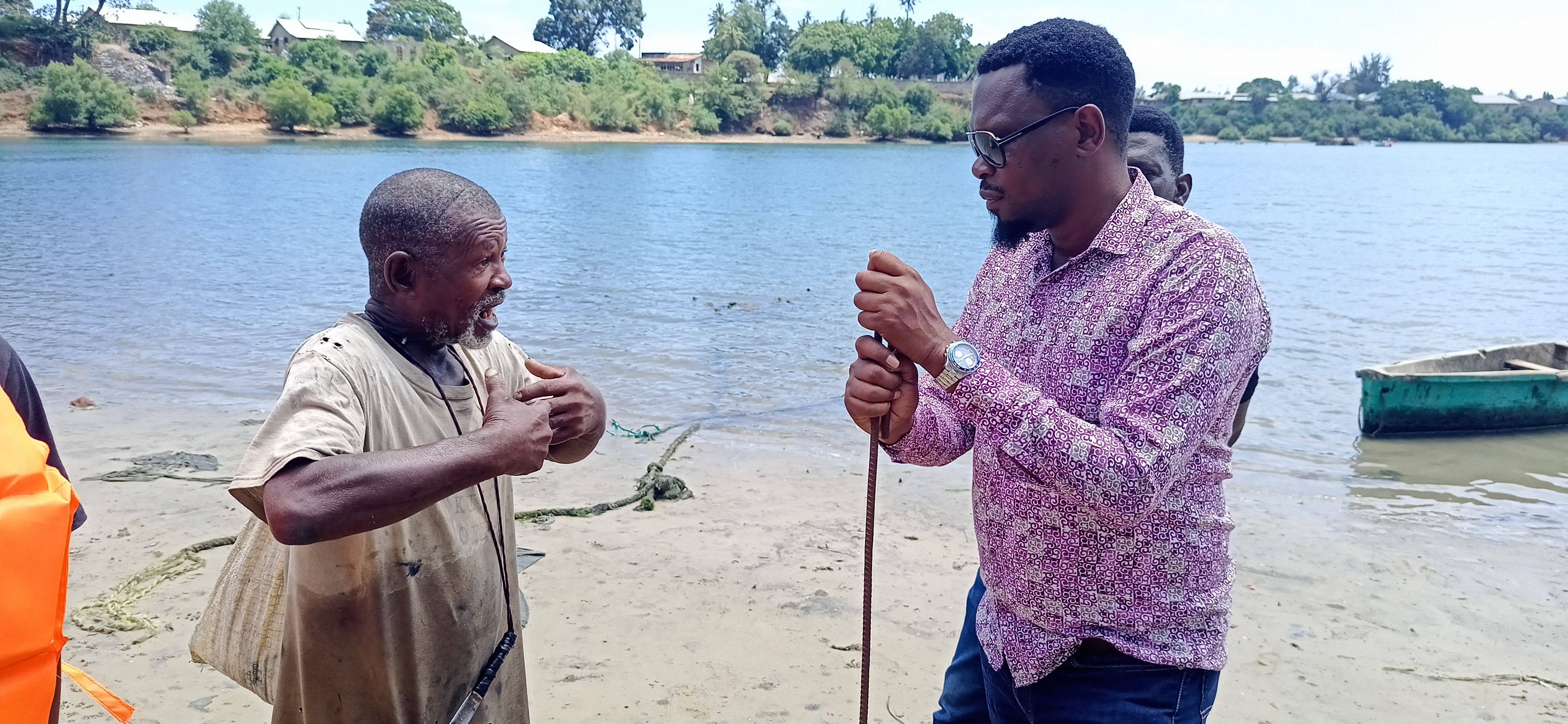
Said Mwachandege, a Kilifi fisherman and former
Kenya Maritime Authority chair Hamisi Mwaguya / BRIAN OTIENO
Fishermen in Mayungu, Malindi subcounty, are counting losses despite an abundance of fish in the area, largely due to the lack of cold storage facilities.
Without proper preservation, much of their catch goes bad, forcing them to sell at throwaway prices.
Ahmed Omar, a member of the Mayungu Beach Management Unit (BMU), which has about 1,000 members, said the CREDiT project, which will introduce solar-powered cold storage rooms, is expected to transform livelihoods by boosting sales.
“Electricity in Mayungu is not only expensive but also unreliable due to frequent outages,” Omar said. He added that fishermen often trek long distances to Malindi town to buy ice for preserving their fish.
With the planned solar-powered cold rooms, fishermen will also be able to make ice flakes for longer fishing trips.
“Sometimes we go into the sea for four days straight. That is when we need the ice flakes,” Omar noted.
Prof. Suresh Perinpanayagam of the University of York, a lead investigator in the project, said the initiative will work with the Mayungu community to provide solar energy for the cold chain.
“This will help keep fish fresh and make it possible to reach distant markets, where they can fetch higher prices,” he said.
He explained that solar energy is relatively cheap and abundant in Kenya but requires proper management. “When we install solar panels, the system has to generate revenue for the community so it can sustain itself over time,” he added.
A 50-kilowatt solar panel will be installed at Mayungu, directly benefiting more than 600 fishermen and indirectly reaching about 300 other stakeholders. Youth and women are among the primary targets.
The project includes training community members in solar energy management, with support from the Technical University of Mombasa (TUM).
Dr. Lawrence Mukhongo, a lecturer at TUM, said their role is to ensure technical continuity. “We will train locals who will handle maintenance and repairs to sustain the project after handover,” he said.
Innocent Ngawa of Coastal and Marine Resources Development (Comred) said the initiative will boost Kilifi’s blue economy. “About 40 percent of the Mayungu community relies on fishing. With cold storage, fish that normally sells at Sh150 per kilo during oversupply will once again fetch Sh350,” he said.
He added that the project, which runs until 2027, will ensure trained locals continue operating the system beyond its lifespan.
Kilifi Agriculture, Livestock and Blue Economy CEC Chula Mwagona said fishermen have been losing significant income due to wastage. “This facility will enable them to sell fish at market prices and reduce exploitation by middlemen,” he said.
Caroline Nyaloti, science and technology manager at the British High Commission in Nairobi, said the project also embraces a green model by bringing together government, academia, industry, and community to generate sustainable solutions and new income opportunities.