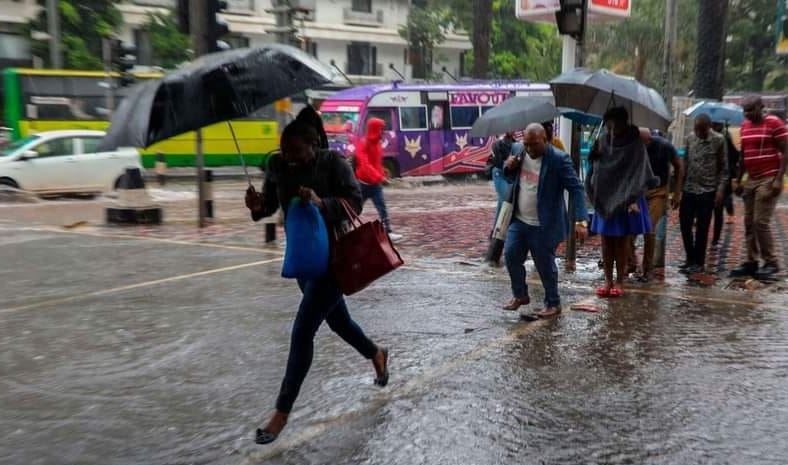


Environmental pollution has been pointed out as the biggest cause of increasing number of respiratory diseases especially asthma among children.
According to experts, lately there has been an increase of asthma disease in urban areas caused by pollution due to the nature of the environment.
The Pan African Thoracic Society President Joseph Aluoch said for a long time, childhood infections particularly pneumonia have for a long time been a major problem causing higher mortality rate not only in Kenya but in Africa at large.
He said currently, there is a high advocacy for environmental challenges in the whole world and both old and the young scientists and medics are in agreement that environmental pollution poses a major challenge to people's health.
Aluoch said there is a big percentage of children dying due to the environmental pollution and this has been there for many years where the cause of the infant mortality has included respiratory infections.
"These has been there from time immemorial and it continues to be seen in Kenya and Africa at large. We know that respiratory infection is often associated with air pollution to which some children are exposed to in their childhood," he said.
He spoke during the third Biennial Pan African Thoracic Society Congress which was attended by delegates across the globe under the theme lung health and environment in Mombasa.
In the rural areas, Aluoch said children are exposed to biomass which is what most mothers in the villages use for cooking.
These include firewood, animal products like cow dung and other plant products which are used for making fire.
"Most of mothers hold their children on their laps while cooking with biomass which produce a lot of smoke that eventually affect the lungs of these babies and cause chronic respiratory diseases.
"This has been a major problem in the third world and lately we have also seen an increase in smoking in developing countries which produce a lot of respiratory diseases," he said.
Aluoch said the burden of asthma which is one of the major chronic diseases is increasing due to urbanisation which is stated with environment pollution.
According to him, one of the things that should be done to reduce the burden of the respiratory disease is to reduce the environmental pollution and particularly in the villages.
"We need to reduce the amount of biomass or use some friendly cooking facilities to reduce the amount of biomass pollution in children," he said.
Aluoch said people need to adopt the use of well-designed and less pollutant jikos which can be used to reduce the biomass and control the environment pollution.
"This less pollutant jikos are not widely spread but they are available in urban areas. The Jua kali people have also learnt how to make the jikos that are less dangerous as far as producing pollution to the family that use them is concerned," he said.
Aluoch said experts and environmentalists are aware of dangers caused by environment pollution in the bodies, the urban pollution and the industrial pollution which fight the health of human being.
In Kenya, he said, poverty is also the main cause of respiratory diseases among children because parents do not have any alternative but expose them to already polluted environment.
"Some of the parents know that biomass cooking is dangerous to the health of the babies but they do not have alternative.
"Some of them know that places where they live in slums are dangerous to their health because of the poor sewage systems but they do not have an alternative. So at the end of the day, the commonest cause of diseases in Kenya and Africa is poverty," he said.
Aluoch said if Kenya improves the level of poverty, it does not need medicine or doctors to control respiratory diseases because this will automatically mean an improvement on environmental sanitation.
He said improving environmental sanitation includes sewage disposal as well as reducing the amount of air pollution which will increase or improve the health of a community by 40 per cent.
A lot of health issues can be reduced or prevented by using measures other than the medicine or the medical department policies, Aluoch said.
"Some of the measures are just pure policies regarding the environment but this will help a lot if we include health education which reduces a lot of problems as far as health care service is concerned."
He said knowledge and awareness is very important because it helps people to know that they have the disease or somebody else has the disease.
Aluoch said there is need to reduce the gap between the incident and the diagnosis of these diseases and this simply means diseases should be diagnosed early in as many people as possible.