

Children as young as seven are involved in crime in Mombasa, security officials have said.
And in a new trend, young girls are also being recruited into the juvenile gangs that terrorise locals.
Some of the gangs, according to police, are led by girls.
The trend has been noted in Kisauni, Nyali, Mvita and Likoni subcounties.
Mombasa deputy county commissioner Ronald Mwiwawi said a good percentage of the youth are found in dens taking muguka, drugs and bang while others are in juvenile criminal gangs terrorising people everywhere.
“We are dealing with criminal gangs with an age group ranging between seven to 21 years, both boys and girls. In Kisauni, we have a girl-led criminal gang and we ask ourselves if girls are getting in crime, where are we heading to?” he said.
Mwiwawi said many times when youth are interviewed, they say the main problems that leads to their criminal behaviour are dysfunctional families.
Their parents are not able to take good care of them and cannot afford to put them in school.
He said they are in charge of security management, part of Vision 2030, and for everything to happen they need an enabling environment.
“In Mombasa, we work for 24 hours for seven days in a week every time trying to ensure that the region is safe for people to do business,” the official said.
“When you talk of security management, this is different from crime prevention. In issues of security management we bring in stakeholders where we review issues affecting us and see how best we can resolve those issues so that we can have a secure environment for all of us,” he said.
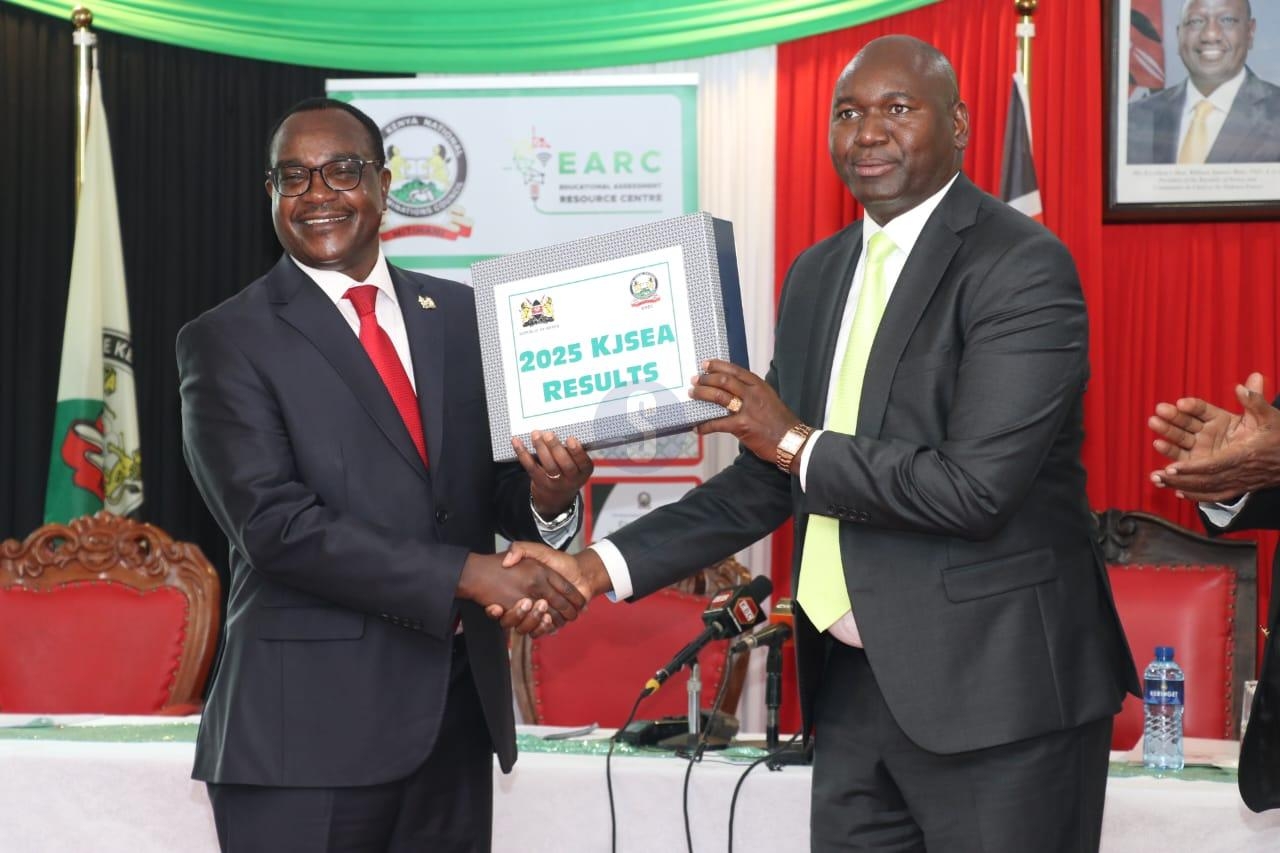
Mwiwai spoke during the launch of a framework between KCB Bank, KCB Foundation and the Kenya Maritime Authority to help the youth access loans for maritime studies.
On Monday, a programme of was rolled out to train 600 youths as seafarers at the Bandari Maritime Academy to take advantage of the blue economy job opportunities overseas.
The Kenya Maritime Authority, KCB Bank and KCB Foundation have signed a Sh155 million three- year partnership to train the youths.
In the arrangement, the youths will receive safety training in shipping and maritime as well as unsecured loan products from the bank to secure visa documentation, embarkation costs, and other travel logistics.
Mwiwawi said when such programmes are implemented, they get interested because it is one way of ending crime among youth.
“When I see that we have a space for our youths, personally I am grateful. As security officers, we are worried about youth population and therefore when such programmes are rolled out, we get interested. So there is a need to be as inclusive as possible when recruiting, for us to remove the rot in our society,” he said.
Mwiwawi said security teams have worked closely with the department of probation whose officers have half-houses where they make juice.
“These officers have a juice-making machine, work which is done by young boys who come from our courts after serving their sentences because if we take them home, they are not accommodated and therefore they still get back to drugs and those issues," he said.
“This is why there is a need for them to have this juice-making machine so that when they come, they learn how to produce, sell and earn an income.”
He said that youths should also be trained on how to save so that they can either take themselves back to school and learn a skill or go and open their own businesses.
“We are all exploring how to help these youth who are so pessimistic and have despaired, so that we bring dignity in our Kenyan youth,” the administrator said.
“As a member and chair of security team, I felt strongly happy when I saw the programme because we are getting a solution for our youths who are suffering and for that we appreciate KCB Bank,” he said.
The officer said there are no deep sea fishers and currently as government, they have trained 423 deep sea fishers. Just a month ago, they received the first six girls to go for deep sea fishing.
He said that building of a factory at Liwatoni, a fish processing hub, is one of the efforts engineered towards helping youth and growing the economy.
“If you go for deep sea fishing and look at the vessels there, there are no Kenyans. The people doing deep sea fishing are from other countries, we do not have our own. That is why the government is working towards training 5,000 youths in the next five years for them to be absorbed in deep sea fishing,” he said.
He said that there were seafarers who were commissioned recently and so KCB Bank was making an important contribution. He said the programme is big and called for more stakeholders to support.
KMA acting director general John Omingo said the programme was rolled out because youths have been facing the challenge of meeting the embarkation cost of getting on board vessels.
This is because the embarkation costs have mandatory requirements from the International Maritime Organization and the World Health Organization in terms of the medical test, training certifications and other immigration documents which are required by the countries where the ships are going to dock.
To get all these documents plus the training, Omingo said that the cost comes up to about Sh150,000 depending on the training institutions.
“This is a challenge especially to the young ones, that is why we saw the need for working with KCB to grant loans to the potential seafarers on account of what we have assured them,” he said.
“Before a person is given the loan, we go through the process to ensure that they are genuine seafarers because they will have to pay for us to also help others who are coming in,” he said.