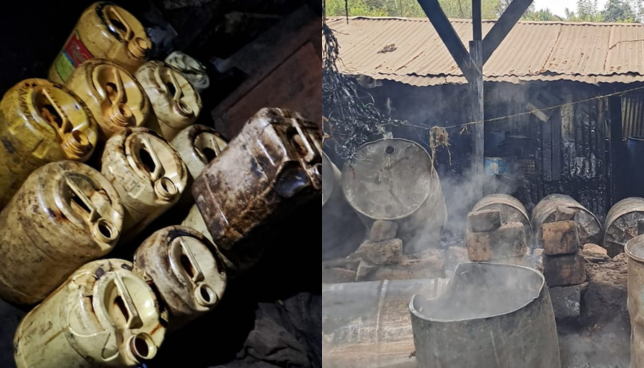
FW, 40, started using drugs at the age of 14 while in
secondary school before she dropped out.
Young and with no access to money, the Murang’a town
native would take spirits with sodas but as she got used to the hard liquor,
she would consume them without dilution.
“I would take alcohol, cigarettes, miraa and bhang,
and eventually got addicted before falling pregnant,” FW said.
After giving birth, she struggled to care for her
baby as her health dwindled due to the heavy consumption of drugs and poor
diet.
FW at one point unsuccessfully attempted to sell her
baby for Sh20,000 to quench her thirst for alcohol.
Her teeth chipped while her body was filled with
scars that she would incur while in stupor.
FW eventually became a petty thief and was arrested
several times over the course of her 15-year addiction.
In a day, she would consume liquor worth Sh300,
Miraa (Sh200), heroine (Sh200) and bhang
worth Sh100.
To sustain her expensive lifestyle, FW started
spiking revelers’ drinks in clubs in Murang’a town to steal from them.
Her turning point came in 2015 when the national
government undertook a nationwide crackdown on second generation liquor.
The then Murang’a governor Mwangi wa Iria started a
free rehabilitation camp at Ihura stadium in Murang’a town that saw over 1,000
youths rehabilitated.
One of the beneficiaries was Wanjiru who was
rehabilitated for four months and was able to go back to secondary school,
which she completed in 2019.
“Many of the friends I kept back then have since
died. Some out of sickness, others died after being hit by cars while drunk and
some were lynched for stealing”.
FW has since become a peer counseller and spends her
time going to learning institutions and churches talking to youths about the
cons of experimenting with drugs and alcohol.
She also uses the forums to talk to youngsters on
teen pregnancies, having been one herself.
“I am now over a decade sober. I am concerned because
when I was treated, second generation liquor went off the market but it is now
back and is affecting many youths. Many homes have buried young people who have
died of alcoholism and suicide,” FW said.
She appealed to the government to close down
manufacturing plants that produce substandard liquor or compel them to only
sell drinks that are up to par.
In Kabuta village, Dennis Kimani, a casual laborer,
said frustrations at times plunge youths into alcoholism.
At 34 years, Kimani depends on transporters who
engage him to load and offload trucks carrying construction materials. At
times, the jobs are unavailable and Kimani has to scavenge for food.
His wife and two children left a few years back as he
could not sustain them and his drinking had become progressively worse.
Every morning before work, Kimani takes a hard drink,
locally known as ‘kutoa lock’ so he can go to work. Without it, his hands shake
too much and his mind becomes foggy.
“I started drinking after my KCSE. I would hang out
with friends and we would all go to the shopping centre to drink. They all left
but my parents had no money to take me to college,” he said, throwing his hands
in the air in resignation.
With no savings and living in a house built for him
by his parents, Kimani said he avoids thinking about the future and prefers to
live everyday as it comes.
Reverend Esrom Kamau from PCEA Kamunyaka Parish in
Gatanga subcounty said he deals with addicts such as Kimani on a weekly basis.
In October last year, Kamau held a goat-eating event
in which he invited local youths and used the platform to sensitise them on
addiction.
“It’s unfortunate that most of these men are in their
most productive ages but are unable to plan their lives because of alcohol.
Many are unmarried and those who are, depend on their wives for food,” he said.
The clergyman said the youths blame their addiction
on joblessness and domestic wrangles but added that some are inducted through
peer pressure.
“Later this month, I plan to invite them again so we
can sit and talk. I like to inspire hope in them and I will not stop,” he said,
adding that most avoid churches due to stigma.
In Kongo-ini village, Kiharu, Grace Wahu, 87, shared
a story of grief after losing nine children and two grandchildren, majority of
them to alcohol related complications.
In 2024, the granny caught the attention of former
Deputy President Rigathi Gachagua who was championing the fight against
alcoholism countrywide.
Wahu has lost seven sons to alcoholism and narrated
her ordeal sorrowfully, explaining how they battled addiction for years before
losing their lives.
This, she said, is despite her efforts to give them a
good education. One son went to Murang’a High School and another to Aquinas Boys
High School.
Her hope was that they would grow up to drive big
cars and live large and visit her with loads of shopping.
Instead, her homestead is now dotted with graves,
some of them too fresh in her mind that she avoids their physical location. Her
husband died when the children were still young.
“I pray to God every morning when I wake up because
He blessed me with many children but sometimes I ask Him, ‘Why did you give me
strength to do all that hard work only to face their graves?” she said.
Wahu now lives with her daughter, a casual labourer,
who struggles to support her. Her sons’ deaths caused her to suffer from
diabetes and hypertension and doctors tell her to feed well to manage them.
“She only earns Sh300 per day and only works four
days in a week sometimes. Sometimes, I can’t eat the food that is available
because of my condition,” Wahu says.
She narrated how her sons who died at various
intervals would wake up in the morning and head to Mukuyu market near Murang’a
town before taking breakfast.
Drinking on an empty stomach, they would eventually
fall sick and doctors would caution them to stop drinking to no avail.
“My sons would see their brothers get sick and still
continue drinking. You wonder what sort of drinking that is. One was taken to a
rehabilitation centre and got better but when he came back home, he resumed
drinking”.
Two of the sons left behind four children who are all
jobless.
Wahu is pleading with the government to relentlessly
fight the menace and ensure harmful drinks are weeded out of the market.
According to the Alcohol and Beverages Association of
Kenya (Abak), about 59 per cent of alcoholic beverages sold locally are
illicit.
But psychologist Albert Mwangi said addiction is a
disease and that should be treated with compassion and care.
In Central region, Mwangi said most addicts are
mistreated and given negative labels such as ‘mlevi’ by the society.
He said addiction depends with the substance and an
individual’s genetic make-up.
“Some people can be addicted to a substance in a few
days while others can take weeks or even months”.
Addiction, is psychological and rewires the brain,
altering circuits for pleasure, motivation,and self-control and creating
intense cravings and compulsive behaviours to seek relief from negative
feelings, rather than just pleasure.
This turns a simple desire into a powerful mental
dependency that reshapes brain structure and function
“Addictive substances flood the brain with dopamine,
a feel-good hormone, creating intense pleasure, but the brain adapts by
reducing natural dopamine, making normal activities feel less rewarding and
increasing dependence,” Mwangi said.
Even worse, the youth seek to escape from withdrawal
symptoms by drinking more, creating a destructive cycle.
Mwangi said addicts require detoxification from the
substances, after which they need support to adopt a healthier lifestyles and
avoid risky areas or company.
“We need to stop being too judgmental to addicts and
instead love them, show them compassion. That’s the only way we can help to
reform them”.
Eliud Wanja, chief officer for public health and administration
in Murang’a county, said measures have been put in place to stem alcoholism,
including reduction of bars in the villages and strict enforcement of alcohol
control laws.
Further, the county administration undertakes
Murang’a Youth Service programme that engages youths in paid community service
where they earn about Sh400 per day before they are enrolled in local Tvets and
given Sh15,0 00 capital to start businesses.
The county also provides internship opportunities for
young people in various departments and engages them in community development
projects undertaken in partnership with MCAs such as ECDE centres renovations,
roads, markets and other infrastructural programmes.
“We also organise ward-based tournaments to
positively engage the youths and promote talent and provide free training for
boda boda riders,” Wanja said.
A 2022 study on the status of family conducted by
National Council for Population and Development (NCPD) revealed that 41.9 per
cent of families in Murang’a have a member who consumes alcohol.
According to the findings, some are addicted to the
point that they cannot feed themselves as any money they come about is used to
buy more liquor.
Data from National Authority for the Campaign Against
Drugs Abuse (Nacada) confirmed that about 17.5 per cent of Kenyans aged 15
to 65 currently use at least one drug or substance with alcohol being the
most abused substance, affecting about 3.2 million Kenyans.
In Central, an estimated over 13 per cent of adults consume alcohol regularly.










![[PHOTOS] Red carpet in Pretoria as Ruto begins South Africa visit](https://cdn.radioafrica.digital/image/2026/06/abe3e750-6e5a-4394-a45c-899768be6240.jpeg)