
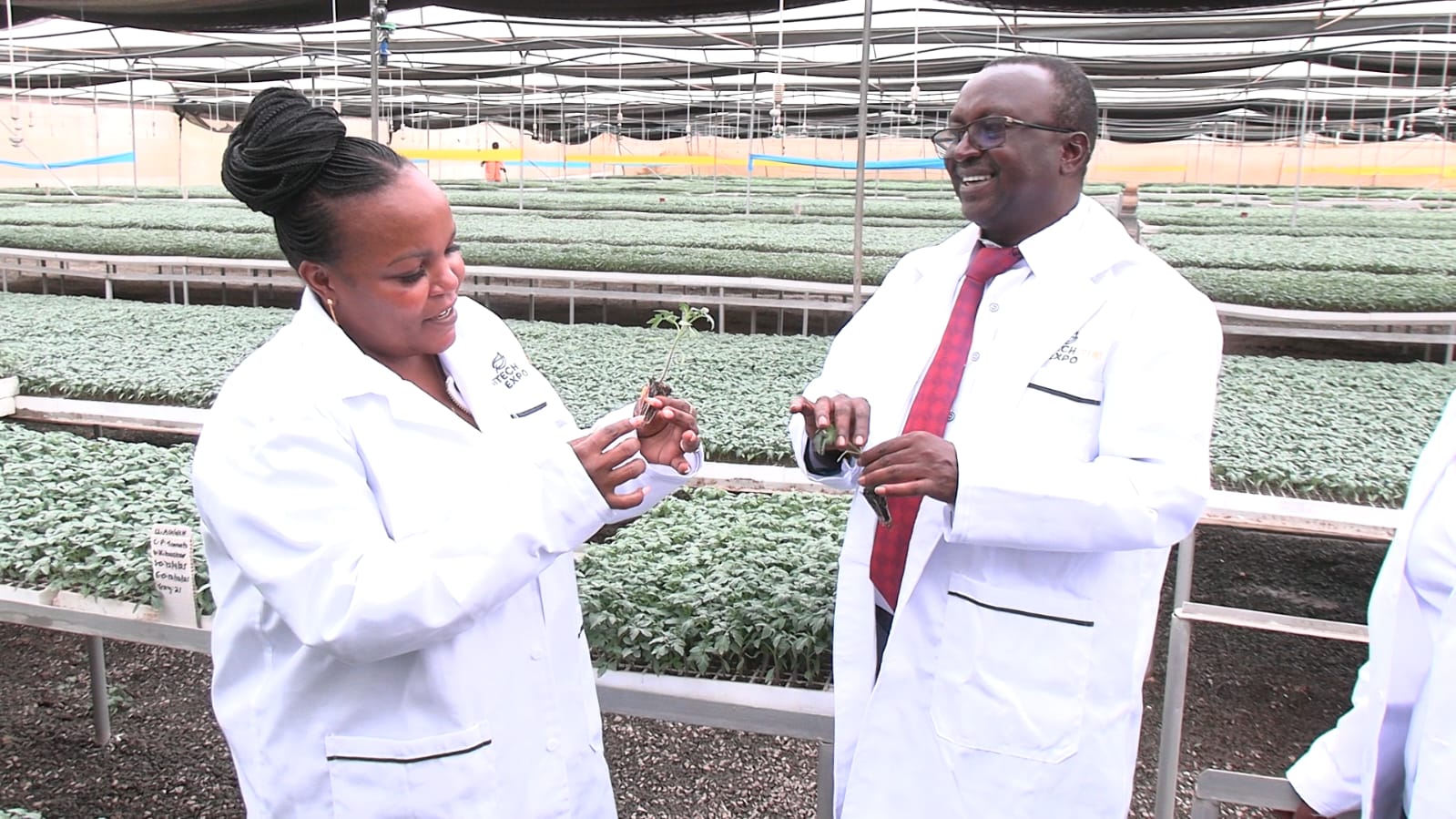
 Kenya Seeds Company chairperson Wangui Ngirici with Agri-tech Grand Expo chairperson Peter Karanja in a demo farm during an exhibition at Mutithi, Kirinyaga county/ALICE WAITHERA
Players in the agricultural sector
have raised the alarm over the rise of uncertified
seeds and counterfeit agro-chemicals, warning that the trend poses a
major threat to Kenya’s food security.
Speaking during the Agri-Tech Grand Expo in Mutithi,
Kirinyaga county, the event’s CEO, Peter
Karanja, urged the government to intensify crackdowns on substandard farm
inputs that continue to expose smallholder farmers to poor harvests and health
risks.
“The proliferation of fake seeds and
agro-chemicals has undermined food production despite heavy investments by both
national and county governments,” he said.
He noted that many small-scale
farmers unknowingly plant fake seeds or use uncertified chemicals, further
compounding losses caused by erratic weather patterns.
Karanja also raised concern over
rice farmers in Mwea Irrigation Scheme
using unregulated chemicals imported from neighbouring countries to fight the golden apple snail, a destructive pest
that has ravaged over 90 per cent
of the 30,000-acre scheme.
“Desperation is driving farmers to
use harmful imports that have been linked to respiratory and chronic health
issues,” he warned, urging stricter vetting of agro-chemicals allowed into the
country.
Last month, the Pests Control Products Board seized illegal agro-chemicals worth Sh3
million in Garissa, amid growing concerns over cross-border smuggling of
banned products.
Kenya Seed
Company chairperson Wangui Ngirici
said the government has stepped up certified seed production to curb reliance
on counterfeit products.
“We have increased annual production
from 18 million to 45 million kilograms, with a target of 70 million by 2027,”
she said, assuring farmers of sufficient supply.
Ukraine
Embassy counsellor for economic affairs Olena Ivanchuk, who attended the expo, said Ukraine has partnered with
Kenya to produce wheat and sunflower
seeds. Kenyan farmers earned $11 million (Sh1.4 billion) from exports of tea, coffee, and spices to Ukraine.