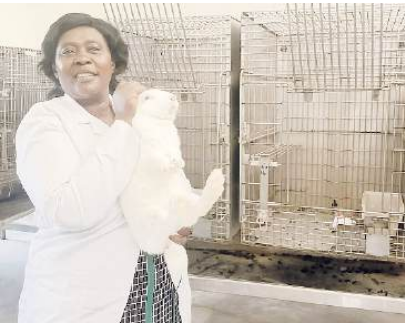
While rabbits are kept mainly as a hobby for young boys in Central Kenya – teaching them discipline and contributing to household diets – a group of five graduates in Mugamba Chiura, Kirinyaga county, have discovered a lucrative niche: breeding rabbits for their urine.
Stella Maris Njage said the five met while undertaking studies in the University of Pretoria, South Africa.
“I was undertaking a course in Computer Science under the Mandela Rhodes scholarship before I studied a Master’s degree in project management sponsored by the MasterCard Foundation,” Njage said.
Upon returning to Kenya earlier than her counterparts, Njage was driven by her sponsors' challenge to empower local communities.
Unemployed, she and her group began exploring income-generating activities that would be high-yielding yet not labour-intensive.
After thorough research, they settled on rabbit farming in November.
With Sh10,000, they constructed hatches and launched their project with 30 rabbits on her parents' farm. The group also received additional funding from the AL for Agribusiness Fund, a network supporting young leaders in African agriculture.
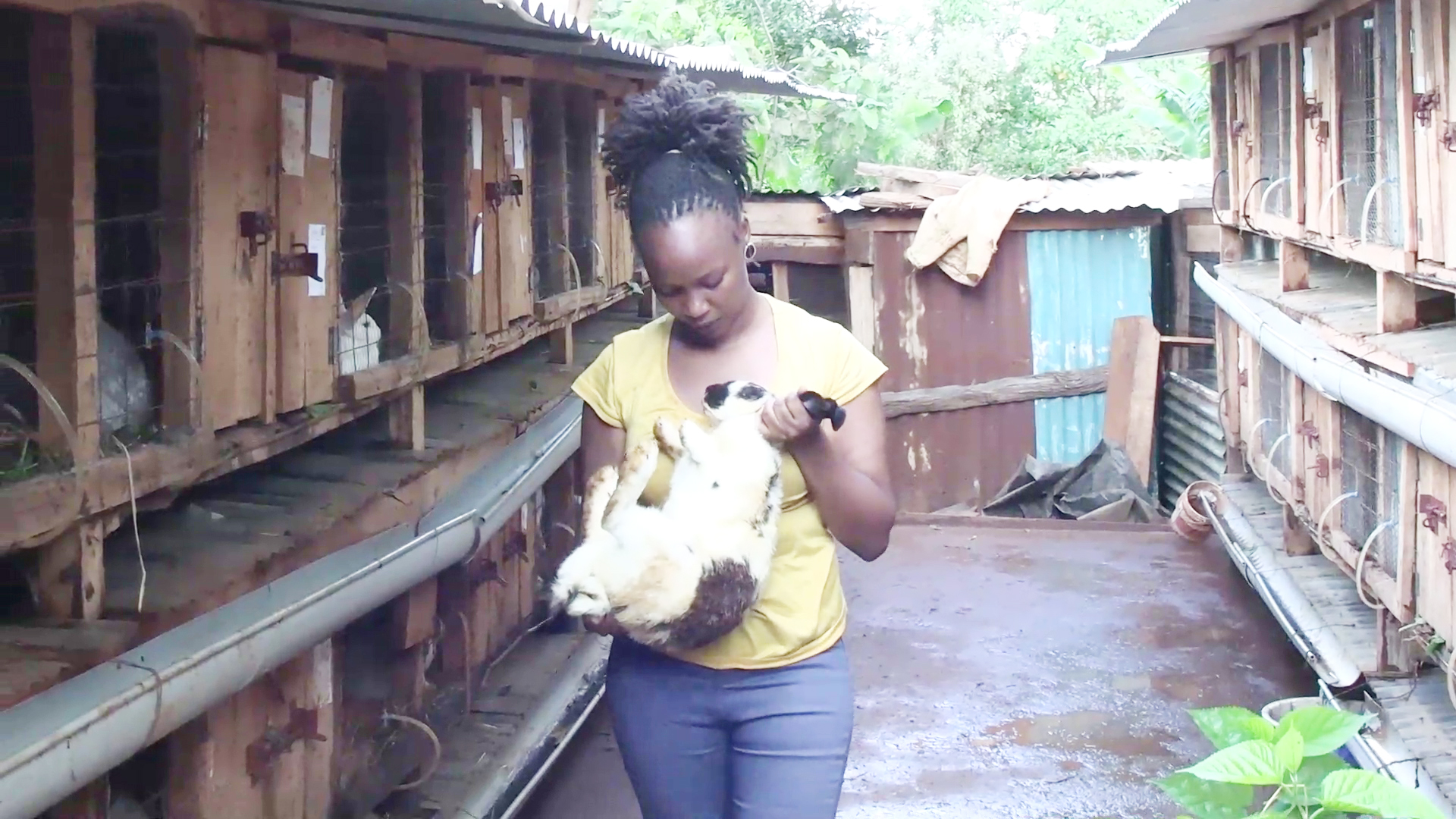
This allowed them to invest in improved housing, featuring drip systems that provide water to the rabbits on demand.
Njage manages the farm, while David Ouma, an agricultural economist, ensures the project's sustainability.
Josiah Muriuki, a food scientist, leads innovation, optimising the venture with appropriate equipment.
Monicah Marika, a food researcher, serves as the team's advisor and Jesse Mwirigi, a technical consultant expert, oversees technical systems.
Six months later, their rabbit population has soared to 300, making the venture profitable even as most team members continue their studies abroad.
Njage highlighted their adoption of a zero-waste model, ensuring that every aspect of their project is monetised to maximise earnings.
"For the meat, the market is there, but you have to go out and look for it," she said.
"Currently, we sell the meat to individual consumers in Embu county at Sh800 per kilogramme."
Rabbit heads are also sold to dog breeders.
Classified as a white meat, rabbit meat is rich in vitamins B6 and B12, a good source of protein and low in fat and cholesterol.
Many people know little about rabbit meat but they are willing to learn.
"Every once in a while, we organise free sampling for rabbit meat as one of our strategies to introduce people to it and many love it, especially due to its deliciousness and health benefits," she said.
Rabbits reach market weight within three to five months, offering a quick income for farmers.
They also require minimal space and are not labour-intensive, making them an ideal income-generating activity for many, including those in urban areas.
Njage uses readily available local feeds, such as amaranth, sweet potato vines and slightly stale kale.
The main challenge, she noted, is diseases that can be transferred from poultry.
"It's very important that farmers starting on rabbit farming establish the pens away from the wind, which can affect rabbits," Njage advised.
"If you don't have sufficient space, ensure you put the rabbit pen before the poultry one so that the wind doesn't blow diseases to the rabbits."
But the benefits go beyond their meat.
“This has been a learning journey. When we started, we were just keeping the rabbits for meat but we eventually learnt about the benefits of their urine,” Njage said.
The county government's promotion of organic farming to stem diseases has created a ready market for locally available bio-inputs.
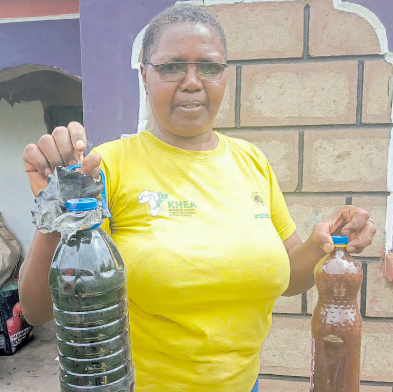
Highly corrosive, the urine has a tangy smell that is ideal for repelling pests in organic farms and controlling some diseases.
The urine also works well as organic fertiliser as it is rich in nitrogen, phosphorus and potassium that make it a good source of plant food.
Njage described their innovative hatch design, which allows urine to seep through to an iron sheet beneath, directing it into gutter-like vessels that channel it to a basin.
From there, the urine is packaged in jerricans or bottles and sold to farmers at Sh100 per litre, with three to five litres collected daily.
The tech-savvy group is now exploring ways to add value to the urine, aiming to reach more farmers and increase their revenue.
They also have plans to develop an app for digital marketing of their products.
The project currently partners with 30 local farmers also engaged in rabbit farming.
"We buy adult rabbits from farmers who are already engaging in rabbit farming, creating a market for them, while for those who are starting, we provide them with bunnies so they can start earning an income," Njage stated.
In the future, the group plans to establish and sell hatches to farmers at a subsidised price.
They also intend to integrate all partner farms with artificial intelligence sensors to easily identify ailing rabbits for timely intervention.
"Once we do that, we will be able to spot rabbits that are unwell and notify the farmer in good time to avoid losses," she added.
The young entrepreneurs plan to collaborate with creatives to develop a market for rabbit fur, which is currently discarded but could be used to make clothes and bags.
"When we bring in the creatives, we will be able to work on varied recipes to reach more consumers and expand our farmers’ network," Njage said.