

@Alicewangechi
With concerns being raised about the level of illnes in Central Kenya, a group of herbalists from Murang’a are set to contribute to the research for alternative medicine.
The counties are Murang’a, Kilifi, Makueni, Garissa, Tharaka Nithi, Marsabit, Kericho, Narok, Turkana, Kakamega, Vihiga, Siaya and Kisii.
The programme is being piloted in partnership with county governments, indigenous people and various government agencies.
It is part of the government’s efforts to operationalise the Protection of Traditional Knowledge and Cultural Expressions Act 2016 that requires the state to establish mechanisms for a digital repository for traditional knowledge and cultural expressions.
With the government stepping up support for traditional knowledge-related activities to bolster its contribution to food security and enhanced nutrition, the programme is expected to lead to enhanced protection, promotion and valorisation of traditional knowledge and associated assets.
Under the programme, Murang’a Traditional Medical Practitioners Association that has about 35 members has forwarded seven samples for research and fine-tuning.
The samples submitted in July this year to the Primates Research Institute were targeted at respiratory disorders such as Covid-19 and colds among others.
Should the samples that were produced collectively by the group be approved, the government will commercialise them, with the group getting 40 per cent of the proceeds while the state, county government and local communities will get 20 per cent each.
Murang’a county’s director for culture Catherine Mwangi said the programme started in 2020 when the Covid-19 pandemic started.
“This programme will help create a county register and document the rich cultural knowledge we have for safeguarding,” she said.
She said the pilot programme will soon be launched in Murang’a and the county is already recruiting those who will be involved in data collection, with the state expected to deploy two researchers.
Anything related to culture, including songs, will be documented for preservation.
Association’s chairperson Joseph Kariuki said residents have been treating illnesses for decades using herbs.
He said poor diet and neglect of herbs are to blame for the high prevalence of sicknesses in the country.
Most Kenyans, Kariuki said, prefer processed foods without considering the fact that people used to be healthy when they consumed traditional foods.
Since the group started meeting in 2000, it has been able to produce herbs for joint disorders and the majority of common illnesses facing Kenyans.
Kariuki said arrowroot leaves, for example, have the capacity to diminish fibroids.
“Most of the diseases can be managed with foods and herbs. We have been treating people for a long time and they have come to appreciate our value. We are glad the internet is also helping many to discover the value of traditional foods and herbs,” he said.
However, Kariuki said, some people see them as witches and warlocks but with the help of the programme, he hopes they will create awareness to clear the air.
He said Kenyans should embrace organic farming as the use of conventional fertilisers degrades the quality of food.
“Most are not aware that if the stalk of maize grown using fertilisers pricked you, the wound takes a long time to heal. Use organic manure and pest control techniques for your own good. Western practices came to erode our own helpful practices,” Kariuki said.
He said the encroachment of river banks and wetlands has displaced medicinal plants that grow near water.
Now, finding some of the medicinal trees has become difficult and herbalists have to travel far or consult their counterparts from other regions.
The herbalists collect indigenous trees that they plant in their farms and share with each other for preservation and meet once monthly to exchange ideas.
In Murang’a, there are two protected areas with indigenous trees in Kambirwa and Gakoigo that help support their activities.
Herbalists registered under the culture department are licensed to conduct sustained harvesting of trees.
But Kariuki said the group plans to establish a botanical garden in which they will plant all medicinal plants and establish a herbal clinic with the help of the government.
Andrew Muchwe, a herbalist, said the practice saved him from a stroke that hit him in May this year.
Muchwe narrated how he woke up one morning to find part of his right side numb. The numbness spread to his shoulders, waist and eventually the feet.
“I immediately recognised that I was getting a stroke and rushed to Murang’a Level 5 Hospital, where a doctor confirmed my suspicions and gave me medications and I went back home,” he said.
After finishing the medications, Muchwe, who has a collection of more than 1,000 traditional trees on his farm in Kambirwa, Kiharu constituency, went back to his herbs and got stronger within no time.
“I believe the reason the stroke was not severe is because I have been using herbs for a long time. Kenyans should make a habit of making food with herbs. That is why some communities that take a lot of herbs have minimal sicknesses,” he said.
“They reduce allergies and make food more digestible while supporting your health. Even cancer is not a killer disease as they call it, we have been treating it for a long time”.
He said many people seek their help after getting frustrated with conventional treatment and feel like they have no other choice.
Charles Gachuiri, another herbalist, said his interest in herbs was sparked by his father, who worked in Uganda and would bring home herbs that would be prepared and consumed by the family.
The herbs saw to it that family members rarely got sick, he said, and his father taught him how to prepare them.
Once grown, Gachuiri got a job in Narok in an area where they shared water with wild animals. Concerned, he turned to herbs to treat the water and avoid waterborne diseases.
When a friend of his acquired a sexually transmitted infection, Gachuiri made a concoction that diminished his symptoms.
He said after that he ventured into herbal medicine before he became a pastor.
“Now I practice traditional medicine as a passion and I have been able to positively impact the lives of many. The future of medicine is traditional herbs,” he said.
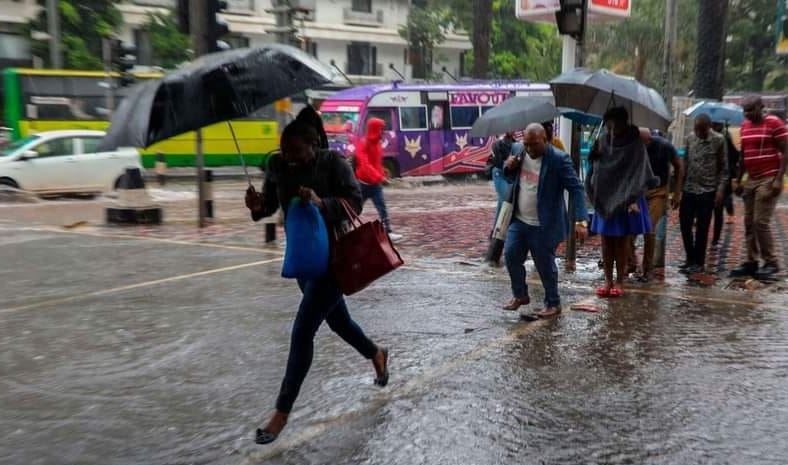
Hellen Njeri, the only woman who attended the meeting, said there were several women in the group who failed to turn up as the rains had fallen and they had to tend to their farms.
Njeri, 85, is a traditional nutritionist. She advises patients on the best foods to consume to fight diseases and helps to add value to herbs for a stronger impact.
Njeri said he has helped patients control illnesses such as epilepsy and other chronic conditions.
The group is mentoring ‘young champions’ with the aim of transferring the knowledge and continuity.
Edited by A.N