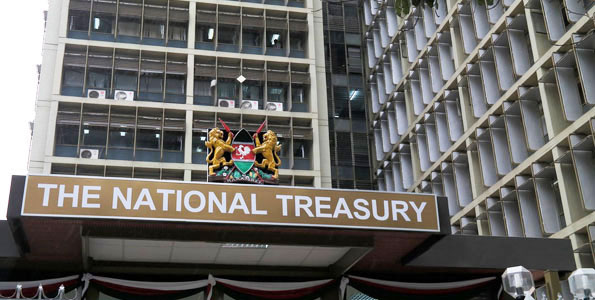
According to the National Treasury, interests on the 18-year bond to sell starting next Monday to June 7 will be market-determined, with the paper’s value date set on June 13.
The new bond issue is expected to attract high investor interest based on the tax-free status of infrastructure bonds.
An investor is expected to put in a minimum of Sh100,000, but with subsequent amounts in Sh50,000.
The National Treasury and its primary bond issuer- the Central Bank of Kenya (CBK) are expected to navigate a tough environment in the bonds market, as investors demand a premium return on government securities.
Investors in government securities have been pushing for higher yields while avoiding long-dated issues to avoid duration risks as interest rates on government paper soar over recent weeks.
This month, the National Treasury raised Sh49 billion from bonds but was off target in taping Sh60 billion due to investor snubs and rejection of expensive bids.
The May issue required a tap-sale (sale of debt instruments from past issues) which tapped Sh17 billion after the primary offer raised Sh31.7 billion.
Financial analyst Ken Muchera believes that there is growing appetite for government securities as the country approaches the general elections.
“Investor are looking for a safe haven. The stock market is volatile, real estate is still correcting and the confidence in private equities is still low. Government papers are sure bet though regime change is a worry,” Muchera told the Star on phone.
Last week, bonds turnover in the domestic secondary market rose by 5.9 per cent with Treasury Bills oversubscribed.
Interest rates on bonds and bills have risen since March, moving from a low of 11.26 per cent to a high of 13.98 per cent for bonds and 9.7 per cent to 9.9 per cent for bills.
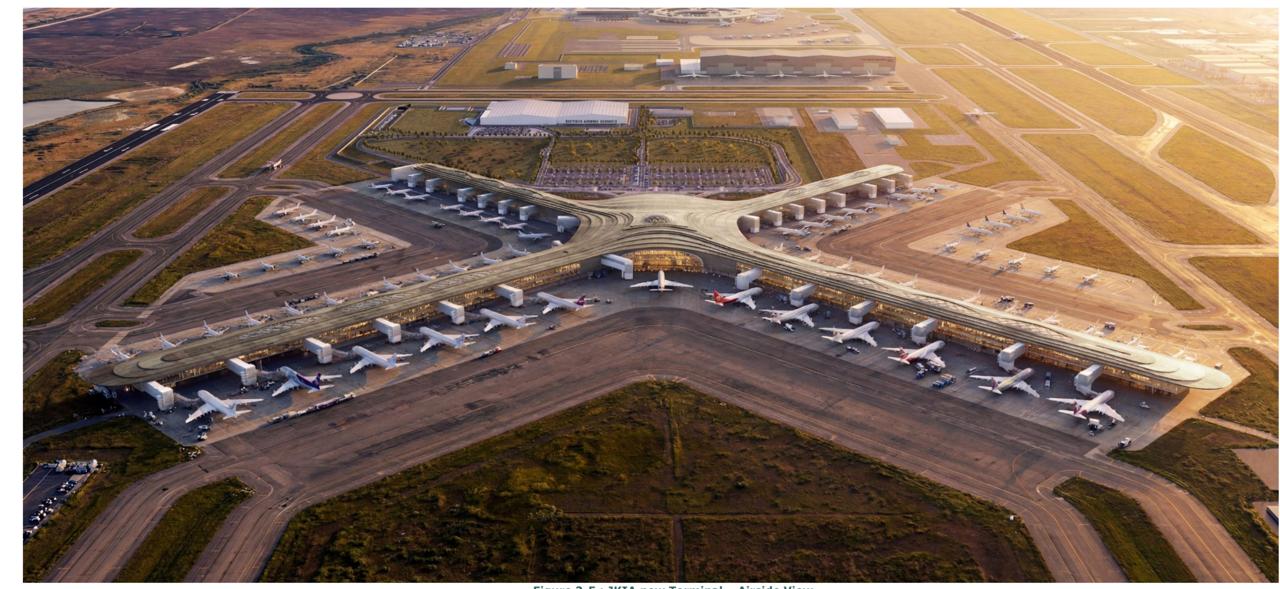
While investors are jostling for the new bond, analysts are concerned about the accumulation of local debt in recent months to fund infrastructure projects for the current financial year ending June 30.
The government has issued an infrastructure-related bond almost every month since January, putting the total to almost Sh300 billion now.
While local bonds are not exposed to currency fluctuations, Muchera says they are almost twice expensive compared to international commercial papers. Even so, the question is on the kind of infrastructure initiatives being implemented.
“While the current regime has really delivered especially on the road infrastructure in recent times, the time of floating these bonds is a bit suspicious. We just have a month to the end of the year,'' Muchera said.
His sentiments are shared by Jerry Mogaka who raised concern that some of the cash raised may find itself in the recurrent budget or at worst fund ongoing political campaigns.
"Historically, we have seen so many local bonds issued during the election period. The accountability of such funds has always been in question. This was the trend in 2017, pushing up the domestic debt,'' Mogaka said.
He adds that the accumulation of domestic debt by the government has the potential to crowd out private sector players, insisting that it should be done in moderation.
Kenya's domestic debt is at par with the external one, with the latest CBK Bulletin putting it at Sh4.19 trillion compared to the external one currently at Sh4.2 trillion.
The exchequer has persistently defended local borrowings to fund development, with the Cabinet Secretary of National Treasury Ukur Yatani saying during the 2022/23 budget reading that the government will continue cutting on expensive external loans.
''We are going to adopt a hybrid of Public-Private Partnerships (PPPs) and local funding to build infrastructures and ensure access to faster service delivery and a conducive business environment,'' Yatani said.