

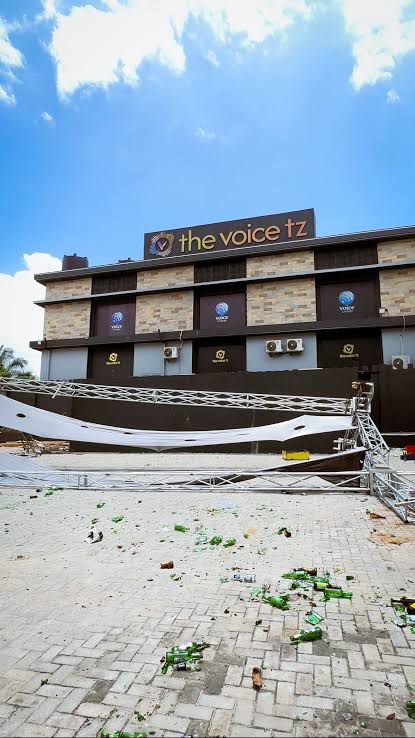
 The Voice Tanzania, one of the businesses that were vandalised during recent demos in Dar es Salaam/ HANDOUT
For one month now, Victor Otieno, a textile and shoes dealer in Nairobi has not been able to travel to Tanzania after the violent unrest following the contentious October 29 elections disrupted movement.
He has traditionally sourced goods for his stall from Kariakoo market, the heartbeat of Dar es Salaam's economy offering traders and consumers a wide range of products, from electronics, textiles, spices to household goods.
“I am grounded and the stock is running out, I am contemplating going to Kampala to see if I can get some things,” he told the Star.
Kenyan traders who import tomatoes from Tanzania, capitalising on lower prices which can be attributed to Tanzania's cheaper farm inputs and absence of value-added tax (VAT) on seeds, making their production costs lower, were also hit hard by the situation in Tanzania.
Other food products like spices, fruits and agricultural products such as legumes are also imported to meet consumer demand.
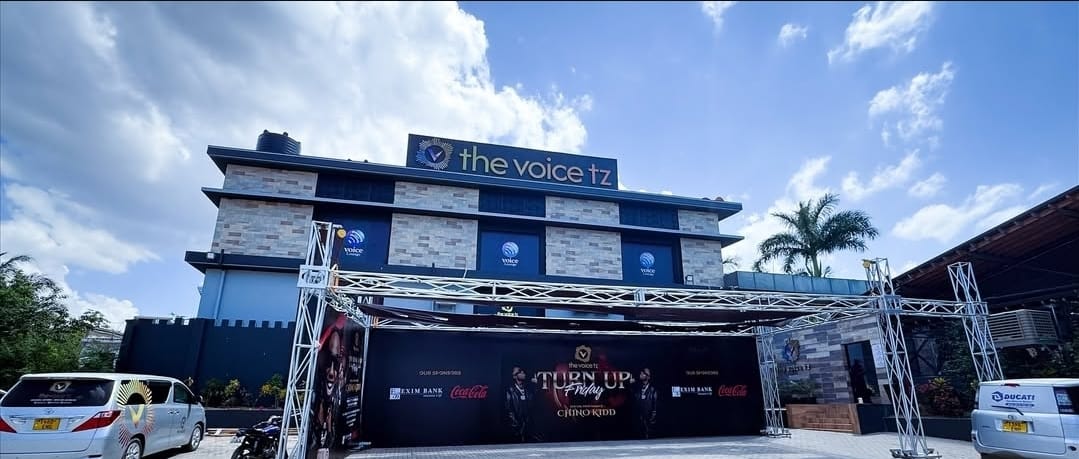 The Voice Tanzania, one of the businesses that were vandalised during recent demos in Dar es Salaam/ HANDOUT
The protests slowed down economic activities with trade taking a major hit. Cargo movement at the key Kenya-Tanzania borders of Namanga, Lunga Lunga, Taveta-Holili and Isebania was disrupted, with the internet shutdown also affecting cargo clearance.
At a recent press conference, Prime Minister Mwigulu Nchemba said at least 1,642 vehicles, 672 fuel stations and 2,268 motorcycles were burnt during the unrest, describing the incidents as “coordinated acts of economic sabotage”.
Some of the affected fuel stations belonged to regional oil marketer Lake Oil Group which operates in Tanzania, Burundi, Ethiopia, Zambia and Kenya.
The energy conglomerate group said in early November that 38 of its fuel stations were vandalised and destroyed during the violence, affecting 300 of its employees.
The government called for calm with the PM telling Tanzanians “not to burn their country down” since what happening was not a political fight, but an economic one from outside sources.
Nearly a month after the unrest, businesses are still grappling with the aftermath—from days of disruption and property damage to a sharp drop in consumer confidence across several urban centres.
Most affected are small-businesses across Dar es Salaam, Mwanza, Arusha and Dodoma, where shop owners were forced to close early, with some remaining closed altogether during the unrest, which has since subsidized as normalcy returns.
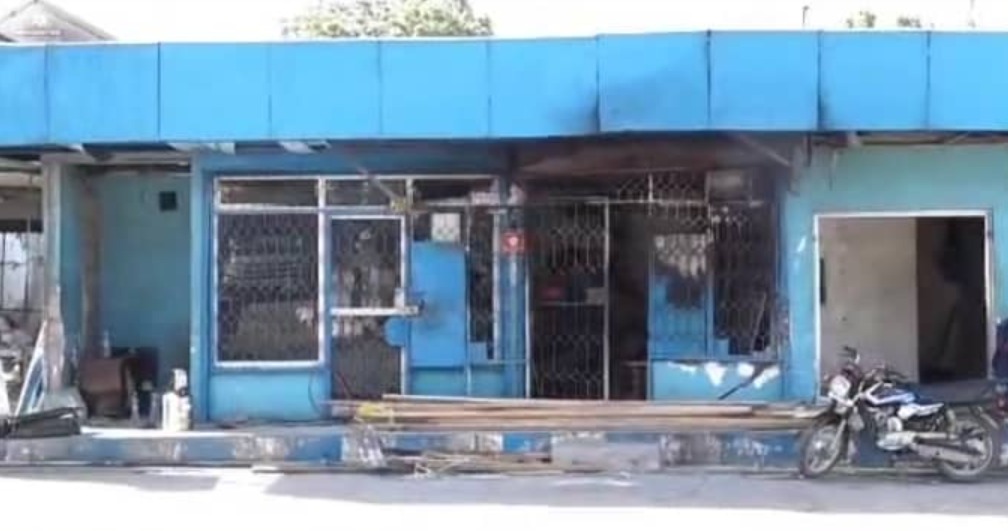
One of the few businesses to address the situation openly has been The Voice Tanzania, a popular entertainment venue in Dar es Salaam.
In a public Instagram statement, entity said it had suffered fire damage and loss of property, and was currently rebuilding.
“We are rebuilding and coming back bigger, better and stronger,” management wrote, alongside photographs showing burnt interiors, shattered glass and collapsed structures.
The images provide a rare on-the-record glimpse of the level of damage sustained by small enterprises during the unrest.
Several other venues, shops and hospitality outlets were either burnt down or vandalised but many have remained silent.
This, even as the planned December 9 demos send more fears with many saying they cannot stand another disruption in business with December being a peak period.
“November and December are among the most profitable for small retailers but the unrest has delayed stock movements, slowed customer turnout and temporarily muted online activity in sectors that rely on Instagram and TikTok engagement. We cannot stand the December 9, demos, we need to stop these disruptions on the economy,” a local business community told the media.
The post-election period has exposed how closely Tanzania’s economy is tied to public sentiment.
Political tension did not only raise questions about security and governance; it also reshaped everyday commerce across the country.
As businesses continue repairing damage and negotiating uncertainty, their recovery will serve as one of the clearest indicators of whether stability both economic and social is beginning to return.
Speaking at Tanzania Startup Week in Dar es Salaam, Prime Minister Nchemba said the government is working to address challenges that investors encounter when establishing businesses in the country.
"Investors and innovators thrive where rules are clear and consistent. By ensuring policy stability, transparency and reducing compliance uncertainties, we can attract more investors and strengthen confidence in Tanzania as an innovation hub,” he said.
Tanzania has gone ahead to cancel public celebrations of its Independence Day slated for December 9.
According to PM Nchemba, President Samia Suluhu instead directed the funds meant for the celebrations be re-channelled towards correcting the economic slump which Tanzania has experienced over the past month.
“The responsible sectors, including the implementing agencies and the coordinator, must ensure that all the funds are properly allocated. The President has reiterated that all damaged infrastructure must be repaired,” Nchemba said.
While Foreign Affairs Minister Mahmoud Kombo said Tanzania’s peace and stability will “always remain the foremost priority of the government,” the business community is hoping government will stabilise the country and ensure economic recovery.
Kenya on the other hand is hopeful trade between the two countries will go back to normal.
Last year, Tanzania was the second biggest export destination after Uganda with Sh67.2 billion worth of exports, with the latter accounting or the biggest value at Sh125.9 billion.
This, as the value of Kenya’s exports to the East African Community (EAC) reached Sh321.4 billion last year, up from Sh305.9 billion in 2023, the Economic Survey 2025 indicates.
Value of imports from Tanzania grew to Sh58.7 billion up from Sh43.7 billion.