 Kenya buys more cheaper power from Ethiopia
Kenya has expanded its electricity trading relationship with Ethiopia after Kenya Power signed a new electricity supply agreement with Ethiopian Electric Utility (EEU).
This reinforces a cross-border energy partnership that is increasingly becoming central to the country's strategy of securing cheaper and more reliable electricity.
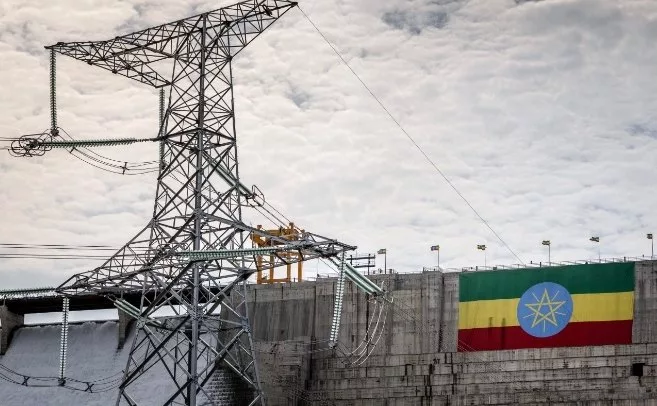
The agreement, signed in Addis Ababa on Friday, provides a fresh commercial framework for electricity exports from Ethiopia to Kenya through the 500-kilovolt Ethiopia-Kenya High Voltage Direct Current (HVDC) interconnector.
This is one of Africa's largest regional power transmission projects.
Under the new agreement, Kenya Power will purchase electricity at 24.07 Ethiopian birr (about $0.15 or roughly (Sh19.50) per kilowatt-hour, alongside a demand charge.
While Kenya Power has not publicly disclosed the total value of the contract or the volumes covered under the renewed arrangement, the deal is expected to sustain and potentially expand electricity trade between the two neighbours.
The latest agreement builds on an existing long-term power purchase arrangement that has seen Kenya import 200 megawatts (MW) of mainly renewable hydropower from Ethiopia since November 2022.
The original 25-year agreement provides for imports to rise to 400 MW after the initial three-year period, making Ethiopia one of Kenya's largest external electricity suppliers.
The electricity is transmitted through the 1,045-kilometre Ethiopia-Kenya HVDC interconnector, stretching from Wolayta-Sodo in Ethiopia to Suswa in Kenya.
The $1.26 billion (Sh162.7 billion) transmission line has a capacity of 2,000 MW and was financed largely by the World Bank and the African Development Bank to facilitate regional electricity trade under the Eastern Africa Power Pool.
The renewed agreement underscores Kenya's growing reliance on regional electricity markets to complement domestic generation, particularly during periods of high demand or reduced hydroelectric output.
Kenya's electricity mix is dominated by geothermal energy, supplemented by hydro, wind and solar.
However, imported Ethiopian hydropower offers a relatively low-cost renewable alternative that helps reduce dependence on expensive thermal power plants whenever local supply tightens.
The financial benefits are already becoming evident.
According to the World Bank, Kenya saved approximately $10 million (about Sh1.3 billion) during the first year of importing Ethiopian electricity, thanks to lower generation costs and reduced reliance on costly thermal generation.
The savings are expected to increase as cross-border electricity trade expands.
Regional power trade has long been viewed as a cornerstone of East Africa's energy integration agenda.
The Eastern Africa Power pool seeks to enable member states to share surplus electricity, lower generation costs and improve grid reliability by linking national transmission systems.
Kenya and Ethiopia are among the earliest countries to operationalise large-scale electricity trading within the bloc.
The partnership has been years in the making.
Kenya and Ethiopia first signed a landmark power purchase agreement in 2012, under which Kenya agreed to import up to 400 MW of electricity once the transmission infrastructure was completed.
Construction delays pushed back implementation until the HVDC interconnector became operational in late 2022, paving the way for commercial electricity exports.
The latest agreement comes at a time when electricity demand continues to rise, driven by industrial expansion, increased household connections and the government's push for electrification.
By tapping into Ethiopia's abundant hydropower resources, Kenya hopes to improve supply security while keeping power costs competitive for households and businesses.