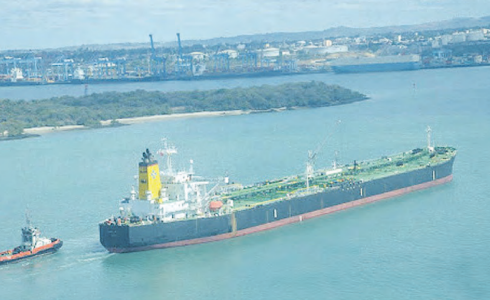
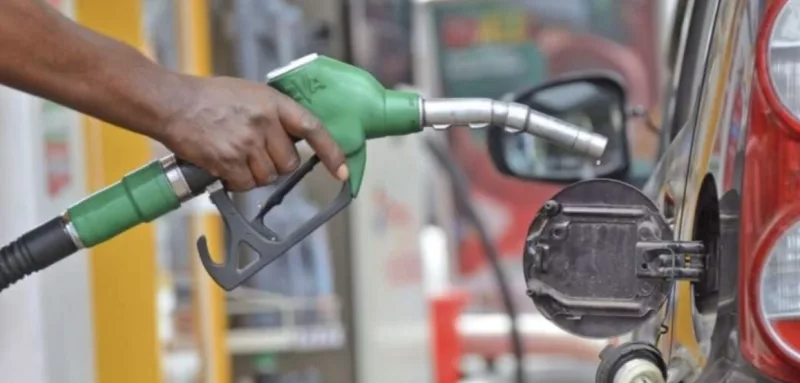
MOTORISTS and industries in the
country are set to benefit from lower
fuel pump prices after the government successfully re-negotiated the
refined petroleum products import
deal with the Gulf.
This is on the back of a much
stable shilling which has rallied to a
six-month high against the US dollar to stabilise at an average Sh129
in the past three months, making
imports cheaper compatred to same
period last year.
Petroleum PS Mohamed Liban
yesterday told the Star the new rates
will be effected next week even as
the government mulls how to pass
benefits of the low global prices to
consumers as taxes remain the biggest headache.
Under the re-adjusted prices, the
three Gulf oil producing companies
in the contract have slashed freight
and premium margins by between
$6(Sh778) and $14.75 (Sh1,913.15)
per tonne on three products–diesel,
super petrol and jet A1, with the
exception of kerosene.
Oil Marketing Companies importing products for the Kenyan
market will now lift a tonne of diesel from Abu Dhabi National Oil
Company at $78 (Sh10,117) down
from $88 (Sh11,414), a huge fall
from the initial master framework
agreement of $118 (Sh15,305) per
metric tonne.
Jet A1 (aviation fuel) from the
same company will now cost $97
(Sh12,581) per metric tonne, down
from $111.75 (Sh14,494).
Emirates National Oil Company
on the other hand has agreed to lower the margins for super petrol to $84 (Sh10,895) from $90
(Sh11,673) per tonne while Aramco
Trading had adjusted downwards it
prices for diesel and petrol from $88
(Sh11,414) to $78 (Sh10,117 ) and
$90 (Sh11,673) to $84 (Sh 10,895)
per tonne, respectively.
“We are doing some analysis to
see how best we can pass benefits,
including the low global prices to
the local consumers. We plan to effect the new lower tariffs next week,”
Liban said.
Kenya will continue importing
products on a 180-day credit period
with the government also having renegotiated the deal changing it from
a fixed period to defined volumes.
The country failed to meet the
contract terms on volumes after
Uganda’s exit from the deal last year,
when Uganda National Oil Company (UNOC) assumed the role of the
sole importer of petroleum products
for the Ugandan market.
This sent Kenya back to the
drawing board forcing it to extend
the deal, initially meant to last for
nine months from March 2023, to
December 2024.Cabinet further extended the deal to December 2027
for diesel imports, February 2028
for JetA1 and March same year for
petroleum products.
The government has been negotiating for lower rates in line with
falling global prices.
“The international oil companies
agreed to GOK’s request for review
of the freight and premium considering the long-term relationship,”
official documents indicate.
G-2-G was meant to help stabilise
the shilling which was on a free fall,
hitting Sh168 to the dollar last year.
It helped end the monthly demand
of over $500 million that oil dealers
needed to pay for fuel on the spot
markets, under the former Open
Tender System.
The fuel is imported on six-month
credit by local selected Oil Marketing Companies backed by commercial letters of credit (LOCs) issued
by domestic banks and confirmed
by international banks.
The Petroleum Institute of East
Africa (PIEA) supported the deal,
saying it has eased demand for the
dollar, as dealers are paying for supplies in Kenyan shilling.
Petroleum products imports account for 30 per cent of Kenya’s
total dollar requirements.
After Kenya and Uganda, Malawi, Zambia and Rwanda have also
considered G-2-G deals for their
imports.