

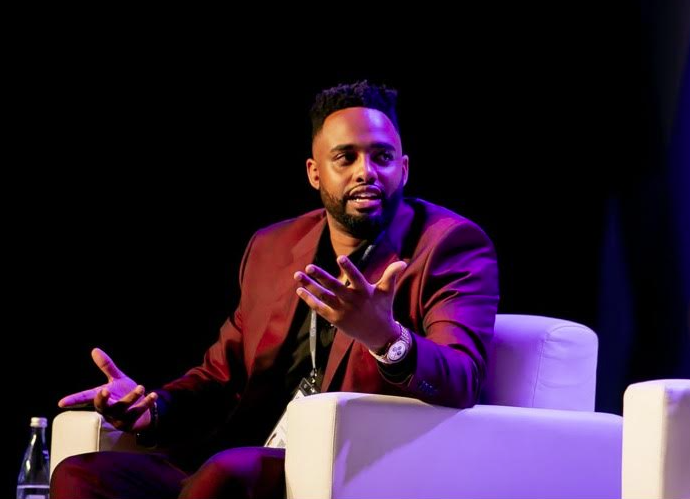
From global boardrooms to Nairobi's frontlines, Joel Rao is leading Dentsu Kenya, a global creative digital network, alongside co-CEO Samantha Kipury. Rao brought his global expertise back to Kenya after leading across four continents. He speaks about his journey, local creative industry and the future.
Who is Joel Rao?
I am a student of life and a builder of ecosystems. My career has never been about moving up ladders, but expanding tables where creativity, technology, and humanity all get a seat. If there’s one thread in my story, it’s this: great organisations don’t start with ambition, they start with belonging.
From my early days in grassroots community initiatives, organizing youth programmes that empowered local voices in underserved areas, to navigating high- stakes discussions in global boardrooms with multinational corporations, I have always believed that creativity is not an industry but an infrastructure for national growth.
It is the foundation that allows economies to flourish by harnessing ideas that solve real-world problems. My work is anchored in three things: unlocking human potential through mentorship and skill-building programmes that turn raw talent into leadership; scaling ideas that matter, like sustainable tech solutions that address Africa’s unique challenges; and ensuring Africa does not borrow the future, but builds it by investing in homegrown innovations rather than importing models that don’t fit our context.
This mindset has guided me through diverse roles, from international youth advocacy to leading one of Kenya’s premier creative agencies, always to create inclusive systems that foster long-term prosperity.
Tell us about Dentsu Kenya and some of your biggest clients?
Dentsu is an integrated growth and transformation partner to the world’s leading organisations, nurturing and developing innovations that drive outcomes. We push the boundaries of business transformation and sustainable growth for brands, people, and society. At Dentsu Kenya, we are where imagination meets evidence. We operate across creative transformation, media, data, customer experience (CX) and commerce, but our real product is cultural momentum for brands.
This means we don’t just create campaigns; we engineer shifts in how people perceive and interact with the world around them, blending artistic flair with data-driven strategies to make lasting impacts.We are proud to earn the trust of icons and innovators like Beiersdorf, known for their skincare giants like Nivea; Safaricom, the telecom leader revolutionising digital access through M-Pesa and beyond; KCB Group, Jubilee Insurance, NCBA, EABL, Standard Chartered Bank and Spiro, pioneering e-mobility solutions to tackle urban transport challenges.
These are businesses shaping the rhythm of Kenya. Our work is not to echo culture, but to engineer is to make brands impossible to ignore because they are impossible to separate from the lives people live every day.
From AIESEC in Mexico to global leadership—how has the journey been?
My twenties were spent asking: How do nations shape people? My thirties have been spent asking: How do people shape nations? Starting with AIESEC in Mexico, I immersed myself in cross-cultural exchanges, leading initiatives that connected young leaders from around the world. There, I learned that youth are not leaders of tomorrow; they are decision-makers waiting for infrastructure today.
We built platforms for collaboration, developed policy frameworks to advocate for youth inclusion in governance and even patented innovations like digital tools for volunteer management that scaled globally, empowering thousands to take action in their communities.This foundation propelled me across four continents from Latin America to Europe, Asia, and now deeply rooted in Africa, where one truth followed me: tools change, but trust is timeless.
You can launch marketing campaigns anywhere, leveraging the latest digital platforms or media buys. But you can only build movements where you genuinely understand the heartbeat of a people, their aspirations, struggles and cultural nuances. My journey has been one of constant adaptation: from organising international conferences that bridged divides to advising on corporate strategies that integrate social impact.
Today, as I lead Dentsu Kenya, this global perspective informs how we create campaigns that are not just effective but transformative, drawing from diverse experiences to craft solutions uniquely tailored to African contexts.
What lessons has Africa taught you that global leadership playbooks miss?
Most global playbooks prepare leaders for predictable markets, with linear strategies and stable environments. Africa prepares you for possible futures, where volatility is the norm and adaptability is key. Here, disruption is not a strategy; it’s a Tuesday. Economic shifts, policy changes, or tech leaps happen swiftly, demanding leaders who can pivot without losing sight of the big picture.
Africa teaches you to innovate with resourcefulness over resources, turning limited budgets into clever, high-impact solutions like mobile-first campaigns; intuition over assumptions, relying on on-the-ground insights rather than data silos; and community over cohorts, prioritising collective well-being over segmented targeting.
These lessons have reshaped my approach, emphasising agile leadership that values cultural intelligence and fosters innovation born from necessity, something often overlooked in Western-centric models.
What makes the shared leadership with Samantha Kipury work?
Great leadership is not about balance; it is about complementarity, where strengths interlock to create something greater than the sum of parts. Samantha Kipury and I have always worked together since 2016, and from the jump, we operated like bickering siblings, challenging each other with candid debates that sharpen our ideas.
How is Kenyan storytelling + tech redefining advertising?
Technology without narrative is noise, just algorithms churning data without meaning. Narrative without technology is theatre, captivating but ephemeral, lacking scale. Kenya is now mastering the fusion of both, where data finds the audience through precise targeting via AI and analytics, and storytelling finds the soul by weaving in local folklore, humour and aspirations that resonate deeply.
Our job is no longer to make ads people like; it is to make ideas people adopt, turning passive viewers into active participants. AI helps us target better, using machine learning to predict behaviours and optimise reach on platforms like social media. But culture helps us connect better, incorporating Sheng slang, regional dialects, or viral trends to make messages feel native.
For example, campaigns that blend AR filters with traditional Kenyan tales are redefining engagement, allowing brands to create immersive experiences that educate, entertain and inspire.
How do you balance creative magic with ROI?
Creativity is not judged by applause; it is judged by the consequences, that is the tangible outcomes it produces. At Dentsu Kenya, we measure success in three layers to ensure creative endeavours deliver real value. Key among them is Cultural impact: Did it move the conversation? For instance, sparking national dialogues on sustainability or inclusion through viral campaigns that shift public perceptions. Commercial impact: Did it move the needle? Tracking metrics like sales uplift, market share growth or customer acquisition costs to quantify financial returns. And finally, by system impact: Did it move the business model forward?
Top tech disruptor in 2025?
Not AI… AI agents. While AI has been transformative, 2025 has seen Kenya leap from assisted intelligence tools that suggest or analyze to autonomous action, where AI agents handle tasks independently. These agents will shop on behalf of users, recommend personalised options based on real-time data, negotiate deals in e-commerce and predict needs through predictive analytics.
How can brands win
Kenya’s “third shelf”—mobile-first shoppers?
Every Kenyan now walks around with a store in their pocket—apps and platforms enabling instant purchases, a bank in their hand—mobile wallets like M-Pesa facilitating seamless transactions and a billboard in their attention span—social feeds delivering targeted content. The battleground is no longer retail shelves; it is mental availability on digital doorsteps: WhatsApp carts for conversational commerce, mobile wallets integrating payments, social storefronts on platforms like Instagram, creator-led commerce where influencers drive sales and predictive demand algorithms that foresee needs. Brands win by prioritising mobile optimisation, leveraging data for hyper-personalisation and building trust through quick, frictionless experiences that fit into busy lives.
How do you rebuild trust while protecting data?
By treating privacy like dignity, which is an inherent right, not a concession. Transparency should feel like honesty, not disclaimers buried in fine print; it means clear communication about data use and empowering users with control. We must shift from data capture, aggressively collecting information, to data partnership, where people feel served, not surveilled, through opt-in features and value exchanges like personalised rewards. In our work, this approach has rebuilt trust for financial clients by implementing robust GDPR-inspired practices tailored to Kenyan regulations, ensuring data security while fostering loyal relationships.
Kenya as Africa’s creative hub—how do we scale talent globally?
By exporting our originality, not seeking approval for it and showcasing Kenyan creativity through international collaborations and platforms. The future is not who becomes more global; it is who becomes more unmistakably themselves, leveraging unique perspectives to influence worldwide trends.
How do you measure long-term brand value?
Through mental availability, how top-of-mind a brand is; cultural contribution, its role in society; pricing power, the ability to command premiums; and lifetime loyalty, repeat engagement over time, not quarterly vanity metrics like fleeting impressions.
Legacy you want to
leave?
A generation of leaders who don’t ask for permission to build, but are empowered to innovate freely. A creative economy that exports belief, not explanation, confidently sharing Kenyan stories and solutions on the global stage.