Stakeholders have suggested the removal of immunity enjoyed by the East Africa Development Bank as they call for more transparency
in the operations of the regional lender.
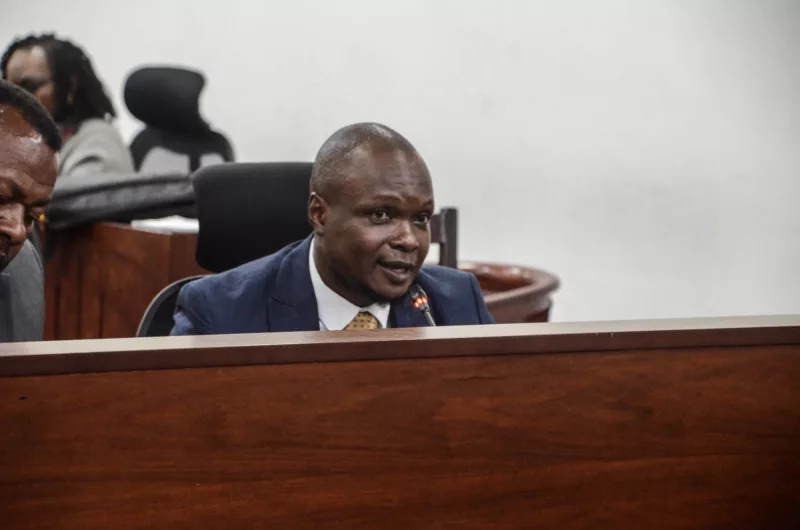
Lawyer Gregory Ndege and former lawmaker John Mutinda also suggested
to a Parliamentary committee the need to institute an inquiry
into EADB
The two appeared before the National Assembly's Finance
Committee which is receiving public views on the East African Development Bank
(Amendment) Bill, 2026.
In their submission, they supported the proposal to allow
any disbursement to the bank first approved by the National Assembly.
Currently, the Act authorises Treasury Cabinet Secretary to
commit and disburse funds from the Consolidated Fund to EADB without the
approval of the National Assembly.
They also recommended that the Auditor General be given
powers to audit EADB books of accounts which is lacking in the current set up.
“The undersigned respectfully urges the committee to amend proposed section 2 (3) to
require independent audit of all sums disbursed to EADB, in addition to the
Cabinet Secretary’s reporting obligation,” the two proposed in a joint
submission.
“The committee should consider an amendment requiring that all sums paid to EADB from the Consolidated Fund be subject to periodic independent audit, with the audit report tabled before the National Assembly, in fulfilment of Article 201 (d) and 229 of the Constitution.”
The two were presenting on behalf of Paul Lihanda whose petition before Machakos High Court rendered
several provisions of the East African Development Bank Act unconstitutional.
The stakeholders also questioned why Kenya has not received
any dividends from the bank for the past 15 years despite injecting
approximately Sh6.6 billion into the institution.
They called for a law change to expressly exclude
criminal conduct of any director, officer, employee or agent of the Bank from
the scope of immunity.
“Introduce, as a condition of continued Kenyan funding under
section 2, requirements addressing insider lending and loan write-offs by board
directors, absence of board tenure limits, and the bank’s avoidance of Kenyan
courts in its own contracts.”
The submissions came as MPs continue to receive public views
on the proposed legislation, which seeks to align Kenya's domestic law with
recent changes to the Treaty for the Establishment of the East African
Development Bank and facilitate implementation of the bank's revised governance
framework.
Committee session chairman and Kitui Rural MP David Mboni admitted that issues relating to the bank have not been well explained including
inquiries submitted to Parliament.
“I think you understand the issues better than some of us.
There was an attempt to get statements from the bank , it never saw the light of day,”
Mboni said.
Among the key proposals in the East African Development Bank (Amendment) Bill, 2026 include compelling approval of the National Assembly prior to the Cabinet Secretary authorising a charge or issuance of public funds to institution.
INSTANT ANALYSIS
Finance Committee members said they would consider the
concerns raised by stakeholders before compiling their report on the Bill. The
committee is expected to determine whether additional accountability provisions
should be incorporated into the proposed law to safeguard Kenya's financial
interests in the regional lender.