When 32-year-old market trader Mary Atieno takes her son to a public hospital, she is not thinking about tax policy.
She is thinking about whether there will be enough medicine, whether she will spend hours in a queue and whether she can afford treatment if supplies run out.
Atieno is just one among many Kenyans, who do not know how loss of taxes through dubious means is denying her basic needs.
Yet experts say the challenges facing hospitals, schools and other public services are often linked to a problem most people rarely hear about, governments losing billions of dollars in tax revenue every year.
According to tax justice advocates, one major reason is that powerful interests often stand in the way of reform.
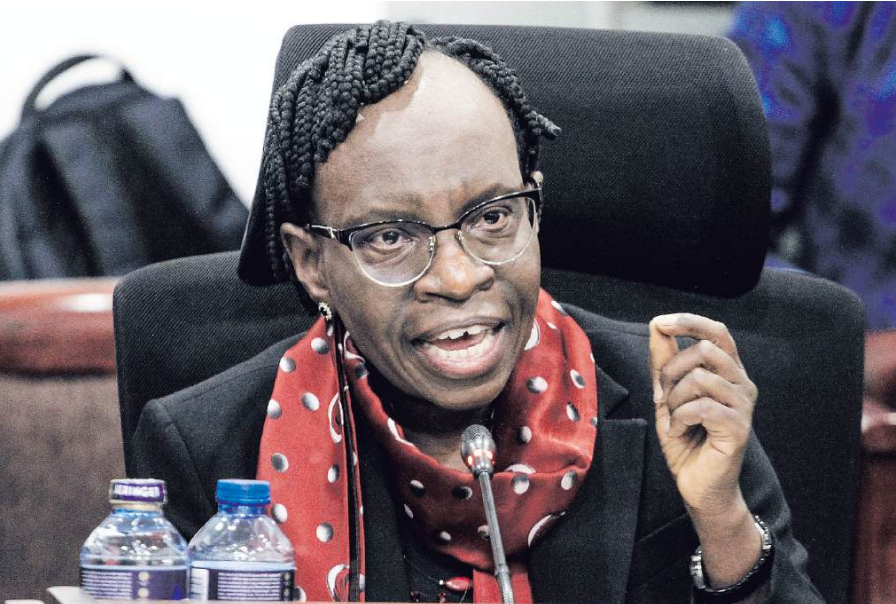
Tax Justice Network Africa acting communications, campaigns and outreach manager Christine Mutinda, says that despite massive evidence and solution meant to stop financial losses from African states, office bearers are not acting.
"We often assume that if we produce enough evidence, decision-makers will act. In reality, evidence competes with political interests, competing priorities, public opinion and power dynamics. That is why advocacy must be strategic," said Mutinda during a training session on Policy and Advocacy in Practice at the International Tax Justice Academy (ITJA).
Across Africa, researchers, economists and civil society groups have spent years documenting how weak tax systems, illicit financial flows and hidden company ownership structures reduce the amount of money governments collect.
Mutinda now says tax justice advocates must move beyond producing evidence and focus on influencing the policies, systems and institutions that shape development outcomes on the continent.
While research remains a critical foundation for reform, she notes that experience has shown that evidence alone rarely changes policy.
"One of the biggest mistakes organisations make is confusing activity with impact. Holding workshops, publishing reports and conducting meetings are important, but they are not advocacy outcomes. Advocacy is ultimately about influencing decisions, behaviours, policies and systems," she said.
She pointed out that people like Atieno, need advocacy strategies that are translated into issues that directly affect citizens' daily lives.
She noted that while evidence is critical, policy reforms rarely occur automatically, even when governments are presented with compelling data.
"People rarely mobilise around technical concepts. They mobilise around issues that affect their daily lives. Our role as advocates is to connect tax justice issues to schools, hospitals, jobs, public services and economic opportunity," Mutinda said.
The training highlighted growing recognition that effective communication is becoming increasingly important as African countries seek to strengthen domestic resource mobilisation and curb revenue losses linked to tax avoidance and illicit financial flows.
Participants were introduced to a range of advocacy tools that civil society organisations can deploy to influence reforms, including evidence-based advocacy, media engagement, coalition building, grassroots mobilisation and direct engagement with policymakers.
Mutinda emphasised that advocacy strategies must be tailored to specific political and social contexts rather than relying on a one-size-fits-all approach.
The session also underscored the importance of stakeholder mapping, with participants examining how different actors hold varying degrees of influence over policy outcomes.
"Advocacy is not about speaking to everyone. It is about understanding who has the power to influence change, who can support your cause and what message will resonate with each audience," she said.
Coalition building emerged as another key area of focus, with participants encouraged to pursue collective action to strengthen their influence on public policy debates.
According to Mutinda, alliances among civil society organisations can increase legitimacy, amplify advocacy messages and generate greater public pressure for reform.
"When organisations work together around a common objective and a shared narrative, their influence becomes significantly stronger. Advocacy is rarely a solo effort; it is a collective journey toward change," she said.
The training concluded with a practical framework for advocacy planning, guiding organisations through issue identification, problem analysis, stakeholder mapping, message development, implementation and impact monitoring.
Mutinda said advocacy should be viewed as a long-term process that requires continuous learning and adaptation as political and economic conditions evolve.
"Change rarely happens in a straight line. Effective advocates continuously learn, adapt and refine their strategies as contexts evolve. The most successful campaigns are those that remain responsive while staying focused on their long-term goals," she said.
As governments across Africa grapple with challenges such as illicit financial flows and the effectiveness of tax incentive regimes, the training reinforced the need for a new generation of advocates capable of translating evidence into influence and influence into policy action.
"In the end, the stories we choose to amplify, and those we allow to fade, determine the future we build as a society," Mutinda said.