The travel and tourism sector injected Sh1.6 trillion into Kenya’s economy last year, a new industry report now indicates, underlining their importance in driving economic growth.
This is up from Sh1.2 trillion recorded the previous year, which was a 10 per cent year-on-year growth as Kenya, alongside other African destinations, reaped big from a strong global travel trend despite high inflation in some economies and reduced spending by households.
According to new 2026 Economic Impact Research data from the World Travel and Tourism Council (WTTC), sponsored by Chase Travel, Lead Research Partner, Kenya continues to strengthen its position as one of the continent's most strategically important tourism markets.
Last year’s contribution to the economy representing 9.3 per cent of national GDP, and supported 1.8 million jobs, equivalent to 8.3 per cent of total employment.
This was up from the 1.7 million jobs supported by the sectors in 2024, where key sub-sectors includes aviation, travel agencies, accommodation, tour operators, niche and sustainable tourism (ecotourism conservancies and cultural heritage), hospitality and entertainment (restaurants, pubs, night life), and professional guiding.
“This dual contribution underlines tourism's role as both a major economic driver and a powerful engine of inclusive growth,” the global tourism body notes in its report.
A balanced demand model, according to WTTC, underpins Kenya’s growth.
International visitor spending accounted for 52.4 per cent of total tourism expenditure in 2025, reaching $5 billion (Sh647.3 billion) and slightly exceeding domestic visitor spending of $4.5 billion (Sh582.5 billion).
This, as the country welcomed 2.5 million international visitors, an increase of 5.6 per cent compared with the previous year, reinforcing its position as a key gateway and growth market for tourism in Africa.
The strength of Kenya's tourism economy is further reflected in its travel and tourism trade surplus.
In 2025, international visitor spending exceeded outbound travel spending by $3.96 billion (Sh512.6 billion), generating a significant net inflow of foreign exchange and underlining the sector's growing contribution to national economic resilience and prosperity.
Kenya is also emerging as a global leader in sustainable tourism where the travel and tourism sector sources about 20 per cent of its energy from low-carbon sources, significantly outperforming both the global average of 5.9 per cent and the African average of 2.9 per cent.
This positions Kenya among the world's leading destinations in advancing tourism's energy transition.
Kenya's strong performance, strategic location and commitment to sustainable tourism have made it a natural partner for WTTC's long-term engagement across Africa.
This week, WTTC led by former Tourism CS Najib Balala, now the council’s executive vice-president for advocacy, government affairs and research, and the organisation's president and CEO Gloria Guevara, visited Kenya where they held talks with Tourism and Wildlife CS Rebecca Miano.
The meeting centered on Kenya's strong positioning within Africa and its competitiveness in the region.
"Africa is now one of the fastest-growing tourism regions globally and Kenya is helping lead that momentum. With a strong economic contribution, a balanced demand model and clear leadership in sustainable tourism, Kenya demonstrates what long-term travel and tourism success can look like,” said said Guevara.
Africa's tourism growth continues to accelerate Kenya's success story is part of a broader transformation taking place across Africa.
WTTC's latest research shows that the travel and tourism contributed $228 billion (Sh29.5 trillion) to Africa's economy in 2025, representing seven per cent of regional GDP and growing by five per cent, significantly outpacing the wider economy, which expanded by 3.per cent as well as the global average of 4.1 per cent.
Growth is expected to accelerate further in 2026, with the sector forecast to contribute $241 billion (Sh31.2 trillion) and expand by 5.4 per cent , making Africa one of the fastest-growing tourism regions globally, alongside Asia-Pacific.
Employment trends reinforce this positive trajectory. Travel and tourism supported 30.2 million jobs across Africa in 2025 and is forecast to reach 31.5 million jobs in 2026.
Over the next decade, the sector is expected to create an additional 9.4 million jobs, reaching 40.9 million by 2036.
While domestic travel continues to account for around 61 per cent of tourism spending across the continent, international demand is accelerating rapidly.
International visitor spending is projected to grow by 6.8 per cent in 2026 to reach $80 billion (Sh10.4 trillion).
In 2025, Africa welcomed 99.2 million international visitors, an increase of 14.1 per cent, highlighting strong recovery momentum and substantial long-term growth potential.
Realising the full potential of the sector, however, will depend on continued progress in key areas, including visa facilitation and processing to improve access and stimulate international demand, WTTC notes.
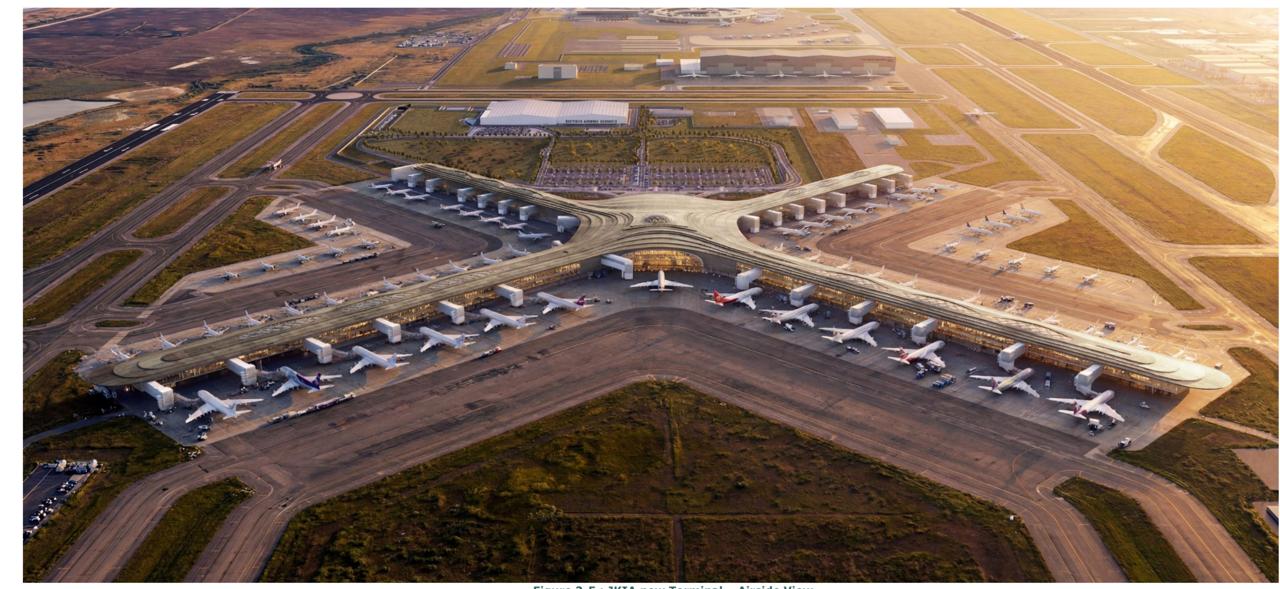
This is in addition to improved connectivity through aviation, transport, and regional integration, and secure and seamless travel enabled by digital and biometric solutions Infrastructure modernisation to support quality growth at scale.
Kenya together with other destinations in the continent must also look into tourism product development and diversification to expand visitor experiences, increase length of stay, and strengthen destination competitiveness.
Africa must also investment in workforce development, skills training, and talent retention to build a future-ready tourism workforce, experts say, and adopt technology to enhance traveller experiences and operational efficiency.