Investors in Kenya’s
property market are shifting away from speculative mega malls and traditional
office developments, according to the latest report by commercial and residential estate agents Knight Frank.
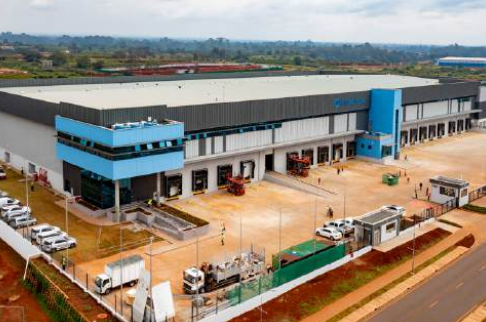
Instead, they are turning to logistics parks, data centres and specialised
industrial projects linked to the country’s expanding digital economy.
The report shows returns from large shopping mall developments
have declined as the market becomes saturated, while newer sectors such as
warehousing and data infrastructure are attracting stronger investor interest.
The report shows
Kenya’s real estate sector is entering a more selective phase, with investors
prioritising quality, flexibility and infrastructure-driven projects over the
aggressive retail and commercial construction boom that defined the last
decade.
Large shopping malls,
once seen as symbols of urban growth, are gradually losing dominance as
consumers increasingly embrace e-commerce, convenience shopping and fast
delivery services.
Developers are now
focusing on smaller neighbourhood retail centres anchored by supermarkets,
pharmacies, restaurants and essential services.
“Africa’s real estate
landscape is transitioning into a more selective, performance-driven cycle,
increasingly defined by quality and specialisation,” said James Lewis.
The growing demand
for logistics facilities is being driven by regional trade expansion, rapid
urbanisation and increased manufacturing activity within Special Economic Zones
(SEZs).
Kenya is also
strengthening its position as East Africa’s logistics hub through investments
in transport corridors, industrial parks and SEZ-linked infrastructure.
The country’s
warehousing and storage market reached $3.4 billion (Sh439.2 billion) in 2025
and is projected to grow at a compound annual growth rate of 6.51 per cent to
$4.7 billion (Sh608 billion).
The growth is being
supported by the rise of e-commerce, demand for faster delivery networks,
expansion of manufacturing, improved road infrastructure and increasing
regional trade across East Africa.
Businesses are also
seeking modern storage and distribution centres that can support efficient
supply chains and last-mile delivery services.
Knight Frank notes
that prime serviced industrial land within major logistics corridors is
becoming scarce as investor demand rises.
Data centres are also
emerging as a major area of investment, with Kenya positioning itself as one of
Africa’s fastest-growing markets.
The report estimates
Africa’s data centre demand could grow between three and five times by 2030,
requiring between $10 billion and $20 billion (Sh2.6 trillion) in fresh
investment.
Oscar Matthews said multiple
subsea cable landings in Mombasa, expanding fibre connectivity, Nairobi’s
strong technology ecosystem and rising demand from cloud computing, fintech, and
artificial intelligence firms are supporting Kenya’s growth.
“In East Africa,
Kenya is emerging as a key hub, supported by multiple subsea cable landings in
Mombasa, a strong enterprise ecosystem in Nairobi, policy support through
Special Economic Zones, and an increasing focus on geothermal-powered energy
solutions,” he said.
Forecasts indicate
double-digit growth in Kenya’s installed data centre capacity through 2030 as hyper-scale cloud operators, streaming companies and AI-driven businesses expand
across the region. The expansion is also being boosted by new fibre projects,
including the 2Africa subsea cable linking Africa to Europe, Asia and the
Middle East.
The office market is
also changing as multinational firms move away from ageing office blocks and
seek environmentally compliant Grade A buildings with flexible workspaces and
lifestyle amenities.
Prime office
occupancy in Nairobi has risen to about 80 per cent this year, with rents for
premium office space stabilising at around $13 per square metre per month.
However, older office
buildings continue to struggle with high vacancy rates, and the arrival of an
additional 2.5 million square feet of office space between 2027 and 2028 is
expected to increase pressure on landlords.
The report says this
could trigger more refurbishments, mixed-use conversions and repurposing of outdated
commercial properties. Flexible workspaces are also growing rapidly as
companies prioritise agility and cost efficiency.
Meanwhile, Kenya’s
high-end residential market remains resilient despite broader affordability
challenges.
Prime residential sales
prices rose by 6.17 per cent in the year to December 2025, while rental prices
increased by 4.05 per cent, supported by diaspora investment, expatriate demand
and wealthy buyers seeking integrated gated communities.
Developers are
increasingly investing in mixed-use developments that combine housing, retail
outlets, schools and lifestyle amenities within master-planned communities and
SEZ-linked zones.
Tourism-linked real
estate is also recovering strongly as visitor numbers rebound.
Kenya recorded about
7.9 million domestic and international visitors in 2025, including 2.7 million
international arrivals, boosting demand for hotels, holiday homes and
short-stay accommodation.






![[PHOTOS] The new Ngong –Naivasha Road viaduct](https://cdn.radioafrica.digital/image/2026/06/64d4f771-4432-4aee-ba3c-2f304c4436ec.jpg)