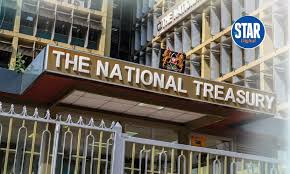
The National
Treasury plans to cut Sh21.1 billion in the
current budget, an indicator of the first supplementary budget for the 2025-26 financial year.
According to the details
in the Draft 2025 Budget Review and Outlook Paper, the exchequer has lowered
its total expenditure target for the 2025-26 financial year to Sh4.269
trillion.
This is down from
the Sh4.291 trillion set in the approved baseline budget, marking a Sh21.1
billion reduction.
The revision comes
at a time when the treasury is struggling to balance spending plans against
weaker-than-expected revenue performance.
This follows the
spiral effects of the sustained Gen Z protests last year that saw the state
fall back on its revenue targets.
For instance, official
data by the taxman shows that, in July 2025, total collections stood at Sh212.6
billion, falling Sh20.1 billion short of the monthly target of Sh232.7 billion.
This
underperformance follows a difficult 2024-25 financial year, when tax revenues
were dented by the withdrawal of the Finance Bill 2024 and months of street
protests that disrupted economic activity.
“This performance,
coupled with the weak budget outturn in FY 2024-25, points to continued fiscal
pressures and underscores the need for realistic revenue projections in
preparing the FY 2026-27 budget,” said National Treasury Cabinet Secretary John
Mbadi.
The cut, while
modest in the context of a Sh4.2 trillion budget, treasury maintains that it is
targeting to shrink the budget deficit to 4.7 percent of GDP in 2025-26, down
from 5.8 per cent last year.
However, debt
obligations remain a pain point for the country with the exchequer data showing
that by the end of June 2025, Kenya’s total public debt stock was estimated at
64 per cent of GDP—above the 55 per cent threshold considered sustainable by
the International Monetary Fund.
Debt service costs
now absorb more than 60 per cent of government revenue, limiting fiscal space
for development programs.
This essentially
means that for every Sh100 that is collected by the government, Sh60 per cent
is directed towards repaying debt.
“The financial
year 2026-27 and medium-term budget are being developed against persistent
fiscal challenges, including revenue shortfalls, rising public debt and debt
servicing costs, accumulation of pending bills and increasing demands for
priority funding,” added Mbadi.
“To address these
challenges, the Government will continue implementing its fiscal consolidation
strategy aimed at reducing the fiscal deficit and containing debt growth, while
safeguarding essential service delivery through enhanced domestic revenue mobilization
and prudent expenditure management.”
Despite proposed
reforms to streamline the payment to suppliers, the exchequer admits that pending
bills still remain a thorn in Treasury’s side.
As of June 2025,
ministries, departments, and state corporations owed suppliers and contractors
Sh525.9 billion, with treasury now warning that without expenditure rationalisation,
the pile-up of arrears could worsen.
Despite the budget
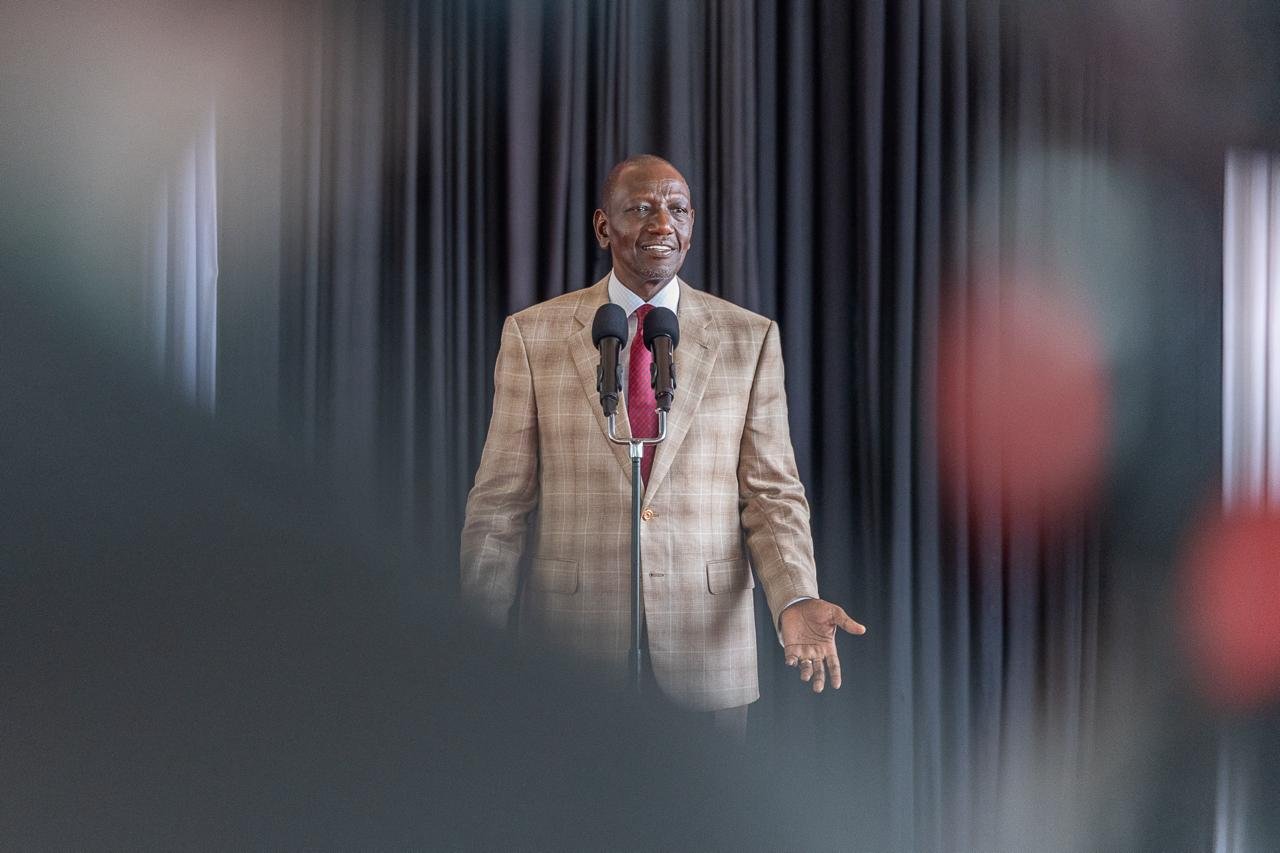
squeeze, treasury holds that priority programs under President William Ruto’s
Bottom-Up Economic Transformation Agenda (BETA) will be protected.
Spending is
expected to remain focused on agricultural transformation, support for small
businesses, affordable housing, healthcare, and the digital economy.
The BROP notes
that ministries and departments will be required to rigorously review their
projects and eliminate low-impact spending.
“The zero-based
budgeting approach—where every expenditure must be justified afresh is expected
to guide allocations in both the supplementary and future budgets,” added
Mbadi.
In previous years,
budgetary adjustments have often shifted money away from development spending
to recurrent obligations such as salaries, pensions and interest payments.
According to the
report, the government will be looking to reform revenue measures, with a focus
on rationalising tax expenditures, expanding the tax base, improving compliance
and streamlining tax structures to stimulate investment.
“Simultaneously,
public financial management will be strengthened through re-engineering of the
pension management system, integrated human resource systems, expanded
Public-Private Partnerships and governance reforms in State Corporations.”
The BROP sets the
tone for the 2026 Budget Policy Statement, due early next year. In that
medium-term framework, the government plans to raise Sh3.58 trillion in
revenues in 2026-27, equivalent to 17.1 per cent of GDP, while spending is
projected at Sh4.65 trillion.
That trajectory
points to continued reliance on borrowing, though Treasury says it will
prioritise concessional loans, expand the use of public-private partnerships
and deepen domestic debt markets to ease refinancing risks.

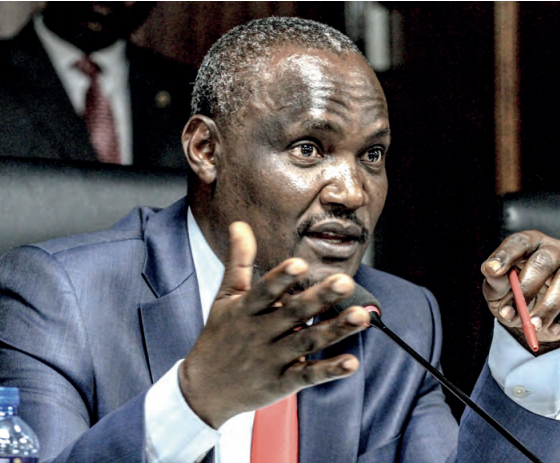 National Treasury CS John Mbadi before the National Assembly Committee on
Implementation on September 18 /ENOS TECHE
National Treasury CS John Mbadi before the National Assembly Committee on
Implementation on September 18 /ENOS TECHE






![[PHOTOS] Ruto hosts Bungoma delegation at State House](https://cdn.radioafrica.digital/image/2026/07/38c18064-4bd7-4a52-9171-4dcce631a74b.webp)