Rugo: Man on a mission to empower Kenyans on budget
Leading Bajeti Hub in advancing transparency, accountability, participation and equity
by MARTIN MWITA
Audio By Vocalize
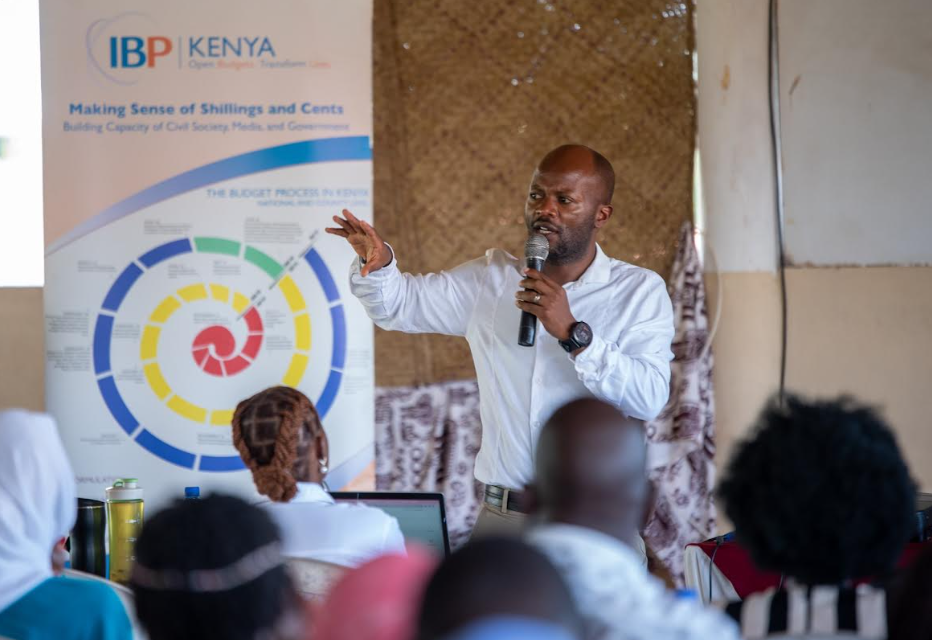
Bajeti Hub executive director Dr. Abraham Rugo during a past budget
event /HANDOUT
Growing up,
Dr. Abraham Rugo Muriu always
envisioned himself in
senior leadership roles in the
country and that vision has come to life. Today, he is the executive director at Bajeti
Hub,a Kenyan
non-profit organisation working to advance transparency, accountability,
participation and equity in national and sub-national budgeting processes. The Star spoke to Rugo on his personal life and Kenya’s
economy with a focus on budget, debt, growth and way forward for the country.
Who is Abraham Rugo ? Where was he born
and raised? How old is he, educational
background and family?
My life began in Olenguruone, Nakuru County in October,
1981. I am the first born in a
family of three. My parents were civil servants in the Ministries of Agriculture and Health and have since
retired. I schooled at Uhuru Primary School,
then proceeded to Nakuru High School before undertaking my first degree as a teacher of Mathematics and
Physics at Kenyatta University. I shifted
my career line to economics and political science after which I undertook my Masters and Doctoral
Degrees in Public Management at Potsdam
in Germany. Married in December 2008 and am a proud father of three. I am a disciple of Christ and
committed to the cause of justice and fairness.
What was your childhood dream and did it come true?
I always envisioned myself in senior leadership roles in my
country and in many ways, that
vision has come to life. Today, I have the privilege of leading one of Kenya’s leading public finance
organisations and am recognised as a leader in the field.
What is the one thing that you will never leave the
house without?
A watch. I have a special place for time keeping.
How long have you been in the public finance
space and what are some
of the challenges you face?
It has been
18 years since I actively entered the field, beginning my journey in February 2007 as an intern at the
Institute of Economic Affairs. Along the way, I have faced three major challenges. The
first was a steep learning curve as I was
coming from a science background. I took to reading and asking all
manner of questions. The second
challenge has been perceptions linked to my physical stature. For reasons I still find puzzling, people expect me to
be tall and big and have not
hidden their surprise, some even insist I have to prove my worth. The third challenge relates to
maintaining my health while managing the
high demands of the work, especially given the limited number of professionals in this space.
What do you do outside your professional life?
I spend most of my free time in socialising with family and friends. I enjoy cycling and good coffee around the
city. A significant part of my time is also
dedicated to serving in church, particularly among the youth, as well as engaging in contemporary speaking on
personal development.
How do you balance work and family?
I have established routines that help me balance work and
family life. I make a deliberate
effort to be home for either breakfast or dinner with my family each day. Weekends, especially Saturdays, are reserved for
rest and quality time with my
loved ones. A coffee date with my wife crowns my week though sometimes it gets sacrificed for
children, church and work demands.
What informed the rebranding from International
Budget Partnership Kenya
(IBP) to Bajeti Hub?
For a decade, we dedicated ourselves to localising and deepening our work
in Kenya, building on the
opportunities created by the new Constitution and the accompanying public finance reforms. This journey called for a
new local identity, one that is relatable and firmly rooted
in our African context. Bajeti Hub
is the result of that evolution, positioning us to reach the next level of growth and impact.
As a public finance sector expert, what do you
make of the country’s Sh4.2
trillion 2025-26 budget in regard to recurrent and development expenditure?
Our budget has followed an incremental trend year after
year, so this comes as no
surprise. Due to the significant debt repayment bill, the recurrent budget has grown significantly in the past
half a decade and this year is the same. That
means the development budget remains subdued and most of it is financed through borrowing. However,
concerns remain that levels of accountability
have not improved, while debt repayment continues to be the leading spending line. I worry that if
this is not dealt with,
it will increase causing a
reduction in the quantum and quality of public services delivered.
Do you think there is enough public participation in the
country’s national budget
making process? if no, what needs to be done?
While there has been some improvement, the low trust between
the public and government shows
that this remains a weak area of governance. In particular, there is a gap in establishing a mechanism to gather
national perspectives, synthesize
them and provide feedback on how
they have shaped budget decisions.
The absence of an overarching policy and legal framework at the national level continues to hinder meaningful
engagement, especially during
budget implementation.
What about at county level?
This is better than the national level but largely due to
the size of the entities and
specificity of public services being delivered at that level. Most counties have a policy and, or legal framework, and also
non-state actors have engaged more
at that level.
Do you think the National Treasury got it right in the
priority areas for the
2025-26 budget?
The budget has definitely given prominence to programmes related to the Bottom-Up Economic Agenda. It is a mixed picture for
critical social sectors; important
programmes in education
sector could do with additional sustained
funding like the free education and school feeding programme, there are some good steps in funding for health
with additional funding for primary health
care and critical care. However, the budget could have laid more focus on sectors that can open the economy
for greater employment creation. Generally,
the priorities are somewhat informed by the structure of the government in place, especially the
expanded departments. There is also incomplete
transfer of functions and funds to county governments. As such a huge proportion of allocations is going
to overheads, especially wages.
Treasury seems to have gone slow on taxes in the Finance
Bill 2025, any comment on
this? Or what is your overall view of the bill?
The bill has definitely not created as much heat as those in
2023 and 2024. While it is true
that the new tax measures in the 2025 Finance Bill aim to raise approximately Sh30 billion, far below the finance
bill 2024 target of over Sh200
billion. The bill mostly proposes administrative and regulatory changes that could burden taxpayers.
These include lengthening the time it takes
to access VAT refunds, requiring advance payment on disputed tax claims and attempting to access taxpayers’ private financial
information. It remains critical
to safeguard essential sectors that may be adversely affected by changes in the VAT status of key
inputs, particularly in pharmaceuticals and
animal feeds.
How best do you think the government can increase
revenues without
necessarily overtaxing Kenyans?
First, tackle corruption in both revenue collection and
public expenditure. Restoring
integrity in these areas is essential to ensure that citizens see the value of their taxes through improved
public services, which, in turn, can boost
their willingness to comply with tax obligations. Second, support private sector growth by implementing
business-friendly policies. A thriving economy drives productivity, employment, and income growth, all of which
broadens the tax base. Third,
streamline the tax system by addressing the numerous fees, levies, user charges and regulatory
burdens that reduce profitability and undermine
the competitiveness of businesses. Lastly, ensure timely payment of pending bills. Delays not only
strain businesses but also hinder their ability to meet tax obligations, which further weakens revenue
collection efforts.
Treasury has been struggling to narrow the fiscal
deficit and govern under
a heavy total debt-to-GDP ratio, what advice would you give them?
Expedite the dissolving and reforming of state corporations
that continue to drain limited
resources. Push for cleaning entities with duplicating mandates so that every shilling is applied
effectively. Get debt on better terms and
reduce the country’s exposure to such challenges in the coming years.
What is your take on the country’s FDIs space. Is there
anything that can be done
to make it better?
Work towards reducing the red tape involved in setting up a
business in Kenya and actively support more joint ventures
between Kenyans and foreign entities.
Bajeti Hub recently noted that Kenya is at a tight spot
and restoring public trust
is the only way out. Tell us more about this?
Trust is the currency of progress. The higher the trust
deficit the higher the laxity to
pay taxes or even participate in progressive development work in Kenya. Trust means that Kenyans can be
sure that the services they expect from
government will be delivered and own decisions made on their behalf by government.
What is your take on Kenya’s debt and which way is best
for the country?
I think there is limited
headway without restructuring of current obligations, especially in the domestic market. In the short term this
may be painful but would buy us the much-needed
space and time to reorganise
our balance sheet and avoid backsliding
in our development milestones.
What does Kenya need to spur economic growth?
There is no one-size-fits-all solution, but for Kenya, there
is a need to invest in the manufacturing
sector, strengthen agriculture and promote
sectors like tourism to drive consumption and economic growth. This
calls for action on various value
chains by leveraging locally available inputs. To achieve this, it is crucial to address the cost of key enablers
such as the regulatory
environment, energy and transport infrastructure.
What would you tell a youngster who wants to
become successful in the
public finance space?
It is a field that requires long game thinking. Results are not
immediate and thus professional
patience is of great value. Start small and build your footprint with time.
Any parting shot?
I remain hopeful that Kenya will be great in every way.
However, since hope is not a
strategy, we must work collectively to each build on our part of Kenya. We are perhaps the change we have been
waiting for.
This is premium content
Subscribe to Continue Reading
Help us continue bringing you unbiased news, in-depth investigations, and diverse perspectives. Your subscription keeps our mission alive and empowers us to provide high-quality, trustworthy journalism. Join us today to make a difference!