Energy and Petroleum Cabinet
Secretary Opiyo Wandayi has petitioned the National Assembly to consider lifting the moratorium it
imposed on the government about
the Power Purchase Agreements
(PPA) as a way of restoring investor
confidence in the sub sector.
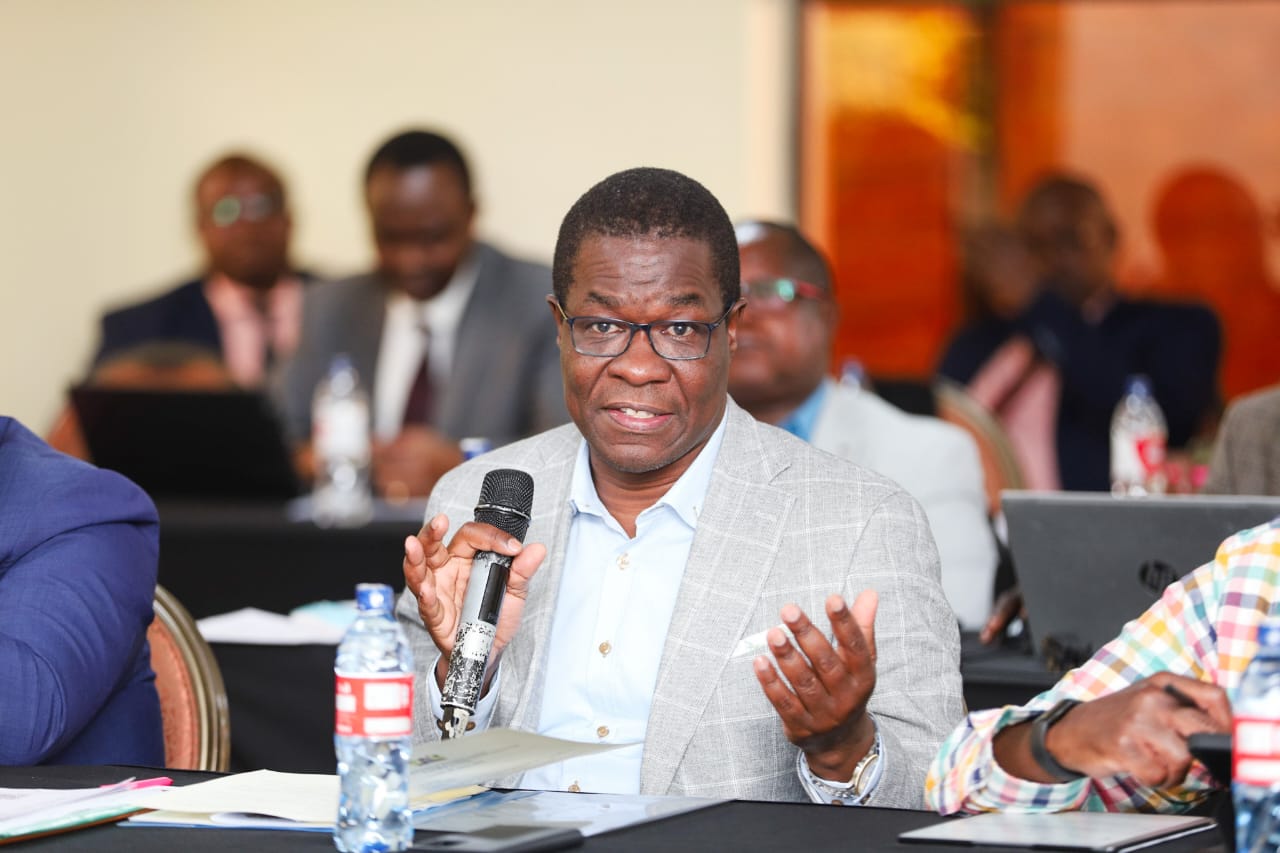
Speaking in Naivasha during a retreat with members of the National
Assembly Departmental Committee on Energy, Wandayi said the
moratorium imposed in 2023 has
negativity-impacted efforts to negotiate better and affordable Power
Purchase Agreements with the Independent Power Producers.
“ Even in cases where we have received better revised proposals, the
moratorium has impeded every effort for negotiations. The net result
has been that we get stuck with the
current rates,” he said.
He added that the state of energy
security and the importance of strategic infrastructure development,
especially electricity, which is critical for Kenya’s economic growth
and sustainable development, require a critical re-look at the PPAs.
“Power Purchase Agreements
have a critical role to play in the
infrastructure expansion, as they
are crucial in securing the necessary investment in energy projects
with the aim of strengthening the
country’s energy infrastructure and
security.”
On September 2021, the Presidential
Task Force on the Review of Power Purchase Agreements placed a moratorium on the renewal of expiring
PPAs and new ones not concluded
by then.
Although it was lifted by
Cabinet in February 2023 on the
basis of addressing the challenges
of realizing a sustainable energy
mix occasioned by the prolonged
drought, the National Assembly
vide a motion on April 19, 2023
made a resolution relating to the
reduction of the cost of electricity.
It also placed a moratorium in
addition to directing the Ministry of Energy and Petroleum and
Kenya Power and Lighting Company in particular to develop suitable strategies for engagement with
the IPPs in order to provide relief
to electricity consumers.
Speaking
at the forum, Principal Secretary
for Energy, Alex Wachira said the
country has experienced increased
demand in the midst of declining
contracted capacity due to retired
power plants, decline in efficiencies
of existing power plants as a result
of age and maintenance, and lack of
new generation capacity.
“The country is already experiencing power supply shortfall and demand management, which will
worsen if the moratorium is not lifted,” he said.
Among the possible outcomes
of failure to uplift the moratorium
are increased power rationing during peak hours, power outages as
a result of suboptimal intermittent
generation, increased cost of power
due to enhanced dispatch of thermal power plants, and over-reliance
on imported energy from Ethiopia,
Tanzania and Uganda.
According to
him, the Ministry’s 2024-43 Least
Cost Power Development Plan
(LCPDP) envisages that electricity
demand will grow at an average of
six per cent annually over the 20-year horizon.
“The demand is expected to reach
2,871MW in 2028 and 8,152 by
2043. To meet this growing demand, various power generation
projects that have been earmarked
for development in the LCPDP need
to be developed, and storage solutions such as pumped hydro storage
and Battary Energy Storage System
(BESS) to provide ancillary services towards enhancing grid security
needs to be considered,” he added.