
 SCREENGRAB/CAF
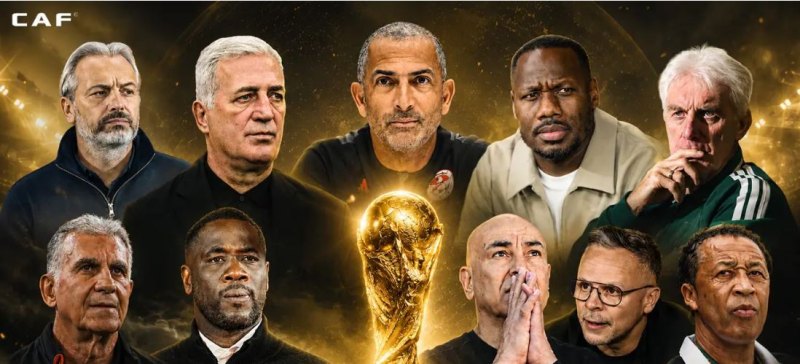
Africa has arrived at the 2026 FIFA World Cup with its largest-ever representation, and behind the dreams of 10 nations stand 10 different football philosophies.
From former African champions who understand the continent’s passion to global tacticians armed with decades of experience, the coaches leading Africa’s campaign represent a blend of history, ambition and tactical evolution.
The expanded tournament has created a new stage for African football, and these managers will carry the responsibility of transforming qualification success into memorable performances on the world’s biggest football platform. For Côte d’Ivoire, the spotlight shines on Emerse Faé, the young coach who turned an unlikely tournament rescue mission into African football folklore.
The former Elephants midfielder stepped into the role during the 2023 Africa Cup of Nations and guided Côte d’Ivoire from the brink of elimination to continental glory.
His success earned him the permanent position and made him a symbol of belief and resilience. Faé’s philosophy is built around attacking energy, quick transitions and emotional connection with his players.
His preferred 4-3-3 system allows his wingers to attack spaces aggressively while midfielders provide balance. Having experienced international football as a player, he understands the pressure of representing a nation and has built a team that combines discipline with fearless attacking intent.
Egypt will be led by national icon Hossam Hassan, a man whose name is already written into Pharaohs history. The former striker remains Egypt’s all-time leading scorer and has carried his competitive personality from the pitch into management. Hassan’s approach reflects his playing career — intense, physical and demanding. His 4-2-3-1 formation prioritises defensive organisation, midfield protection and quick counter-attacks.
His challenge is to restore Egypt’s reputation on the global stage while inspiring a new generation of players with the same passion that defined his career. Senegal has turned to Pape Thiaw, who inherited the responsibility of guiding the Teranga Lions after the successful era of Aliou Cissé.
Thiaw represents a new generation of African coaches looking to maintain Senegal’s status as one of the continent’s strongest teams. His style combines defensive structure with attacking freedom. Senegal’s strength under Thiaw comes from organisation, physical power and the ability to transition quickly from defence into attack.
Morocco, Africa’s history-makers at the 2022 World Cup, begin a new chapter under Mohamed Ouahbi. Taking over after Walid Regragui’s historic run, Ouahbi faces the difficult task of maintaining the Atlas Lions’ tactical excellence and global reputation. His challenge is not only qualification success but keeping Morocco among football’s elite nations after their remarkable semi-final appearance in Qatar.
Cape Verde continues its rise under experienced coach Pedro “Bubista” Brito. The long-serving manager has overseen the Blue Sharks’ transformation from outsiders into a respected international side. Bubista’s strength lies in stability, organisation and belief.
He has created a disciplined team capable of competing against stronger opponents, making Cape Verde one of Africa’s most fascinating stories heading into the tournament. Meanwhile, several African nations have placed their trust in internationally renowned coaches. Ghana handed the Black Stars’ rebuilding project to Carlos Queiroz, one of football’s most experienced tournament managers.
The Portuguese coach brings decades of elite-level experience, including spells with major national teams and clubs. His philosophy is based on defensive discipline, tactical intelligence and tournament management. DR Congo’s remarkable return to the World Cup has been guided by French coach Sébastien Desabre.
After years away from football’s biggest stage, Desabre rebuilt the Leopards through organisation, teamwork and tactical flexibility. His teams are known for compact defensive structures, energetic pressing and quick attacking transitions. Tunisia appointed Sabri Lamouchi, a French-Tunisian tactician with previous World Cup experience after leading Côte d’Ivoire in 2014.
Lamouchi brings a reputation for tactical discipline and structured football, qualities Tunisia will rely on in a demanding global competition. South Africa are guided by veteran Belgian coach Hugo Broos, the man who previously delivered AFCON success with Cameroon.
Broos engineered Bafana Bafana’s return to the World Cup after a long absence and has restored confidence through organisation and experience. Algeria completes the African coaching line-up under Vladimir Petković.
The Bosnian-Swiss coach has focused on rebuilding the Desert Foxes through defensive consistency, tactical balance and greater stability.
Together, these 10 coaches represent Africa’s football journey — from legendary former players taking charge of national teams to experienced foreign managers bringing global knowledge.
Their missions are different, but the dream is the same: proving that African football belongs among the world’s best.