There
was a time when Kenyan secondary schools symbolised hope, discipline,
aspiration and social mobility. Parents entrusted schools not merely with
academic instruction, but with the moral, emotional and social formation of
their children.
Today, however, a deeply disturbing pattern is emerging across
the country. Our schools are increasingly becoming sites of fear, violence,
trauma, death and institutional failure.
The
reports dominating Kenyan media spaces are both alarming and heartbreaking:
dormitories engulfed in flames, students killed by fellow learners, rising
cases of bullying, violent unrest, drug abuse, suicide attempts, psychological
breakdowns and institutional cover-ups. What once appeared as isolated
incidents now resembles a national emergency.
The
tragedy at Utumishi Girls Academy, where young girls lost their lives in a
dormitory inferno, was not merely a fire accident. It was a mirror held before
the nation.
Behind the smoke and ashes lies a deeper crisis that Kenya can no
longer ignore. The speed and frequency with which these incidents are occurring
suggest not random indiscipline, but a collapsing social ecosystem around young
people.
The
easiest response has been to blame “spoilt children,” weakened discipline,
social media, or modern parenting. But such simplistic explanations evade the
harder truth: our schools are absorbing the accumulated failures of our
society.
Today’s
learner is growing up in an environment marked by economic uncertainty, family
instability, social fragmentation, political toxicity, digital overload and
emotional isolation.
Many students come from homes weighed down by
unemployment, domestic conflict, alcoholism, absent parenting and emotional
neglect. Others live under crushing academic pressure in a country where
educational success is increasingly viewed as the only legitimate pathway out
of poverty.
Yet,
instead of responding with compassion, support systems and psychosocial care,
many schools continue to operate through fear, rigidity, punishment and
silence.
In
many boarding schools, students exist within highly controlled environments
characterised by overcrowded dormitories, authoritarian rules, sleep
deprivation, humiliation, bullying hierarchies and limited emotional support.
Some institutions still operate using outdated models of discipline inherited
from colonial and militaristic traditions where obedience matters more than
emotional wellbeing.
We
must ask ourselves difficult questions. How many students are silently
depressed in our schools? How many are emotionally exhausted? How many are
victims of bullying but have nowhere to report? How many are using substances
to cope with stress and hopelessness? How many are carrying trauma that no
teacher, parent, priest, counsellor, or policymaker has taken time to
understand?
The
problem is compounded by the near collapse of guidance and counselling systems
in many schools. What exists in policy often does not exist in practice.
Counselling departments are underfunded, understaffed and frequently treated as
ceremonial offices rather than critical mental health support structures. In
some schools, students fear counsellors because confidentiality is not
guaranteed. In others, emotional struggles are dismissed as indiscipline.
This
is happening at a time when young people globally are facing an unprecedented
mental health crisis. Kenyan schools, however, continue to prioritise grades
over humanity.
The
obsession with performance has created institutions that produce examination
results while neglecting the emotional and moral wellbeing of learners.
Schools
celebrate mean scores while quietly ignoring depression, violence, addiction,
burnout and emotional alienation. We have normalised a system where students
wake before dawn, sleep late into the night, live under constant surveillance
and are evaluated almost exclusively through academic output.
An
exhausted and emotionally neglected generation is now speaking — sometimes
through violence, sometimes through unrest, sometimes through self-destruction.
Equally
troubling is the persistent institutional negligence surrounding school safety.
Kenya already has school safety regulations requiring emergency exits, fire
drills, proper dormitory spacing and disaster preparedness.
Yet many schools
remain dangerously unprepared. Fires continue to expose locked exits,
overcrowded dormitories, faulty electrical systems and delayed emergency
responses.
But
beyond infrastructure and policy failures lies a deeper moral crisis. Kenyan
society itself is undergoing rapid social transformation without corresponding
ethical and emotional grounding.
We are raising young people in a
hyper-competitive environment where success is glorified, but empathy,
resilience, integrity and community are increasingly neglected.
Parents
are overwhelmed by economic survival. Teachers are overstretched and under
immense pressure to produce results. Religious institutions are losing moral
influence among sections of the youth.
Social media has become both refuge and
battlefield for emotionally vulnerable adolescents. Meanwhile, political
leaders continue modelling aggression, intolerance and impunity before the very
young people we expect to become responsible citizens.
Schools
are not isolated islands. They reflect the society around them.
The
crisis therefore requires more than suspensions, transfers, or tougher
punishments. Kenya must fundamentally rethink the purpose and culture of
schooling.
We
need a national conversation on learner wellbeing and the future of education.
Guidance and counselling should be professionalised and strengthened in every
institution.
Mental health support must become a core component of educational
policy rather than an afterthought. Teachers need training in psychosocial
care, trauma awareness and conflict management.
Boarding school culture must be
humanised. Parents must become emotionally present in the lives of their
children. Schools must become spaces of dignity, dialogue, mentorship and
emotional safety.
Most
importantly, we must stop treating young people merely as candidates for
examinations and begin seeing them as human beings navigating an increasingly
complex and fragile world.
The disturbing stories emerging from our
schools are not merely education stories. They are warning signs of a society
struggling with its conscience, values, and social fabric.
If Kenya fails to listen carefully,
today’s school crises may become tomorrow’s national crisis.


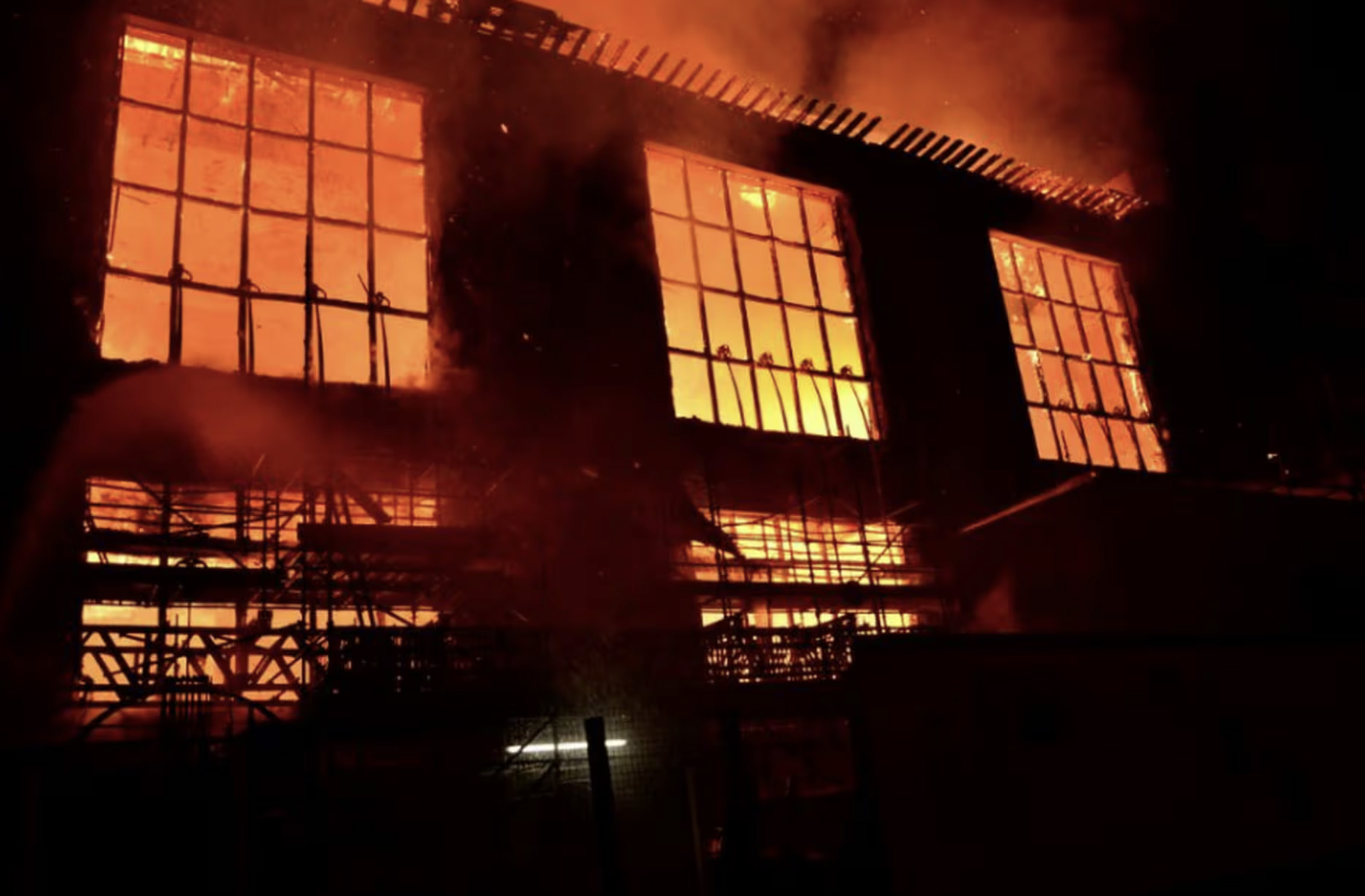 The tragedy at Utumishi Girls, where young girls lost their lives in a dormitory inferno, was not merely a fire accident. It was a mirror held before the nation /FILE