Every year on June 12, Russia celebrates Russia Day – a holiday that symbolises not only the country's rich history and statehood, but also its vision for the future. This year, Russia marks the occasion at a time of profound changes in international relations.
The world is witnessing a historic shift toward a more balanced and representative international system. New centres of economic growth and political influence are emerging, reflecting the growing role of countries outside the traditional centres of power.
Multipolarity is no longer a theoretical concept but an objective reality that increasingly shapes global politics and economics.
Russia views this transformation as an opportunity to build a fairer and more sustainable international order based on the principles of sovereign equality, non-interference in internal affairs, mutual respect and mutually beneficial cooperation.
International institutions and mechanisms of global governance should reflect contemporary realities and ensure that all nations have a meaningful voice in addressing common challenges.
For many countries of the Global South, this evolving multipolar landscape offers greater opportunities to pursue independent development strategies, diversify international partnerships and participate more actively in global decision-making processes.
It also creates conditions for overcoming longstanding imbalances that have limited the economic and political potential of many regions.
In this context, Brics represents a natural and practical response to the ongoing transformation of the world order. The growing interest in the association demonstrates the demand for more inclusive and equitable forms of international cooperation.
Through its financial and development instruments, initiatives aimed at strengthening economic connectivity and efforts to expand the use of national currencies in international transactions, Brics responds to the aspirations of many countries seeking sustainable growth, enhanced economic resilience and greater financial sovereignty.
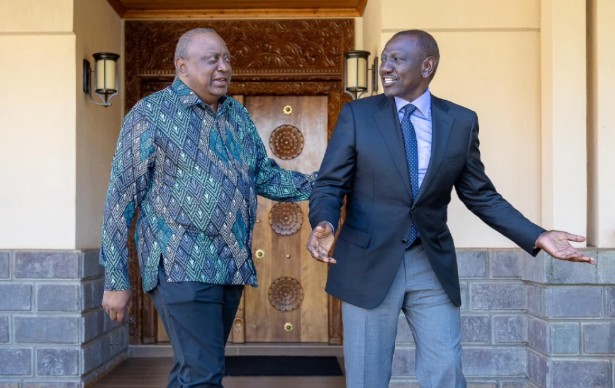
This approach resonates with positions expressed by many African countries, including Kenya. President William Ruto has repeatedly stressed the need to reform global financial structures and create fairer systems that better represent developing countries.
At this point Russia-Africa relations are developing within this emerging framework of a multipolar world order, in which the African continent, as Russia’s Foreign Minister Sergey Lavrov has said, is becoming one of the key centres of global growth and political influence, while African countries are becoming more confident in asserting their right to determine their own future and development paths.
Russia-Africa cooperation is built on a solid historical foundation rooted in support for national liberation movements, respect for sovereignty and the principles of equal partnership.
Today these relations are entering a new dynamic phase: political dialogue is expanding, economic ties are strengthening and educational and humanitarian exchanges continue to grow.
Russia views African states not as an arena for geopolitical competition, but as strategic partners with enormous human and economic potential.
The Russia-Africa Partnership Forum and the upcoming Third Russia-Africa Summit to be held in October in Moscow are expected to give additional momentum and practical direction to this cooperation.
We anticipate broad participation from African leaders and representatives from across the continent. Preparations are underway for a new three-year action plan aimed at strengthening practical cooperation in trade, investment, technology, education, infrastructure and cultural exchange.
Kenya, as one of Africa’s leading economies and an influential regional and international centre, is viewed by Russia as an important partner in East Africa.
Our countries maintain a constructive political dialogue based on mutual respect, sovereign equality and shared interest in strengthening international stability and promoting a more balanced and representative system of global governance.
In recent years, bilateral contacts have continued to develop at various levels. Political consultations, exchanges between government institutions and growing interparliamentary engagement contribute to strengthening mutual understanding and identifying new areas of cooperation. High-level and working-level visits remain an important mechanism for advancing the bilateral agenda and maintaining regular dialogue on regional and international issues of common interest.
At the same time, both countries recognise that the full potential of Russia-Kenya relations remains untapped with significant opportunities for expansion existing across a wide range of sectors.
The
prospects of bilateral cooperation extend well beyond traditional trade. New
opportunities are emerging in advanced sectors such as artificial intelligence,
information and communication technologies and digital infrastructure.
Given Kenya’s role as a major transportation and business hub in East Africa, as well as the ongoing transformation of global logistics chains, considerable prospects also exist in the fields of transport connectivity and logistics.
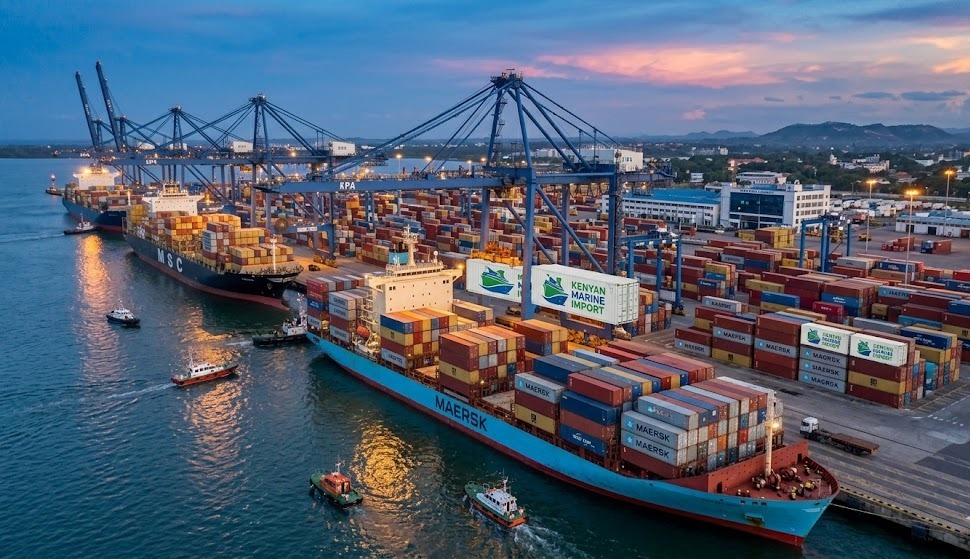
Cooperation related to regional transportation corridors and infrastructure linked to the Port of Mombasa could create additional opportunities for trade and economic interaction.
Energy cooperation represents another promising area. Russia remains open to discussing the needs and interests of Kenyan partners in the field of nuclear energy and advanced energy technologies.
With its extensive international experience, Russia’s state corporation Rosatom can offer proven expertise and reliable technological solutions.
Food security also remains among our common priorities. Russia is interested in increasing supplies of agricultural products to Kenya while facilitating greater access for Kenyan products to the Russian market.
In this regard, the creation of institutional mechanisms supporting economic interaction and investment promotion could become an important step forward. We are currently working jointly on the establishment of an Intergovernmental Commission on Economic and Trade Cooperation.
Experience with similar bilateral mechanisms in a number of African countries has demonstrated their practical effectiveness in promoting long-term trade, investment, and B2B cooperation.
Russia and Kenya continue to strengthen the human dimension of bilateral relations. Both sides view investment in people, education and cultural exchange as an essential foundation for a long-term and sustainable partnership.
Educational cooperation remains one of the most dynamic areas of interaction. Russia has recently increased the number of state scholarships available to Kenyan students to 70, creating broader opportunities for young people to access quality higher education and professional training.
Such exchanges contribute not only to academic development but also to deeper mutual understanding and stronger people-to-people ties between our countries.
At the same time, Kenyan academic institutions are making an important contribution to the development of bilateral educational and research cooperation. A notable example is the establishment of the African Centre for Russian Studies at the University of Nairobi, which has become a valuable platform for academic dialogue and research exchange.
The centre has already developed partnerships with leading Russian institutions, including the Institute for African Studies of the Russian Academy of Sciences, the Institute of Asian and African Studies of Moscow State University and other academic organisations.
These initiatives help promote objective knowledge about Russia and Africa, encourage joint research projects and strengthen professional and scholarly links between the two countries.
Cultural and sports cooperation further reinforce these connections. In recent months, Kenya has hosted successful performances by Russian ballet and musical ensembles, as well as Russian film screenings, while Kenyan artists and performers have actively participated in cultural festivals and contests in Russia.
Sports exchanges are also expanding: Kenyan athletes regularly take part in competitions held in Russia, while international initiatives such as the OneRun marathon in Kenya help bring people together and strengthen mutual engagement between our societies.
Through political dialogue, expanding economic cooperation and growing humanitarian ties, Russia and Kenya are steadily building a comprehensive partnership based on mutual benefit, trust and a shared vision of sustainable development and a more equitable international order.
Ambassador or Russia to Kenya