Kenya is not at a crossroads; it is
on a precipice. The statistics are not just numbers; they are a gathering
storm. With more than 75 per cent of the population under the age of 34, we have
long romanticised a demographic dividend while expertly nurturing a demographic
time bomb.
Each year, a million young Kenyans enter a labour market that
formally creates fewer than 800,000 positions. This structural betrayal, felt
in empty pockets and stifled ambition, has boiled over into the streets, as the
youth-led protests of 2024 and 2025 made devastatingly clear.
This is not merely an employment
crisis. It is a triple threat strangling our future: an economy hobbled by
suppressed demand, a social fabric fraying with distrust and a democracy whose
legitimacy is being questioned by its largest constituency.
The most dangerous
thing in Kenya today is this pervasive, simmering idleness: the graduate
scrolling endlessly and the skilled artisan sidelined. This is a restless
energy of more than 10 million souls caught between digital promise and
economic paralysis.
In this precarious moment, President
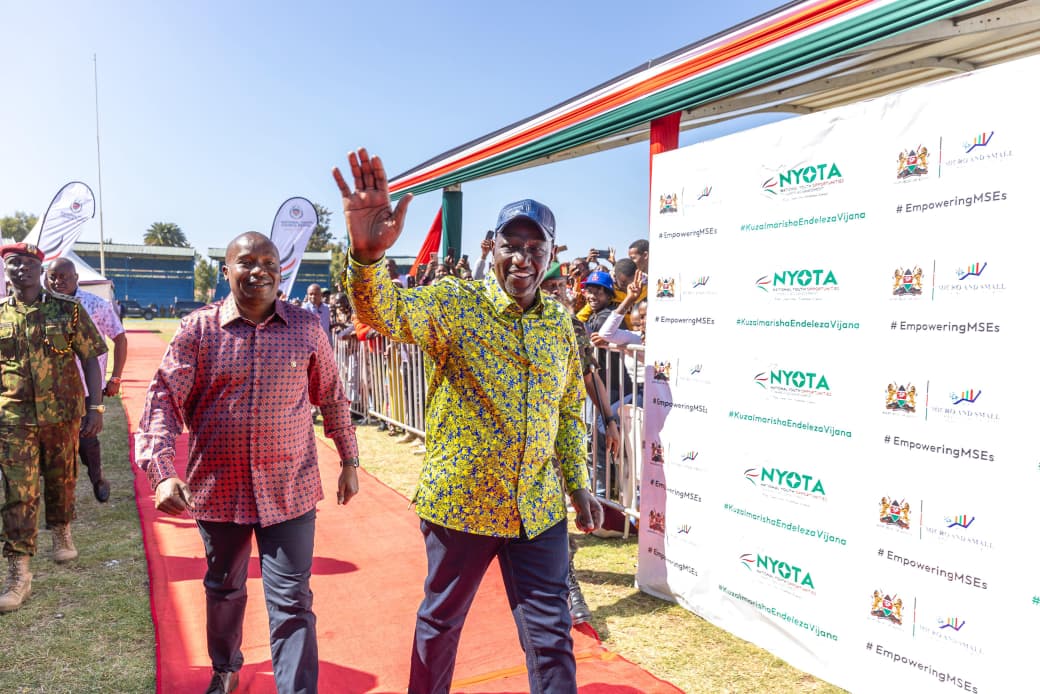
William Ruto’s government has placed a substantial bet: the National Youth
Opportunities Towards Advancement fund. To view it as just another government ‘kitty’
or a cleverly branded photo-op would be a catastrophic misreading.
Nyota must
become Kenya’s most critical strategic intervention, a multi-pronged instrument
to defuse the time bomb and harness its energy to power the nation. Its success
or failure will set the tone for our next decade.
The genius of Nyota lies in
its integrated design, which acknowledges the hard lessons from the graveyards
of past acronyms: programmes hamstrung by fragmentation, patronage and a narrow
focus on handouts rather than ecosystems.The fund moves beyond throwing cash at
a problem.
It proposes a four-pillar pact:
targeted financing for youth-led businesses in sectors such as green energy and
tech, paired with real capacity-building, market linkages, and, crucially, a
foundational commitment to participatory governance.
This is a holistic
approach to building entrepreneurs, not just disbursing beneficiaries. It means
funding a young woman’s agro-processing idea in Rusinga Island, Homabay, then
pairing that capital with a mentor in Eastleigh, Nairobi, who has navigated
export regulations, and finally connecting her to a distribution network in
Mombasa or Dubai. It is a shift from dispensing charity to cultivating
capability.
The potential impact pathways are
profound and interwoven. First, it directly attacks the economic heart of the
crisis. Our growth has been ‘jobless,’ thriving in sectors that don’t
mass-employ the young.
By strategically financing enterprises in high-growth sectors
such as climate-smart agribusiness, renewable energy and digital services, Nyota
aims to invert this model. It creates new jobs from within these ventures and
performs the vital surgery of formalising the informal sector.
It takes the
vibrant, survivalist hustle that defines so much of Kenyan life and injects it
with the oxygen of structured support, turning subsistence ventures into
taxable, growing SMEs.
This expands our tax base, boosts domestic demand and
begins the essential work of transitioning Kenya from a nation of jobseekers to
a nation of job creators. Our demographic density, currently a liability, can
become our most potent competitive advantage in innovation.
However, economic exclusion is only
half the poison. The other half is a deep, corrosive alienation from the state
itself. For millions of youth, ‘governance’ symbolises elite capture, corruption
and exclusion.
This is Nyota’s second, even more daunting mission: to serve as
living, breathing proof that public institutions can be transparent, fair and
effective. This will not happen by decree. It will happen only if Nyota’s
operations are sacrosanct in their meritocracy. Its application portal,
selection panels and disbursement trails must be models of transparency,
auditable in real-time by any citizen.
The young person in Kitui must know
they lost a grant to a better proposal, not to a connected name. This visible
fairness is the first brick in rebuilding our shattered social contract.
Furthermore, by integrating youth voices into the fund’s oversight and feedback
mechanisms, it channels the energy of protest into the architecture of participation.
It declares that young voices belong in the boardroom, not just the streets.
This leads to the third and perhaps
most urgent pathway: national stability. An idle, disenfranchised young
population is the ultimate national security vulnerability, a combustible
material ripe for recruitment by criminal networks, manipulation by political
actors, or descent into cybercrime.
Traditional, enforcement-heavy security
approaches treat the symptom while ignoring the disease. Nyota, conversely, is
a preventive security strategy of the highest order. An engaged young person
running a thriving solar panel installation business in Garissa has a tangible
stake in stability; they become a stakeholder in peace, not a pawn in conflict.
As we march towards the high-stakes 2027 election, this proactive, economic
form of inclusion is not soft social policy—it is the hardest, smartest
investment in electoral peace and long-term stability we can make. It protects
the state by making it worth protecting.
Finally, this internal crisis
actively corrodes our external standing. International investors and
development partners are not blind. They analyse youth unrest and institutional
distrust as primary political risks.
A failing youth strategy translates
directly into a premium on capital, diminished foreign direct investment and a
loss of soft power in a fiercely competitive region. A successful, transparent
Nyota Fund decisively flips this script.
It becomes a powerful tool of
economic diplomacy, signalling to the world a Kenya that is innovative,
meritocratic and authoritatively tackling its greatest challenge.
Authentic
success stories from beneficiaries become our most compelling ambassadors,
stronger than any trade delegation. It allows us to reclaim regional leadership
not through rhetoric, but through demonstrable, inclusive model-building.
For this transformative potential to
be realised, the fund must ignite a whole-of-government crusade, insulated from
political cycles and electoral whimsy.
Its launch is just the beginning. The
National Treasury must treat its funding as a non-negotiable investment in
national security, ring-fencing it with ironclad accountability across
administrations.
The Ministry of Education must urgently reform curricula to
feed it with a generation skilled in digital literacy, green technologies and
entrepreneurship, not just theory.
The Ministry of Interior must see Nyota cohorts
as vital partners in community stability, not as subjects of suspicion. Our
foreign service must leverage the vast diaspora to provide mentorship, market
access and investment to amplify the fund’s global reach. This is a nationwide
mobilisation unseen for a single policy.
The clock is not just ticking; it is
thundering. The next decade will answer the defining question of our time: Will
our youth be the architects of Kenya’s renaissance or the agents of its
instability? Kenya’s greatest challenge is, inextricably, its only sure path to
greatness.
Nyota provides the blueprint. We must now build, with unwavering
focus and integrity. Our youthful army awaits its mission. We must give them
the tools to build a nation, lest they find other, destructive uses for their
energy. The choice, and the moment, is irrevocably ours.
The writer is executive director, Global Centre for Policy and Strategy,
a Nairobi-based think tank




![[PHOTOS] Elderly brave cold to vote in Ol Kalou](https://cdn.radioafrica.digital/image/2026/07/d2345b9e-578f-45ff-9bb0-d7819671c165.webp)


![[PHOTOS] Ol Kalou residents turn out in large numbers to vote](https://cdn.radioafrica.digital/image/2026/07/fe42d51c-7f79-466e-94e8-59561f77bbe7.webp)