the immediate grief felt by his
family, friends and supporters, his passing raises a broader and deeply Kenyan
question: when prominent public figures die under sudden or unclear
circumstances, do the powers that be do enough to establish the full truth?
Kenya’s
history suggests that the answer is often ‘no’. That history alone makes a
thorough, transparent and independent investigation into Jirongo’s death not
only prudent, but necessary.
Jirongo
was not a marginal figure or a has-been. A Gen Z of his time, or close to it,
Jirongo splashed into the national limelight due to his involvement with the
infamous YK92, Vijana wa Party ya Baba na Mama.
Over
decades, he occupied influential political and economic spaces, interacted with
powerful actors and remained a recognisable name in Kenya’s public life. In any
democratic society, the sudden death of such a figure — especially in an
incident as easily obscured as a road accident — must be examined beyond
routine procedures. This is not to pre-judge foul play, but to ensure public
confidence in the integrity of state institutions and investigative processes.
Kenya’s
painful past provides compelling reasons for caution. The country has
experienced numerous high-profile deaths that were initially explained away but
later raised serious unanswered questions — questions that continue to haunt
public discourse and erode trust.
Perhaps
the most emblematic case is that of Dr Robert Ouko, Kenya’s former Minister for
Foreign Affairs, found brutally murdered in 1990. Despite a judicial commission
of inquiry and international attention, no one has ever been conclusively held
accountable. Evidence disappeared, witnesses contradicted themselves and
political interference was widely alleged. To this day, the Ouko case stands as
a symbol of institutional failure and impunity at the highest levels.
More
recently, the mysterious death of Jacob Juma, a controversial businessman who
openly accused senior government figures of corruption, reinforced public
cynicism. Juma was found dead in his car in 2016 under circumstances that
authorities quickly ruled a suicide. Yet, the speed with which the case was
closed only deepened suspicion and fuelled conspiracy theories that thrive
where transparency is absent.
These
are not isolated examples. From Pio Gama Pinto and Tom Mboya in the post-Independence
era, to JM Kariuki, and later unexplained deaths of activists, witnessesand
whistleblowers, Kenya’s political history is marked by a pattern: influential
individuals die suddenly, investigations are rushed or compromised, and the
truth remains elusive. Each unresolved case compounds national trauma and
normalises the idea that some lives — and some truths — are expendable.
It is
against this backdrop that Jirongo’s death must be viewed. A road traffic
accident may well be the correct explanation. But in a country where car
crashes have, in the past, been used to mask assassinations or negligence,
accepting the first explanation without exhaustive scrutiny would be irresponsible.
Modern
forensic science, independent accident reconstruction, digital data analysis
and witness protection mechanisms provide tools that were unavailable in
earlier decades.
There
is simply no excuse for superficial inquiry.
A
thorough investigation should include: a transparent postmortem conducted by
independent pathologists; full disclosure of accident scene analysis; scrutiny
of vehicle condition and data; examination of CCTV and mobile phone records;
and protection of any witnesses who may possess relevant information. Just as
importantly, findings should be made public in a manner that allows independent
experts and the public to assess their credibility.
This
is not about politicising death or exploiting tragedy. It is about learning
from history rather than repeating it. When the state demonstrates seriousness
and openness in investigating the death of a prominent figure, it sends a
powerful signal that no case is too sensitive, no individual too powerful, and
no truth too inconvenient.
The
cynic would say where does that leave the question of whether the state itself
is the culprit, the answer is let’s pray that’s not the case — anymore.
Jirongo’s
death presents Kenya with the choice to either follow familiar path of quick
conclusions and lingering doubt, or it can break with tradition and set a new
standard for accountability.

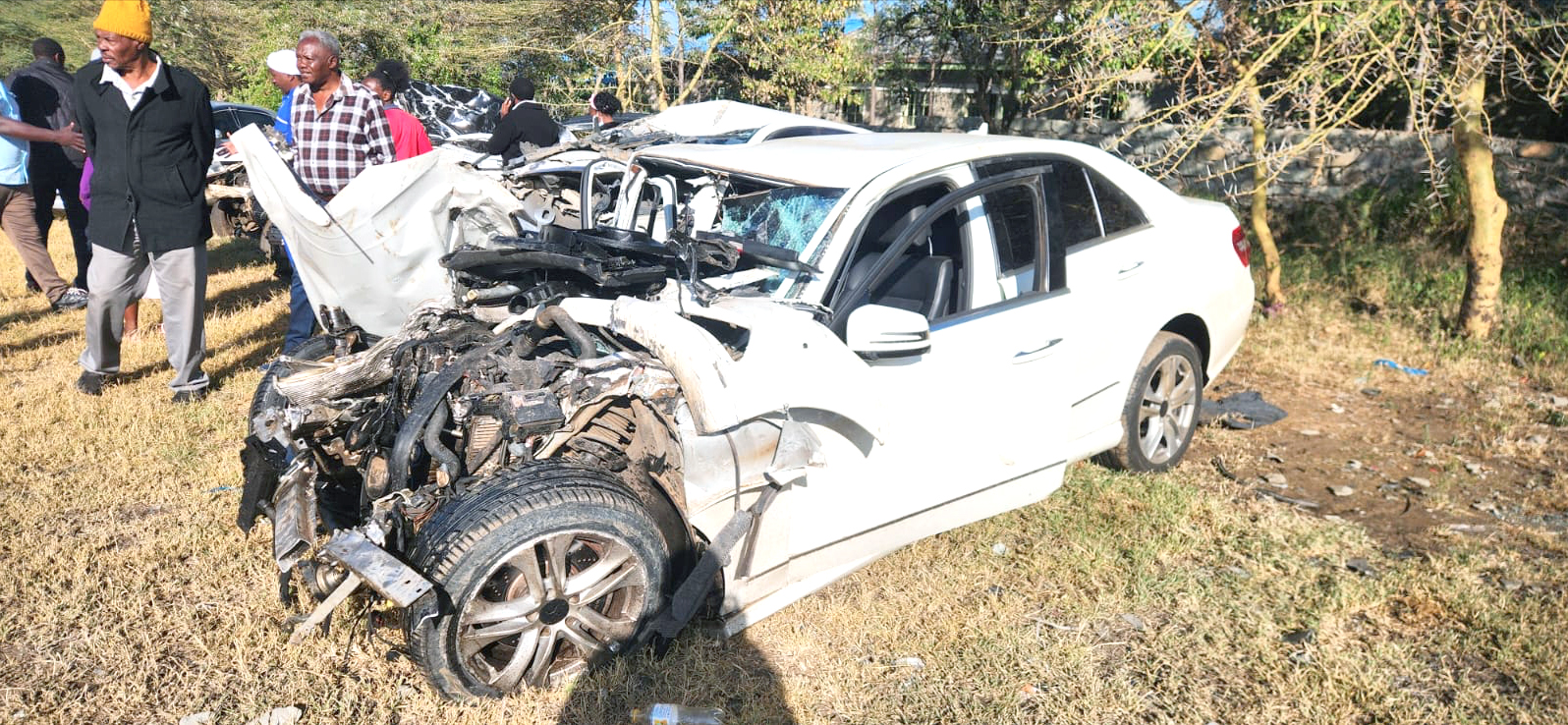 The car driven by former Lugari MP Cyrus Jirongo during the fatal accident on December 13, 2025 /HANDOUT