The
passing of Raila Amolo Odinga, Baba, as we fondly called him, has left a deep
void in the soul of this nation. Kenya has lost not just a political icon, but
a moral compass, a man whose life’s work was the pursuit of justice, democracy and
the freedom of the common person.
I have had the honour, albeit in a few but deeply
impactful moments, to engage with Baba and each encounter left me challenged,
inspired and more determined to stay the course in the struggle for human
rights.
The
last time I was with Baba was on June 4, 2024, when I invited him to be the
chief guest at the Pan-African Conference hosted by VOCAL Africa, which was held
at the Argyle Hotel in Nairobi. Despite his busy schedule, he honoured the
invitation, walking into the room with his characteristic calm confidence and
the presence that always commanded both respect and affection.
Before his
keynote address, we had a few quiet moments together to discuss the state of
human rights in our country. Baba listened keenly, as he always did and then
looked at me with that familiar firmness in his eyes.
“Hussein,”
he said, “you must stay the course. The struggle for human rights is not a
sprint; it’s a lifelong crusade. Eternal vigilance is necessary.” “You see,” he
added, “freedom, once achieved, must be defended constantly. If you sleep,
those who fear justice will reclaim it.” That was vintage Raila - never mincing
words, always reminding us that democracy is not a gift from leaders but a duty
of citizens.
That
was not our only encounter. One of my earlier and memorable meetings with Baba
was several years earlier in Mombasa. At the time, we were leading the Black
Mondays movement, which was a citizen initiative resisting the monopoly of the
Standard Gauge Railway (SGR) that threatened to cripple the coastal economy and
disempower local businesses. Baba had travelled to the Coast and requested to
meet with us.
He
walked into the meeting with his trademark simplicity, no entourage of
arrogance, no pretense of superiority. Just a leader eager to listen and to
engage.
He told us, “We must protect our state enterprises but they must serve
the people, not a few powerful interests.” He expressed deep concern about the
economic marginalisation of the Coast and assured us that he fully supported
our struggle to defend both parastatals and the region’s interests.
At
one point during that meeting, he pulled me aside privately. He wanted to know
my personal views on the local political dynamics at the time. It struck me
that for a man of his stature, he still made time to listen, to learn and to
connect with younger activists and leaders. That humility, rare in our politics,
is part of what made Baba extraordinary.
Yet,
even in the midst of admiration, I must admit that I was deeply disappointed by
one of his final political decisions — his choice to join the government at the
height of the Gen Z protests. Like many Kenyans out there, I did not believe it
was the right move. It felt like a betrayal of the independent spirit that had
defined him for decades.
It is my firm belief that an opposition must remain an
opposition, a necessary counterbalance to power, not a partner in it. When
opposition goes to bed with the government, democracy suffers. Accountability
weakens. The people lose their voice.
Baba’s greatness was built on his ability
to stand firm against the excesses of power, and so his decision to embrace the
“broad-based government” was, to many of us, a difficult moment to reconcile
with the ideals he embodied for so long.
As
I reflect on these interactions, one truth stands out — Raila was driven not by
self-interest, but by conviction. He believed, with every fibre of his being,
that Kenya could become a nation of justice and opportunity for all. He gave
everything — his youth, his health, his peace — to the dream of a better Kenya.
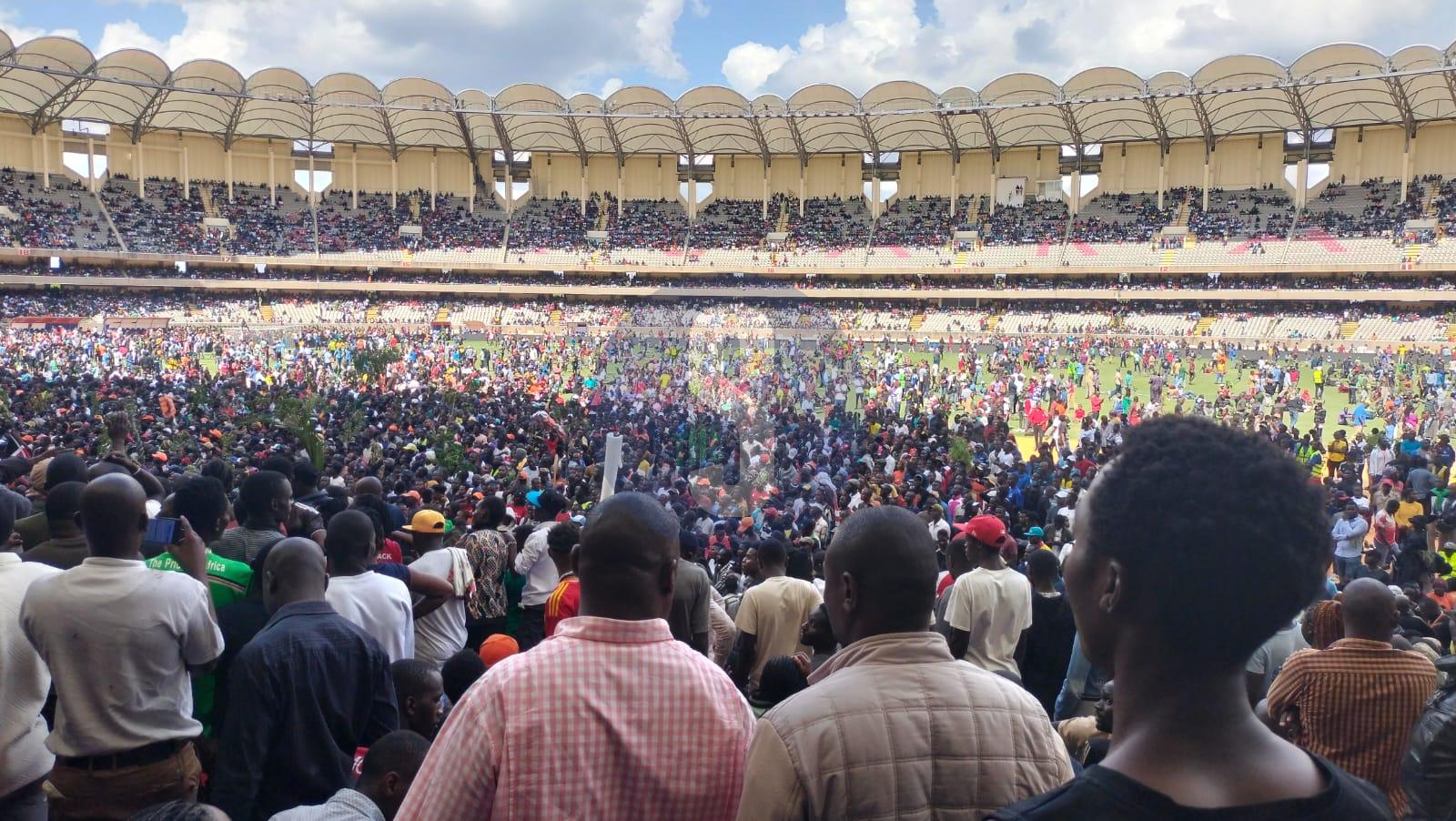
It
is however, ironic that even during his buria,l when we gather to celebrate his
lifelong struggle for justice, as leaders stand on podiums to praise him, they
ignore the cries of families whose loved ones were killed during the same
event. Leaders speak eloquently about Raila’s ideals of justice but remain
silent as innocent lives are lost.
If
Raila were alive today and lives were taken during the burial of any leader, he
would have been the first to condemn it. He would have called for justice,
demanded accountability and stood with the families of the victims. That is who
he was, consistent, fearless, principled. To praise him while ignoring the very
injustice he stood against is the height of hypocrisy. Kenya must not allow
this selective morality to define his legacy.
Fare
thee well, Baba. You ran your race with grace, you bore our pain with courage
and you lit a torch that will continue to guide generations to come. Kenya will
remember you not just as a politician, but as a liberator of hearts and a
champion of justice. May your soul rest in eternal peace.
Human rights activist, lawyer and VOCAL Africa CEO



![[PHOTOS] Raila Odinga Stadium construction enters home stretch](https://cdn.radioafrica.digital/image/2026/06/45f6990c-4882-4cd2-b83c-8fc730dcdce5.jpg)