Some
of us have been singing since 2007 that we needed a break from the presidency
rotating between two communities, and by extension, two regions. In an open
letter to President Mwai Kibaki on July 25, 2011, I implored our now-late head
of state as follows:
“When
we say Your Excellency needs to ensure peaceful handover of power to your
successor, …we are also implicitly asking Your Excellency, and now openly urge
you to use your power and influence to make sure that we not only have free and
fair elections in 2012 but, equally importantly, you must ensure that tribalism
is crushed as the determinative factor in electing our leaders.”
I
further implored our third president thus, “If you accomplish this, Your
Excellency would not only have presided over the changing of Kenya from the old
to the new … you would have also planted a seed that would germinate to an even
more beautiful Kenya where our affairs are governed not by tribe and negative
ethnicity, but by who we are as Kenyans.”
I
concluded my plea to Kibaki by appealing to his sense of patriotism, saying,
“[the] way I see it, Your Excellency, there are a number of things you can do
to lead in this effort to defeat tribalism-based schemes to succeed you and
therefore cleanse our nation of this debilitating disease of tribalism in
Kenya.”
I
then went on to enumerate and describe what these were, including for Kibaki to
“inform our brothers and sisters from Central that, with 42 tribes in Kenya,
and having had Your Excellency and our first President Mzee Jomo Kenyatta
elected from Central to lead our country, let our brothers and sisters from the
area show love and unity with other Kenyans and vote for someone other than
their own this time around.”
As
I previously noted, I don’t know whether Kibaki ever saw my letter, but I do
know a key adviser did, and that fact notwithstanding, now-retired President
Uhuru Kenyatta was sworn into office following the 2013 election.
It
was therefore music to our progressive ears when Uhuru announced after the
handshake, that it was time another son or daughter from outside Mt Kenya led
the country. By supporting Raila Odinga, Uhuru was also saying let’s end the
rotation of the presidency between two communities.
Leaders
from the region joined the chorus, starting with Jubilee insiders such as David
Murathe, Governor Anne Waiguru and opinion leaders such as Prof Mutahi Ngunyi.
While
that was Uhuru’s mission, namely, to put someone in State House other than one
from Mt Kenya, or the Kalenjin community for that matter, someone from the
latter had a different mission.
That
mission by the latter succeeded.
We
are now thrust into a situation come 2027 when Kenyans must decide whether it
is time – as it is - to have a president from elsewhere than these two
communities who have led us since Independence.
Forget
about who has said they’re interested in vying in 2027, there are only two
candidates who can successfully challenge and make the current president a
one-term president and these are former Super CS Fred Matiang’i or former
Vice-President Kalonzo Musyoka.
If
you listen carefully, you’ll hear former
Deputy President Rigathi Gachagua ‘shout loudly’ that he is
not interested and therefore will not vie in 2027.
His
mission is two-fold: to be a vital factor in determining who makes Wantam a
reality and to have an oversized say in the next government.
Both
of those objectives are monumental, but one would be purely speculating if they
told you how that would play out in the end.
What
one can state objectively is this: if Uhuru failed earlier to end the rotation
of the presidency between two communities, he will not fail this time around.
Now
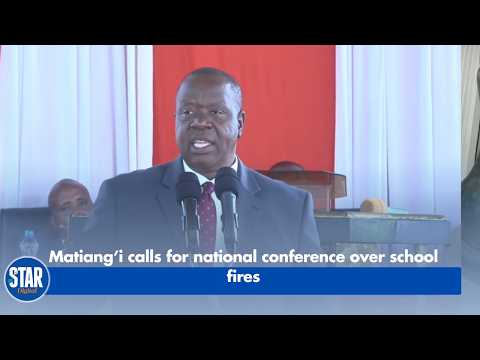
all is set for Uhuru to hand over the Jubilee Party to his former Interior CS from the Abagusii community in Kisii. It
would therefore follow that if a majority of voters cast ballots for Jubilee’s
presidential candidate – expected to be Matiang’i - then this noble
notion all progressives have been dreaming about will become a reality come
2027. No more two-tribe rotation, and with that tribalism will end in Kenya as
a factor in presidential elections.


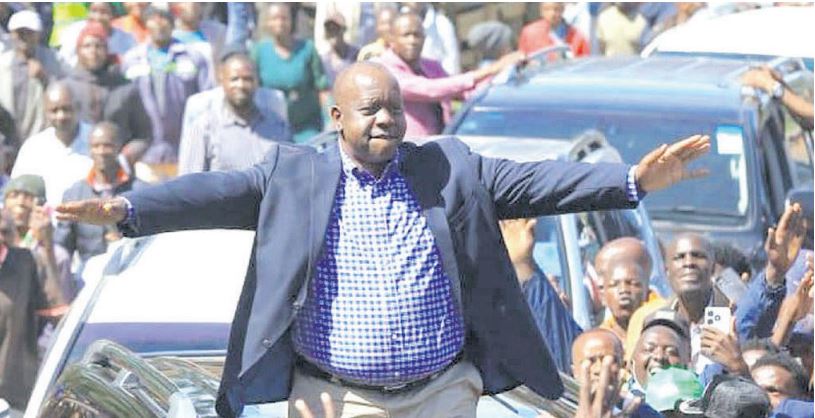 Former Interior CS Fred Matiang'i / FILE