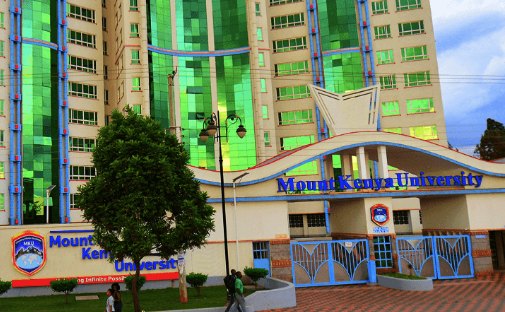
While the context is American, the echoes of this standoff reverberate powerfully in faraway countries like Kenya, where public universities are increasingly under siege – not just from the state, but also from the lingering shadow of colonialism.
In fact, many argue that our higher education system remains the last frontier of colonial hegemony.
More than 60 years after political independence, our public universities remain trapped in an outdated colonial mindset.
The buildings may be new, the enrolment diverse and the politics local – but the soul of the university still genuflects at the altar of Western epistemology. This is not merely an academic problem.
It is a national crisis of imagination and self-definition.
From the language of instruction to the content of our syllabi, research priorities, faculty promotion criteria and, even our graduation gowns, Kenya’s universities continue to operate as intellectual outposts of the colonial project.
We valourise European thinkers, theories and worldviews while ignoring or denigrating African intellectual traditions and indigenous knowledge systems.
This paradox is jarring. The institutions that were once hotbeds of emancipation have become the echo chambers of Western intellectual racism.
Yet, the calls to confront this epistemic crisis are not new.
Scholars like Walter Mignolo have described the enduring grip of coloniality. Ngũgĩ wa Thiong’o – his cremation in the West is beside the point – has argued that decolonising the mind is the most vital form of resistance in the post-colony.
Equally urgent is Shiv Visvanathan’s notion of cognitive justice: the recognition that all knowledge systems – whether scientific, spiritual, oral, or communal – deserve space, respect and legitimacy.
Our academic institutions are relics of colonial legacies.
They were modelled after the British university system – not to liberate, but to produce a class of native administrators loyal to the empire. The curricula were designed to serve colonial economic and political goals, not to empower local communities or advance indigenous innovation.
Decolonising Kenya’s universities must begin with curriculum reform. It is not enough to sprinkle a few African authors into reading lists or rename courses to sound pan-African.
We must redesign entire syllabi around African experiences, languages and philosophical frameworks.
In political science, for instance, why is Plato privileged over Cheikh Anta Diop or Amilcar Cabral? In sociology, why do we still treat Durkheim and Weber as “founding fathers” while ignoring Archie Mafeje, Mahmood Mamdani, Franz Fanon or Sylvia Tamale?
Language is another critical frontier.
The dominance of English in Kenyan universities reinforces a colonial hierarchy of knowledge. Promoting Kiswahili and local languages in academic discourse is not anti-intellectual – it is profoundly liberatory.
To decolonise thought, we must reclaim the tongues that carry our metaphors, memories and meanings.
Imagine a Kenyan university where students can write theses in Kiswahili, publish journals in Luhya or Mijikenda, and debate philosophical questions in Sheng, Dholuo, Agikuyu or Akamba. That would be a truly decolonised intellectual space.
Furthermore, we must rethink research priorities and methodologies. Too often, academic research in Kenya is driven by donor funding and foreign interests. Projects are framed to appeal to Northern funders, not local needs.
Data is extracted from communities but rarely returned in ways that empower them. Instead of chasing international rankings or publishing in inaccessible Euro-American journals, universities should invest in community-engaged research that solves real problems – governance, food insecurity, economic engagement, mental health, ecological sustainability, urban poverty – and does so in co-creation with the people most affected.
A decolonised university must be grounded in the soil of the society it serves. What can dons do?
When contacted for his opinion, Dr Constantine Wasonga, the secretary general of Uasu, emphasised the union’s pivotal role in the decolonisation of Kenya’s universities.
“Uasu has a critical, strategic, and transformative role to play in decolonising our institutions of higher learning,” he said.
As a representative body of the intellectual class, the union operates at the intersection of policy influence, knowledge production and academic labour rights – three core arenas in the broader decolonisation struggle.
According to Dr Wasonga, by organising, agitating and educating both within and beyond the academy, Uasu can act as a catalyst for a genuinely decolonised and liberatory higher education landscape.
Let us be clear, the goal is not to burn down the university, but to reengineer it. Reimagine its pedagogy as a space of plurality, justice and rootedness.
A space where the wisdom of the elders sits alongside scientific inquiry, where oral storytelling informs innovation, where spirituality and science speak in harmony, not contradiction.
This is how we should prepare the next generation not only to inherit the future, but also to shape it.



 Graduates celebrate their graduation /AI ILLUSTRATION










![[PHOTOS] Ruto attends service at Nkarusha SDA](https://cdn.radioafrica.digital/image/2026/06/dd6275de-ac6e-4370-96c8-fed73c7f1a3a.jpg)