Kenya is a multiparty democracy. This is a conscious choice of the form of government that Kenyans wanted to have at independence and when they deliberated, voted and promulgated the constitution 2010.
They dismissed oligarchy, where all power resides with a few dominant class in the society, the monarchy with a hereditary chief of state with life tenure and powers varying from nominal to absolute and dictatorship where one person makes all the rules and decisions without input from the people are the other forms of governments.
In a democracy the role of citizens cannot be overstated. Their active participation is a cornerstone of democratic principles and a vital force in ensuring accountability, transparency, and the protection of rights by states and non-state actors.
The people, also known as rights holders, have the duty to raise their voices about decisions that affect their lives, hold the powerful accountable, and fight for equality. This role is facilitated by a safe civic space and a free media that provides crucial information to the public.
Kenya's democracy has evolved significantly since independence, marked by moments of turmoil and triumphs. Kenyans have consistently confronted oppression and dictatorship prior to independence leading to surrender of the colonial occupiers and against the autocratic tendencies of successive post independent governments whenever they veered off the democratic path.
Like our Mau Mau heroes and Kenyans at the forefront of the Second Liberation struggle that ushered in multi-party democracy, the Gen-Z and Millennials are today walking a familiar path of active citizenship. As Kenya navigates the challenges of governance, wanting leadership, social and economic challenges, the active involvement of citizens—particularly the youth—serves as a beacon of hope in safeguarding our nascent democracy.
The Constitution of Kenya 2010 firmly anchors civic engagement within its framework, to ensure that citizens have the rights, means, and opportunities to take part in governance. It guarantees freedoms of expression, access to information, and the right to public participation. The Constitution empowers Kenyans to play a central role in shaping their democracy, to safeguard devolution, and demand transparency, and accountability on those who manage their affairs so that they don’t divert from aspirations of the people.
The events of the past week have brought bare the citizen awareness of their duties and responsibilities and a state that is veering off its democratic commitment. Any attempt at authoritarianism and suppression of free expression threatens democracy, creates resentment and deepens inequality.
The youth - Genz and Millennials - who are the new spokespeople for the masses of Kenya have listed leadership, governance and policing, respect for human rights, thriving economy among issues that need urgent redress, not dialogue, to reverse a sorry state of affairs.
Young Kenyans, frustrated by issues such as punitive laws, corrupt leaders, resource wastage, and poor governance, have demanded accountability from the leaders, accountability resources including public debt, spiralling cost of living and opportunities for the youth.
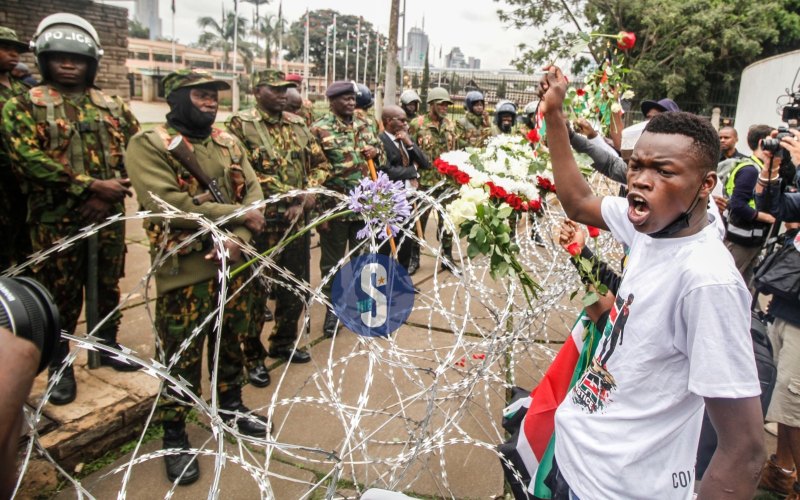
They also call for the respect for the constitution and constitutional bodies, and the laws of Kenya. In response, the government have resulted to brute force, intimidation, mass arrests, kidnapping, misinformation, and propaganda that unfortunately have failed to deter the call for change.
On 16 July, the Kenya National Commission on Human Rights shared disturbing data on the state of human rights in Kenya during the past four weeks of protests – A total of 50 people killed across the country, 413 injured, 59 people abducted while 682 were arbitrary arrested.
In addition, the social media was flooded with misinformation and pro-government propaganda that rather than address the public concerns and state induced violations have miserably attempted to blame vocal civil societies in Kenya and philanthropic foundations like the Ford Foundation for citizen agitation.
Accountability is a critical pillar that binds democratic societies globally and Kenya is not exempt. It should be recalled that serious crimes against citizens of any nation shocks the conscience of everyone anywhere in the world.
Unprovoked and indiscriminate killings by the police of over 50 youthful, unarmed protesters and kidnapping of 59 social media users and human rights defenders some of whom have been tortured or killed are serious crimes. Kenyan institutions like the Independent Police Oversight Authorities, and the Director of Public Prosecution must take seriously these violations to ensure justice and accountability.
Equally, the KNCHR and the Courts should invoke their powers to commission inquiries into commission of serious human rights violations and fight impunity. The community of states that believe in democracy must equally add their voice to stop the violations and consider investigative and fact finding missions for accountability.
The constitution envisions that every citizen is active in governance. This means that the population is aware and there is safe civic environment for citizens to demand the full realization of human rights. The 1998, UN Declaration on Human Rights Defenders recognizes the right and responsibility of individuals, groups and organs of society to promote and protect universally recognised human rights and fundamental freedoms.
It recognises the valuable work of HRDs in the protection of human rights and fundamental freedoms and support good governance as a critical safeguard against threats from autocratic regimes and backsliding democracies. It acknowledges that where civil society and human rights defenders’ ability to work freely is weakened, human rights abuses and violations, discrimination, and corruption flourish.
The Kenya state continue to undermine the work of human rights defenders and civil societies through intimidation, unfair trials on spurious charges, digital attacks on their information and despicable narratives. Recent surge on online attacks on the most progressive and vocal CSOs on platforms like X and Facebook as well as public attacks by political leaders is not uncommon form of scapegoating.
As citizen agitation peaks, misinformation and propaganda will certainly increase but they cannot alter the truth. What is critical is that despite increased reprisals that include office break-in, surveillance, kidnapping, intimidation of funding partners, as well kidnapping, injuries and killings of their leaders, civil society organisations in Kenya have remained resilient and would continue to play a pivotal role in fostering citizen engagement, advocating democratic reforms, protection of human rights and rule of law.
As a democracy, Kenya government must focus on strengthening democracy, its institutions and its practice. This includes the protection of civic space for citizens’ to freely express their views, assemble peacefully, and access information.
Additionally, the state must be committed to listen to the people, and genuinely address their concerns. The alternative would be a regrettable extra-constitutional shift to other forms of government against the wishes of the people.
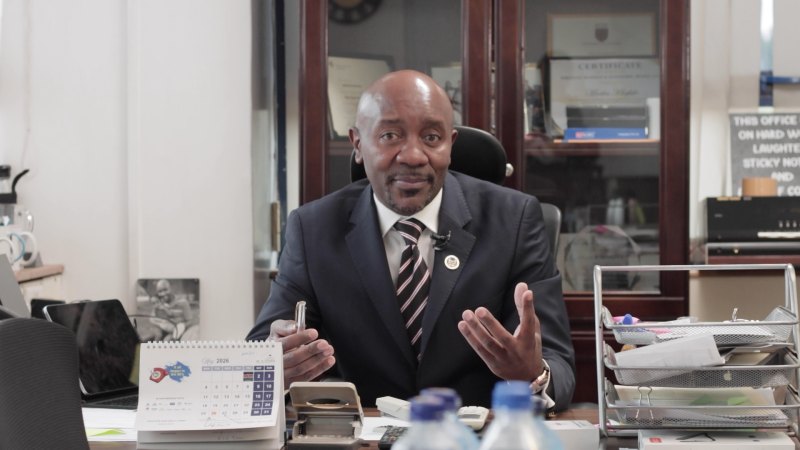
Executive director, Defenders Coalition


![[PHOTOS] Calm prevails in Kisumu, Homa Bay](https://cdn.radioafrica.digital/image/2026/06/dff8923b-c99a-4f40-a4be-cc996653e4e0.jpg)