In this case, in the eagerly anticipated August 9 general election, I foresee the presidential victory tilting towards Deputy President William Ruto for a myriad of reasons, chief among them the running mate and Uhuru factors, and the numbers. In statistics, numbers don't lie.
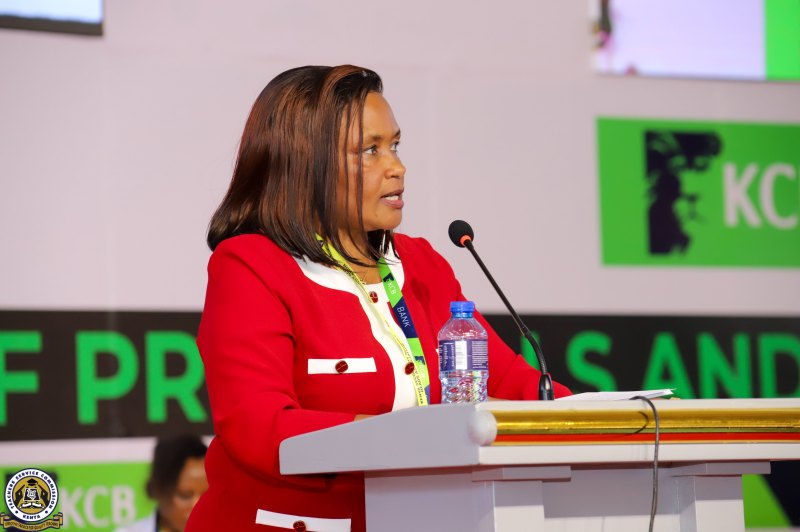
Since Azimio la Umoja presidential flag bearer Raila Odinga unveiled his running mate to be the former Gichugu legislator and Narc Kenya party leader Martha Karua, her selection was met with, elation especially amongst feminist circles. This was so because should Raila win, Karua would be the highest ranking woman ever serving in our country’s political hierarchy, and a heartbeat away from the presidency.
As much as it is historic, her deputy presidential candidacy is simply attractive but not arithmetically bringing in clout.
Ruto still commands a huge support in Mt Kenya region, a huge voting bloc in the country. His Rift Valley backyard, another massive vote basket, will clearly thrust his bid.
The talk of the women vote bloc is unrealistic because voting patterns in Kenya are solely determined by ethnic numbers and definitely not informed by gender.
Additionally, Kenya is a deeply patriarchal society, where leadership has been viewed, by millions unfortunately, as a preserve for the men. Therefore Karua’s political prominence is not as palatable to the millions of patriarchal Kenyans, both men and women, who would not be comfortable, as yet of a woman as second in command.
Besides, she was presidential contender in 2013, finishing a distant sixth with a paltry 43,881 votes nationally, despite being in national politics then for 20years, six years as a powerful Cabinet minister. Her numbers fall short.
The 2022 elections will be Raila’s fifth stab at the presidency. His first stab at the presidency was in 1997, when he came a distant third. Since then, his candidacies have been met with fascination and furor in equal measure, as in three of his strongest campaigns, he has cried foul and strongly alleged vote rigging against him.
His current presidential campaign is only bolstered by the fact that he has been endorsed by the incumbent, President Uhuru Kenyatta. To millions of Raila ’s supporters, that is equivalent to poll victory given President Kenyatta is in control of the state machinery that is very amiable to Raila's campaign.
Without it, Raila’s campaign is fatigued. His talking points aren’t as fiery as they were in 2007, which arguably was his strongest presidential campaign. His stump speeches are incoherent and uninspiring as he tends to dwell on criticizing Kenya Kwanza’s William Ruto, inadvertently giving his closest opponent more political capital and publicity. And, the fact that he is considered to be President Kenyatta's “project” is harming his candidacy and puncturing his chances of succeeding Uhuru as the fifth president of Kenya.
Uhuru’s conspicuous involvement in the Raila campaign is eroding Odinga’s credibility as a potential and possible independent political player, should he be president.
It is rather obvious that Uhuru wants Raila to be a conduit of his political participation, as was the intention with the failed Building Bridges Initiative, which was felled by the Judiciary.
Uhuru has also explicitly indicated that he is the one who chose Karua as Raila’s running mate, further buttressing the belief that he still wants to govern through the back door. Few Kenyans would want a continuation of Uhuru’s presidency, as it has contributed, amongst many other ills a sky rocketing debt that is in trillions and an abysmal state of the economy where unemployment is rife.
When convincing voters on why they should reward a candidate with their votes to get to office, it is not advisable to woo voters by making them feel indebted to you, or rather entitled to be voted for.
In this case, the Raila-Karua ticket has been traversing the country making known of their dual contributions to multiparty democracy, human rights and also their agitation for good governance since the early 1990s. They have enumerated their years in the trenches fighting for the progress of this country, and the underlying tone in their delivery is that they should be rewarded for their previous sacrifices.
That falls flat. Voters should never feel they owe a candidate their votes. Rather, a candidate should solely base their messaging on what they can or will do for the voters. The contrary conveys entitlement.
Lastly, Ruto is likely to win the August 9 elections because his campaign is not detached from the concerns of the poor. Whilst Raila was fixated on popularizing the BBI, since his famous handshake with Uhuru, spending billions of tax ayer’s money, that association left a bad taste in millions of Kenyans’ mouths.
The BBI was clear on expanding the government, against the financial detriment on the taxpayers. Ruto, who was an early opponent to the initiative, cited it as unnecessary, struck a chord with followers, when he proclaimed that economic reforms to Kenya’s proletariat should be the priority instead of assuaging to the political class by expanding the government.
The victor in this titanic race is likely to be the Deputy President, according to my humble analysis.
It was imprudent to have Karua as Raila’s running mate, because if she alone, cannot guarantee herself gubernatorial victory in Kirinyaga county, why would she be entrusted in delivering the vote rich region of Mt. Kenya to Raila, yet she has been in the political cold for a decade due to an embarrassing presidential loss and a gubernatorial loss to a political novice?
It all adds up to a presidential victory to Ruto on Tuesday.