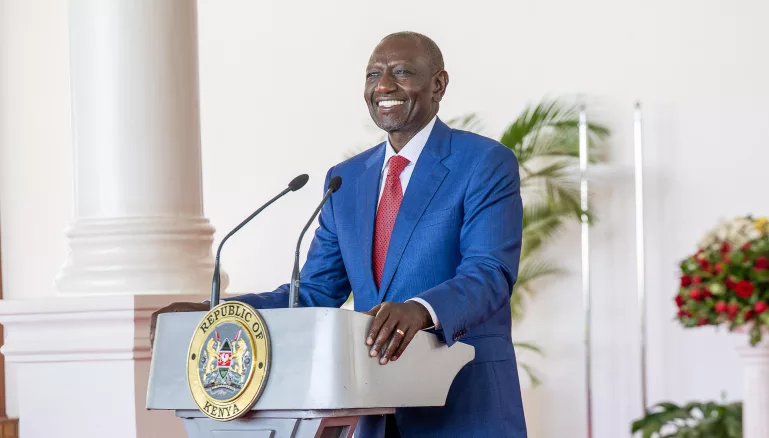
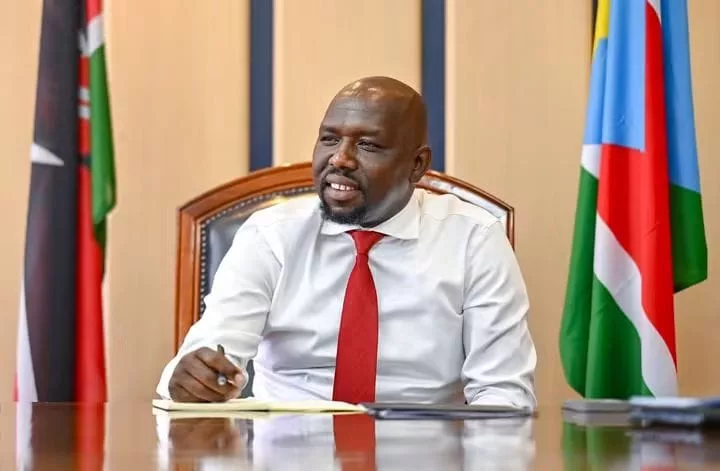
The two had been on opposite sides of the infamous 2007 electoral contest that left Kenyans displaced, maimed and dead in its fractious aftermath. Out of the ashes of the post-election violence, Uhuru and Ruto formed Jubilee to capture power as insurance against impending trial at the International Criminal Court for crimes against humanity emanating from the 2007-08 violence.
Therefore, Jubilee had virtually no ideology at its founding, being a mere vehicle for subterfuge against the ICC, couched in enticing electoral promises such as laptops for all primary school children, stadia of international standards all over the country, and other juicy morsels for voters that have yet to materialise to this day.
For their reelection in 2017, Jubilee was under intense scrutiny by the opposition led by Raila Odinga, a foe with formidable ideological credentials on social justice, widely credited as the father of Kenyan democracy and devolution of power and resources to the grassroots.
As Raila campaigned on defeating corruption, lowering the cost of living, and creating equal opportunity for all Kenyans to prosper, Jubilee responded by coining the ‘Big Four Agenda’, ostensibly to spur economic transformation in Kenya.
Unfortunately, a better-focused policy plan for the second term of the Uhuru administration had to contend with a presidential election besmirched by the Supreme Court finding that the vote was irredeemably marred by malpractices, thus nullifying the results in a historic decision.
That Kenyans spent about a quarter of their total household budget from their pockets on healthcare is an onerous burden that can only be eased through better risk mitigation in a health insurance scheme to avoid catastrophic spending that drives families into penury every time a loved one has an ailment.
With the fresh presidential election boycotted by Raila, Uhuru was in danger of running an illegitimate government that would probably tear the country asunder.
In their wisdom, Raila and Uhuru made peace to save the nation from a fate of turmoil and ensure progress. Thus, Jubilee had breathing room to govern the country after the March 2018 ‘handshake’ between Raila and Uhuru.
This tranquillity was however disrupted by Deputy President Ruto, protesting being upstaged by the partnership of Raila and Uhuru, which he claimed was aimed at edging him out as a presidential successor.
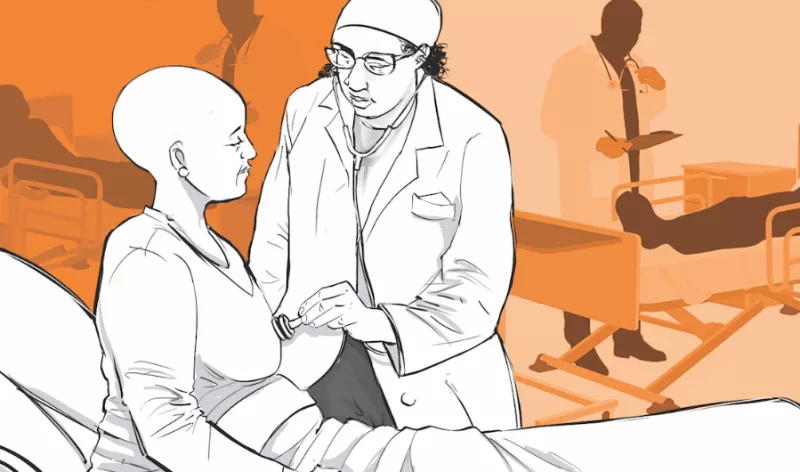
In this second article of the series, I analyse the impact of the Jubilee administration's Big Four policies on Kenyans, focusing on healthcare.
Jubilee promised achievement of universal health coverage, implying affordable, accessible and quality medical care for all Kenyans, and a 54 per cent reduction in out-of-pocket (OOP) health costs as a proportion of household expenditure.
Jubilee sustained the increased access to healthcare it inherited from the Kibaki-Raila coalition government, facilitated by devolution of health services, increased training of health professionals and expanded government spending. The Economic Survey shows expenditure on health as a proportion of total government spending rose from 2.8 per cent in 2017-18 to 3.7 per cent in 2021-22.
However, World Bank data shows OOP health expenditure as a proportion of household spending by Kenyans remained high under Jubilee, falling only slightly from 32.1 per cent in 2013. The Big Four target of a 54 per cent reduction in OOP health expenditure from the 2017 figure of 23.3 per cent was not met, as the required 2.5 percentage point annual reduction was missed, and OOP actually rose to 24.3 per cent in 2019.
That Kenyans spent about a quarter of their total household budget from their pockets on healthcare is an onerous burden that can only be eased through better risk mitigation in a health insurance scheme to avoid catastrophic spending that drives families into penury every time a loved one has an ailment.
Raila says if he is elected President, he will implement ‘Baba Care' by enrolling all Kenyans into the National Hospital Insurance Fund through incentives for those who can afford to contribute their premiums consistently, and government paying for Kenyans who cannot afford it.
This is feasible as it would improve NHIF enrolment from the current 23 million principal members and dependents to cover all the 50 million Kenyans, contributing to universal health coverage where everyone has access to affordable and quality healthcare without having to pay additional money from their pockets.
NHIF would have better funding to pay healthcare costs as the insured pool is expanded to all Kenyans. This would improve the current inadequate funding that has seen the fund resort to asking patients to pay future premiums in advance of up to 18 months in some cases, before approving payment for their treatment, which many people cannot afford.
The cost to government for paying premiums of the estimated 2 million needy families of about 8 million people, including the 4 million in extreme poverty, is about Sh12 billion per year, which is affordable in our current budget, especially if inefficiency and theft of public resources are eliminated. This will ensure no Kenyan is denied healthcare services due to poverty, or any other reason.
Ruto has proposed lowering the premiums from Sh500 per month to Sh300 per month, which will inevitably help more people to enrol in NHIF and improve access to affordable healthcare. However, the reduced premiums would still be out of reach of the poorest Kenyans.
As Kenyans bid farewell to the Jubilee administration of Uhuru Kenyatta and William Ruto, the hope is that the next government shall have a clear ideological and policy focus to include every Kenyan in national progress based on equal opportunity to prosper.
Jubilee made efforts to achieve commendable aims, especially in its second term, but failed to meet some of the major commitments such as the achievement of universal health coverage.
For universal health coverage to become a reality, Kenya must aim to surpass the average level of healthcare access and quality in middle-income countries within the next five years, and double the number of registered health professionals and health facilities from the current 222,870 and 14,137 respectively.
The next president has to commit to the mantra of ‘promises made, promises kept’, to build Kenya into a prosperous and enduring country.
“WATCH: The latest videos from the Star”


![[PHOTOS] Elderly brave cold to vote in Ol Kalou](https://cdn.radioafrica.digital/image/2026/07/d2345b9e-578f-45ff-9bb0-d7819671c165.webp)


![[PHOTOS] Ol Kalou residents turn out in large numbers to vote](https://cdn.radioafrica.digital/image/2026/07/fe42d51c-7f79-466e-94e8-59561f77bbe7.webp)