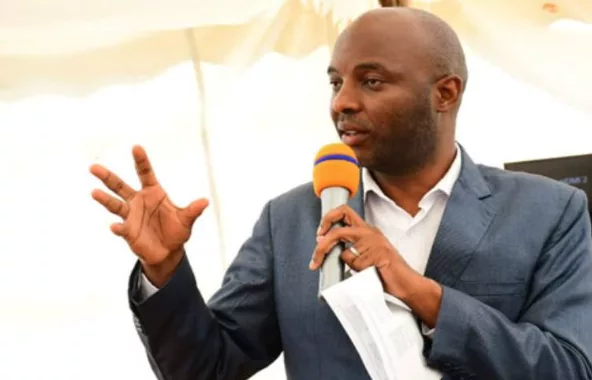
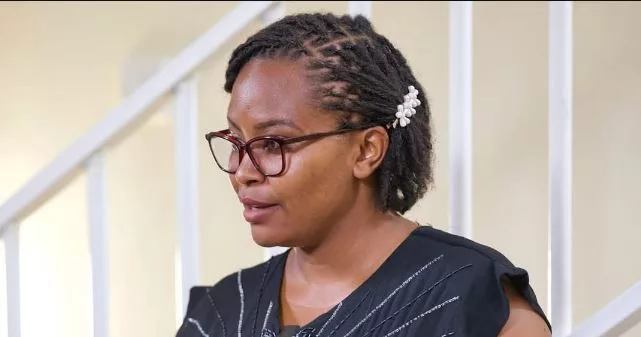
Media arts and Design HOD Roy Khaemba speaks during the training
In the age of artificial intelligence and growing misinformation, fact-checking skills are becoming increasingly important for aspiring journalists and media practitioners.
The rapid spread of information through social media platforms, messaging applications, blogs, podcasts and AI-powered tools has transformed the media landscape.
While technology has made it easier to access information, it has also increased the circulation of false, misleading and manipulated content, creating new challenges for journalists and the public alike.
These concerns formed the basis of discussions during the 2026 National Fact-Checking Bootcamp, which brought together university students from across Kenya for training on ethical fact-checking practices, information verification and responsible use of artificial intelligence in journalism.
The bootcamp, held at Zetech University in partnership with Africa Check and DIMLIS Africa, focused on preparing future journalists to navigate an increasingly complex digital information ecosystem where misinformation can spread faster than ever before.
For media educators, the challenge is no longer simply teaching students how to gather and write news stories. It is also about ensuring they can distinguish factual information from falsehoods before publication.
According to Roy Khaemba, Head of the Department of Media Arts and Design at Zetech University, the ability to verify information has become a critical skill in modern journalism.
“Today’s media environment makes it extremely difficult even for ordinary consumers to tell which information is factual and which is not,” he said during the event.
Khaemba noted that while audiences consume large amounts of information every day, many lack the tools needed to assess its credibility. As a result, journalism schools have a growing responsibility to train students to identify misinformation and provide accurate information to the public.
“We want to have a situation whereby students whom we are sending into the industry have the ability to tell what is factual and what is not factual for the benefit of the masses,” he said.
His remarks come at a time when concerns over misinformation continue to grow globally, particularly during politically sensitive periods such as elections.
Kenya is expected to enter another intense political cycle in the coming years, a period that experts say is often accompanied by increased circulation of manipulated videos, fabricated claims and misleading social media posts.
For journalism trainers, equipping students with verification skills before they enter newsrooms could help strengthen public trust in the media during such periods.
The rise of artificial intelligence has further complicated the information landscape.
Generative AI tools are increasingly capable of creating realistic text, images, audio and video content. While these technologies offer opportunities for newsrooms to improve efficiency, they also present significant risks when used to create deceptive content.
As a result, discussions around AI literacy formed a key part of the bootcamp.
Participants received training on how to responsibly use AI tools, understand their limitations and verify information generated through automated systems.
Industry experts say AI should be viewed as a tool rather than a replacement for journalistic judgement.
“The AI is here with us, and we just have to use it but not be afraid of it,” Haemba said.
He explained that journalism education must evolve alongside technological advancements, ensuring students are equipped with skills relevant to modern newsrooms.
That sentiment was echoed by Africa Check's Alphonse Yundu, who said future journalists require a combination of traditional reporting skills and modern verification techniques.
“We are making journalism students ready for the newsrooms of the future,” he said.
According to Yundu, the training covered verification skills, digital hygiene, fact-checking techniques and AI literacy, all aimed at helping journalists navigate a rapidly changing media environment.
“There are a lot of falsehoods that spread on social media and sometimes even find their way into mainstream media, community radio stations, churches and public conversations,” he said.
“We want them to get the skills and knowledge on how to spot falsehoods and how to stop the spread of those falsehoods.”
One of the recurring debates during discussions on misinformation is whether so-called "armchair journalism" contributes to inaccurate reporting.
The term is often used to describe journalists who rely heavily on online sources and desk-based reporting instead of physically going into the field.
However, Yundu argues that the issue is more complex.
Modern technology, he noted, has created legitimate ways for journalists to gather information remotely through satellite imagery, drones, open-source intelligence tools and digital verification platforms.
The real problem, he said, is not where journalists work from, but whether they possess the necessary skills to verify information before publishing it.
“What is contributing to falsehoods making their way into the newsroom is really a lack of skills to verify information,” he said.
For years, newsrooms have cited tight deadlines and pressure to break stories first as reasons for publishing information that later turns out to be inaccurate.
Yet according to Yundu, advances in verification technology have significantly reduced such excuses.
“There are new tools that journalists can use to verify information quickly,” he said.
“You don't have to use the excuse that there is no time. There are plenty of tools available to anyone with an internet connection and a smartphone.”
His comments reflect a growing shift within journalism, where speed is increasingly being balanced against accuracy.
Media analysts argue that while audiences demand immediate updates, inaccurate reporting can have lasting consequences, including reputational damage, public panic and legal disputes.
The challenge is particularly relevant in the era of viral content, where false information can reach thousands of people within minutes.
A manipulated image, an edited video or an AI-generated statement can spread across multiple platforms before fact-checkers have an opportunity to intervene.
This reality has elevated fact-checking from a specialised newsroom function to a core journalistic skill.
Beyond technical verification, trainers are also emphasising ethical responsibilities.
Haemba noted that students are being introduced to professional standards and updated codes of conduct to ensure they understand their obligations as future journalists.
The goal, he said, is to prepare graduates who can uphold accuracy and accountability even when working independently outside the supervision of lecturers and editors.
“At the end of the day, they will not have teachers around them,” he said.
“We need to make sure that when they go out into the industry, they carry with them the right information and the right professional values.”
Experts also stress that combating misinformation requires continuous learning.
The tactics used to spread falsehoods evolve rapidly, meaning journalists must regularly update their skills to keep pace with new technologies and emerging threats.
Yundu said training institutions, media houses and fact-checking organisations all have a role to play in ensuring journalists remain equipped to deal with these changes.
“What we taught journalists several years ago is not necessarily what they are using today,” he said.
“Every year we look at the tactics being used to spread falsehoods and then identify the most effective responses.”
This approach has seen fact-checking organisations increasingly collaborate with universities, newsrooms and media development institutions to strengthen information integrity across the profession.
As artificial intelligence continues to reshape how information is produced and consumed, experts believe the future of journalism will depend not only on technological innovation but also on the industry's commitment to accuracy.
For journalism students preparing to enter the profession, the message from trainers was clear: technology may change the tools of journalism, but the fundamental responsibility to verify information remains unchanged.
In an era where anyone can generate content and publish it instantly, the ability to separate fact from fiction may become one of the most valuable skills a journalist can possess.