


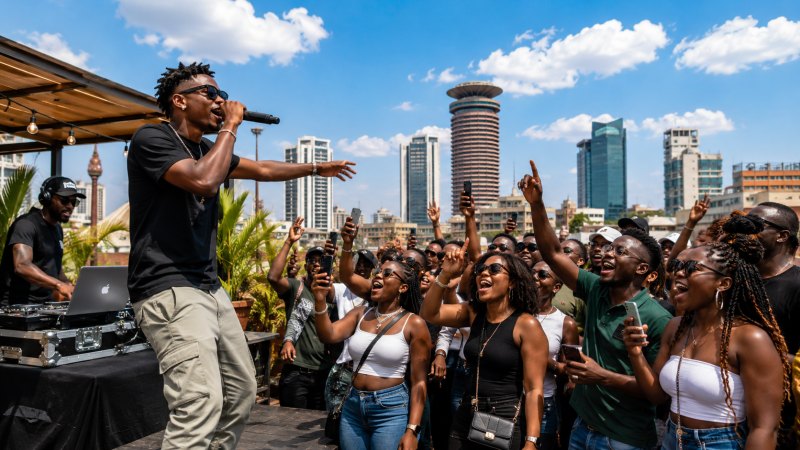
I first noticed it in a matatu on my way back home, one of those loud, neon-lit ones blasting Gengetone like it’s a public service. The conductor skipped past three of us standing awkwardly with crumpled up notes, only to stop, grin and say, “Uko sawa, boss?” to a guy in a crisp hoodie and suspiciously symmetrical face. No fare drama. No side-eye. Just vibes. That’s when it hit me: pretty privilege isn’t a theory; it’s a currency. And among Gen Zs in Kenya, it’s being spent everywhere.
Let me explain what I mean without killing the vibe. Pretty privilege is the unspoken advantage people get simply because they are considered attractive. It’s not just about dating or Instagram likes; it seeps into everyday life. It’s who gets served faster at Java, who gets a second chance in a job interview, who is forgiven for being late, loud or even rude. It’s subtle, but it’s everywhere. And once you see it, you can’t disregard it.
I’ve watched it play out in classrooms in campus, at house parties in Rongai and even in church (yes, even there). Back in campus, we had this one lecturer who insisted on ‘participation marks’. Sounds fair, right? Except participation somehow always seemed to come from the same faces, the ones with clear skin, trendy fits and that effortless confidence. I remember raising my hand repeatedly, only to be passed over. Then Wesley*, who hadn’t spoken all semester, would clear his throat, say something vague like, “I think society influences behaviour,” and suddenly it’s, “Excellent point, Wesley!” The class would nod like he’d just quoted Plato.
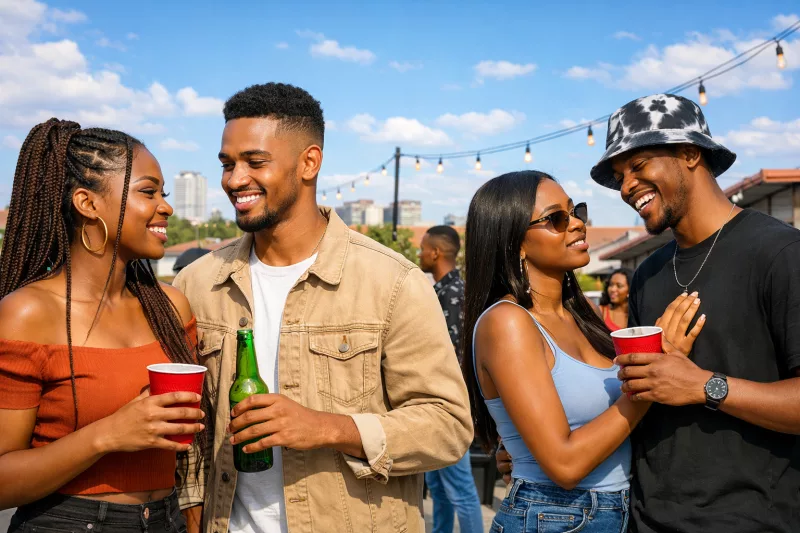
And it’s not just institutional. It’s deeply social. At a friend’s birthday in Kilimani, I saw two girls arrive minutes apart. One, conventionally stunning, with perfect makeup and sleek outfit, was greeted with screams, hugs, drinks shoved into her hands. The other, more understated, got a polite “Hey” and had to find her own seat. Same party. Same people. Different energy. I remember thinking, are we even aware we’re doing this?
The thing is, this isn’t just vibes, it’s backed by research. Studies in social psychology consistently show that attractive people are perceived as more competent, more trustworthy and even kinder. It’s called the ‘halo effect’. In Kenya’s hyper-visual, social media-driven Gen Z culture, that effect is amplified. TikTok and Instagram don’t just reward beauty, they algorithmically boost it. The prettier you are, the more visible you become, and the more opportunities come your way. It’s a feedback loop, and it’s working overtime.
But here’s where it gets messy. Some people argue that pretty privilege is inevitable. “Si ni life,” my friend Galvin Waweru, 23, told me over mutura in Roysambu. “Attractive people have always had it easier. Even in animals, the strongest or most appealing get picked. Why are we acting shocked?”
He has a point. There’s a biological and evolutionary angle to all this. Humans are wired to respond to symmetry, health cues, all that.
Still, that explanation doesn’t sit right with me, not when I see how it plays out in real life. Because it’s not just about attraction; it’s about access. It’s about who gets heard, who gets hired, who gets forgiven. And that has consequences.
On the flip side, I’ve also heard from people who benefit from it and are surprisingly self-aware. “I won’t lie, doors open for me,” said Amina Rahma, 25, a content creator from Westlands. “Sometimes I get brand deals or free stuff, and I know it’s not just my personality. But it also comes with pressure. People expect you to always look perfect, always be ‘on’. It’s exhausting.” That part often gets overlooked, the cost of being put on a pedestal.
Still, let’s be honest, the benefits often outweigh the drawbacks. And for those on the other side, it can be quietly demoralising. It chips away at your confidence when you realise that effort, intelligence or kindness sometimes come second to aesthetics. It makes you question your worth in spaces that claim to be merit-based.
What worries me most is how early this starts. Scroll through TikTok and you’ll see teenagers already ranking themselves, chasing a certain look, filtering their faces into sameness. Beauty is becoming less diverse, more standardised. And with that comes a narrowing of who gets to feel “enough”.
I’m not saying we should pretend attraction doesn’t exist. That would be dishonest. But we need to be more conscious of how much weight we give it. We need to check ourselves in those small, everyday moments; who we smile at, who we listen to, who we overlook. Because at the end of the day, pretty privilege isn’t just about pretty people. It’s about the rest of us and what we’re willing to reward.





![[PHOTOS] Ruto hosts Bungoma delegation at State House](https://cdn.radioafrica.digital/image/2026/07/38c18064-4bd7-4a52-9171-4dcce631a74b.webp)