
The first week in a new workplace often feels like the first day of school. You arrive with experience, confidence and a reasonable understanding of your profession, only to discover that every institution has its own rhythm, language and unwritten rules.
That was my experience when I recently joined The Nairobi West Hospital as a customer care executive.
Having previously worked at Avenue Healthcare Kisumu Hospital, a 90-bed Level 5 facility, I thought I had a fair grasp of healthcare customer service. Then I stepped into a 400-bed Level 6 hospital in Nairobi and quickly realised I was entering a much larger ecosystem. The scale alone was striking!
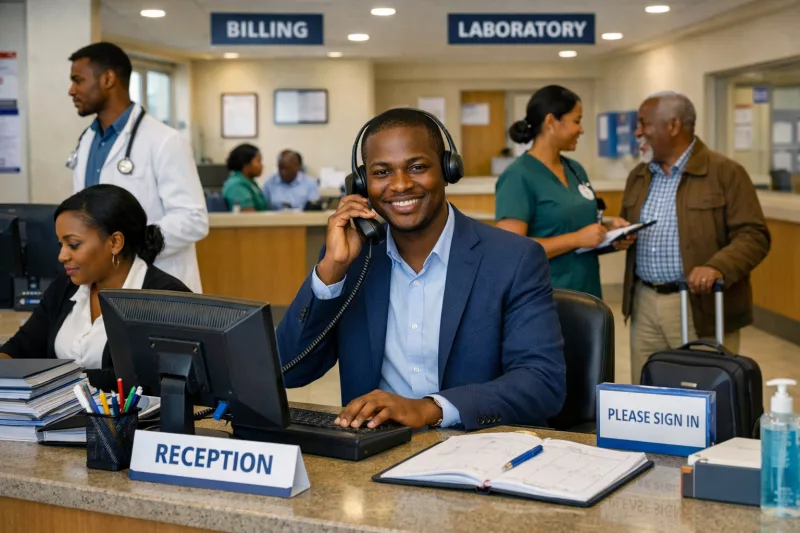
The volume of walk-in clients, the constant movement of patients and visitors, the ringing telephones and the coordination required across multiple departments create an environment that rarely slows down. At times, particularly when manning the front office desk during colleagues' lunch breaks, the experience felt like directing traffic at one of Nairobi’s busiest roundabouts.
Yet the size of the hospital is not defined by its bed capacity alone. It is reflected in the calibre of professionals who walk its corridors every day, and the complexity of care they provide. Working alongside world-class doctors, nurses, pharmacists, laboratory scientists, radiographers and other multidisciplinary healthcare professionals has given me a front-row seat to modern medicine in action.
Every day, I witness the collaboration required to deliver highly specialised care, from advanced orthopaedic procedures and bone marrow transplantation to sophisticated diagnostic imaging. The Nairobi West Hospital is home to Kenya's first AI-enabled 160-slice PET-CT scanner. It offers comprehensive MRI and CT imaging services, among other cutting-edge technologies. As someone passionate about customer experience, it is inspiring to see how clinical excellence, innovation and compassionate service come together to improve patient outcomes.
Everyone needs assistance. Everyone needs it now. And everyone deserves to feel seen. And heard.
In such moments, multitasking ceases to be a line on a CV and becomes a survival skill.
Healthcare customer service occupies a unique space. Unlike retail or hospitality, many clients arrive carrying anxiety, discomfort, fear or uncertainty. Some are worried about a diagnosis. Others are concerned about a loved one. A few are simply exhausted by a long day.
The challenge is not merely providing information. It is doing so with empathy, patience and professionalism.
This week reminded me that emotional intelligence remains one of the most valuable competencies in customer experience. Procedures can be taught. Systems can be learned. But the ability to calm a distressed client, diffuse frustration and preserve dignity in difficult moments is what often defines service excellence.
Another lesson came from observing the diversity of the hospital's clientele.
Nairobi is a cosmopolitan city, and its hospitals reflect that reality. Every day brings interactions with people from different ethnic, linguistic, cultural and social backgrounds. Such encounters reinforce the importance of cultural sensitivity and diplomacy. Effective communication is not simply about speaking; it is about understanding.
The experience has also prompted me to think about patient journeys. Modern healthcare is increasingly measured not only by clinical outcomes but also by the experience patients have while seeking care. Long queues, multiple service points and repeated administrative processes can influence how patients perceive quality.
At my previous workplace, a model known as ‘Door to Doctor in Three Minutes’ sought to streamline this experience by minimising patient movement and bringing services closer to the consultation room.
No system is universally applicable, particularly in facilities with significantly different patient volumes, but the underlying principle remains relevant: Healthcare should be designed around the patient, not the process.
Beyond operational observations, the transition has also offered a personal lesson in work-life balance. In my previous workplace, 12-hour shifts formed part of my professional routine. The move to a structured daytime schedule has been a welcome adjustment and a reminder that employee well-being is not separate from service delivery. Staff who are rested, motivated and supported are better positioned to care for others.
Five days may seem too short a period from which to draw conclusions. Yet first impressions often reveal truths that familiarity can obscure. They force us to observe, question and learn.
What I have discovered so far is a hospital driven by constant activity, dedicated professionals, remarkable innovation and a shared commitment to patient-centred care. I have also discovered that learning never truly ends. Every new workplace presents an opportunity to grow, adapt and view old challenges through a fresh lens.
As I settle into this new chapter, I remain grateful for the opportunity to serve, learn and contribute. After all, every hospital has a heartbeat. Sometimes, you only begin to hear it when you are standing at the front desk.