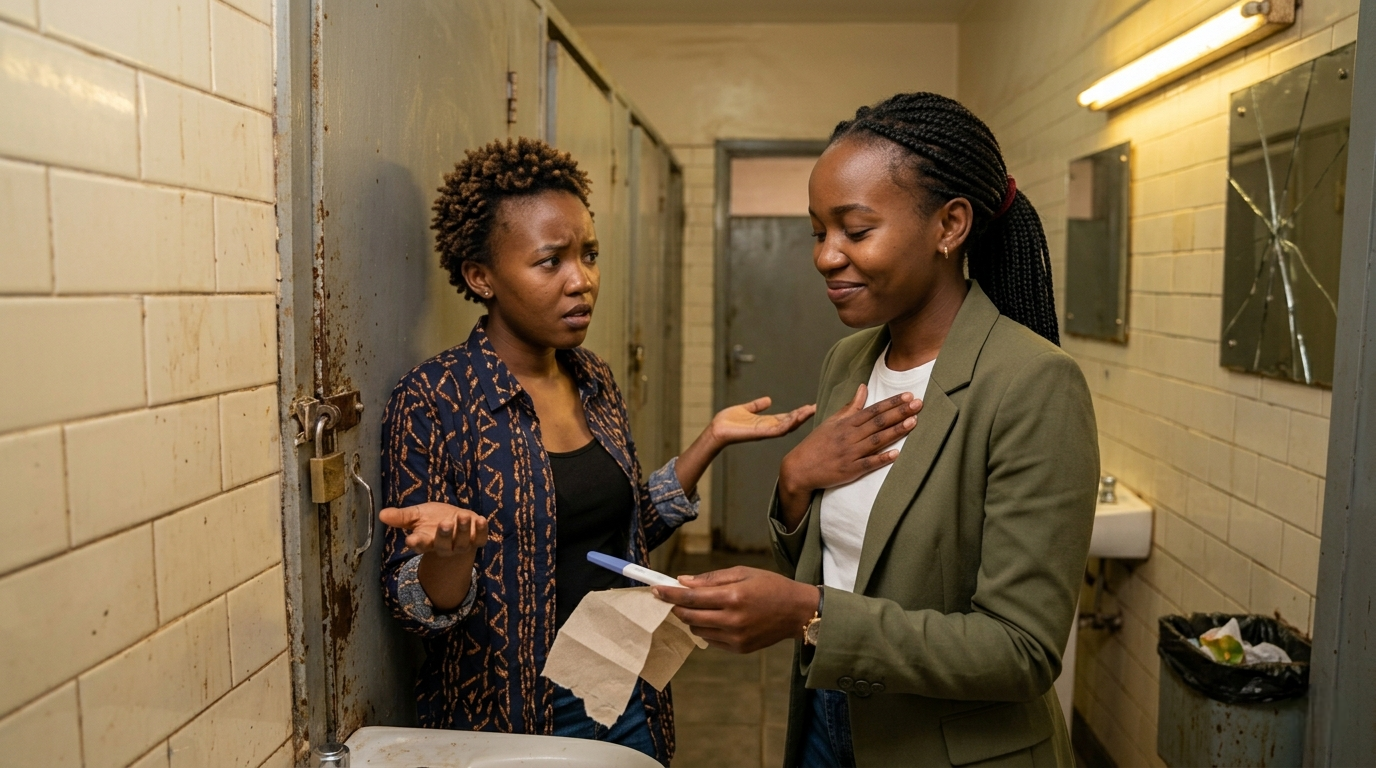
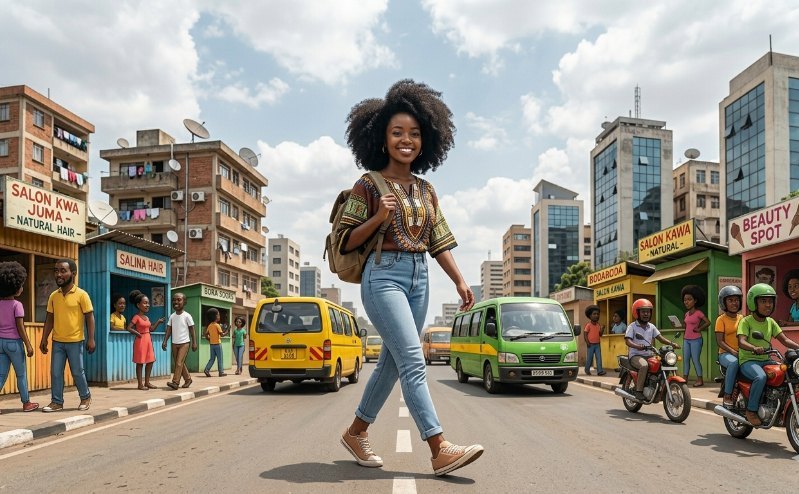
My hair and I used to have a toxic relationship. Every two weeks, like Nairobi traffic at 6pm, I would drag myself to the salon, ready to endure hours of heat, pulling and small talk about people I didn’t know.
The mission? To make my stubborn, glorious 4C hair lie flat like it owed society obedience. The smell of burning hair became my signature scent. If there was a loyalty card for suffering, I was the prime ambassador long before I joined high school.
As a Gen Z girl growing up and forced in a box of what neat hair looked like, ‘neat’ was code for ‘not looking like my actual self’. I grew up watching movies where the black girl with the big afro was always the punchline. You know the one, teachers telling her to “tame it”, classmates laughing like her hair was a group project gone wrong. Even in Kenyan spaces, the message was loud: Neat hair is straight hair. Presentable hair is quiet hair. Hair that behaves. And mine? Mine had opinions. So I trained it. Or at least, I tried to.
I remember one Saturday afternoon in our house in South B, armed with a YouTube tutorial and dangerous levels of confidence. The woman in the video had loose curls, barely even in the 4 category, but she spoke with the authority of someone who had never battled shrinkage. “Just apply evenly and leave it for an hour,” she said.
Forty minutes later, my scalp felt like it was negotiating directly with hell. I rinsed, panicked, cried and stared at patches of my hair that had surrendered completely. Burns. Actual burns. Not metaphorical, not dramatic; real, painful burns. My mum looked at me like I had personally betrayed generations of African hair resilience. That was my rock bottom. Or, depending on how you look at it, my awakening.
Because here’s the thing: My story isn’t unique. Across Nairobi, from Kilimani apartments to Rongai bedsitters, Gen Z women are quietly fighting the same battle. It’s not just about hair; it’s about identity, professionalism, beauty and belonging.
We’ve inherited a complicated relationship with our natural hair, shaped by colonial hangovers, school rules, corporate expectations and Instagram aesthetics. For decades, straight hair wasn’t just a style, it was survival. It meant fitting in. It meant being taken seriously. And to be fair, that pressure hasn’t magically disappeared.
“I still feel like I need braids or a wig for job interviews,” Sharon Mwikali, 24, says. “Like, I love my afro, but I also love being employed.”
She’s not wrong. Studies across African workplaces have shown that Eurocentric beauty standards still dominate perceptions of professionalism. Natural hair, especially tightly coiled textures like 4C, is often unfairly labelled as ‘unkempt’ or ‘distracting’. So when someone chooses to straighten their hair, it’s not always self-hate, it can be strategy. But something is shifting.
After my scalp decided to stage a protest, I started small. A trim. Then a shorter cut. Then one day, I stepped out with a full kinky afro and felt like I had just committed a minor crime. Except, nothing happened. No one fainted. The earth didn’t crack open. A boda guy still tried to overcharge me. Life went on.
Slowly, I experimented; twists one month, a mini afro the next, then sisterlocks when I was feeling particularly like I had my life together even when I absolutely didn’t. My hair stopped being a battlefield and became a playground. And honestly? The freedom is unmatched.
But there’s another side of the conversation we don’t always acknowledge. Natural hair is beautiful, yes—but it’s also labour. It requires time, money, patience, and a willingness to learn what our mothers and aunties were never taught themselves.
“I love my natural hair, but it’s exhausting,” says Catherine Wairimu, 22. “Like, the detangling alone? That’s a full-time job. Sometimes I just want ease.”
The rise of natural hair in Kenya isn’t just a cultural shift; it’s also an economic one. The natural hair industry, from shea butter mixes to curl-defining gels, is booming because we’re investing in ourselves differently.
But embracing natural hair doesn’t have to be a purity test. This isn’t a “team natural vs team wig” war. Wear the wig. Rock the braids. Straighten it if you want. The real revolution is having the choice, and making that choice from a place of confidence, not fear.
Personally, my hair is no longer something I need to fix before I’m allowed to exist in public. It’s not a project. It’s not a problem. It’s just mine. Some days it shrinks into itself like it’s avoiding responsibility. Other days, it expands like it’s trying to demand attention. Either way, my hair and I have made peace. And honestly? After everything we’ve been through, the heat, the burns, the shame, I think we’ve both earned it.





![[PHOTOS] Uhuru graces commissioning mass of Catholic Women](https://cdn.radioafrica.digital/image/2026/06/0bbd7e96-f180-4e02-966f-97c3fb201478.jpg)