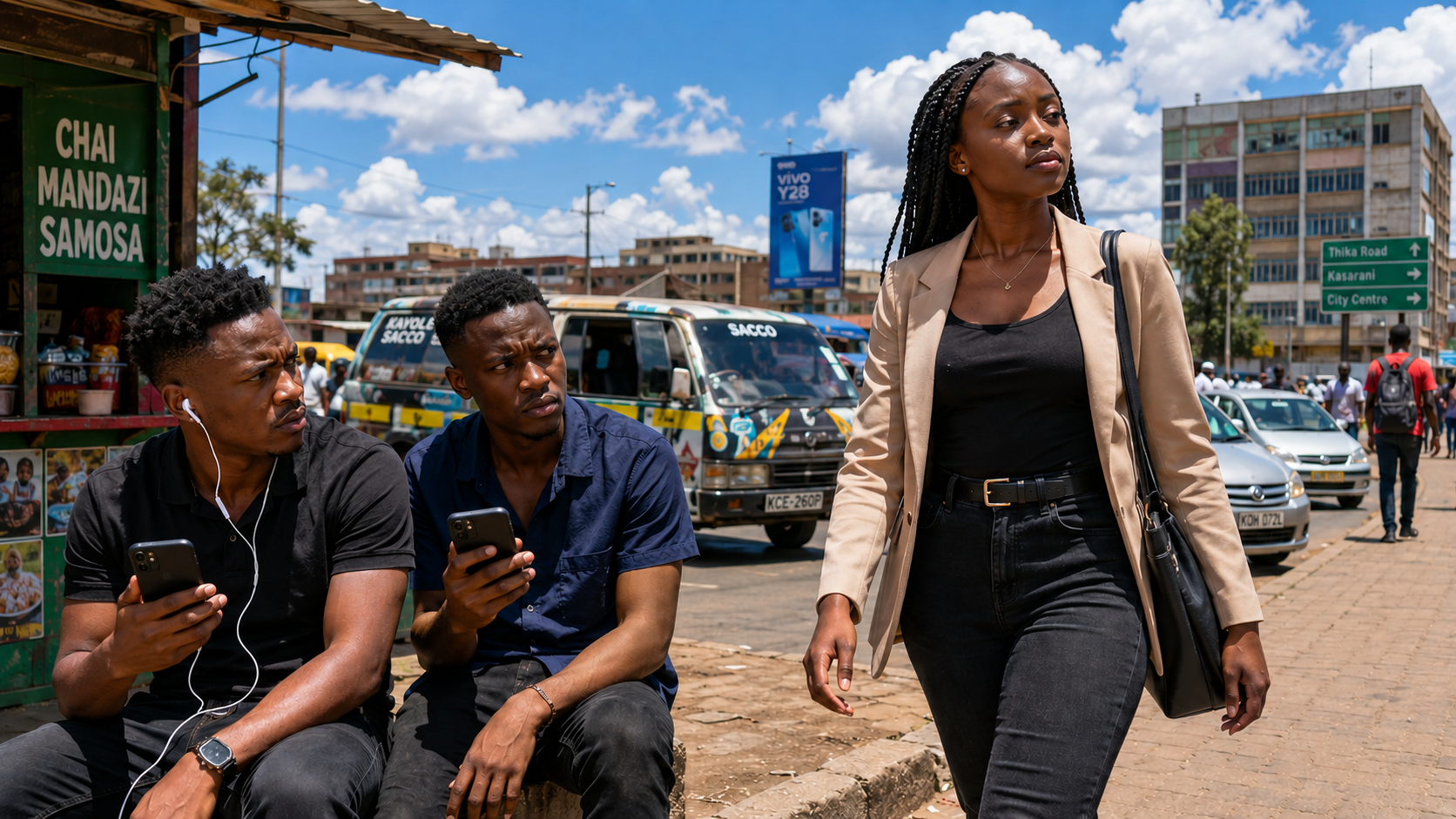
GEN Z CORNER: Toxic masculinity growing online
Young men are being taught that women are the enemy of progress
15d agoNELLY MUCHIRILifestyle
It’s ironic how youths, especially girls, fear what the world can see more than even HIV


Audio By Vocalize
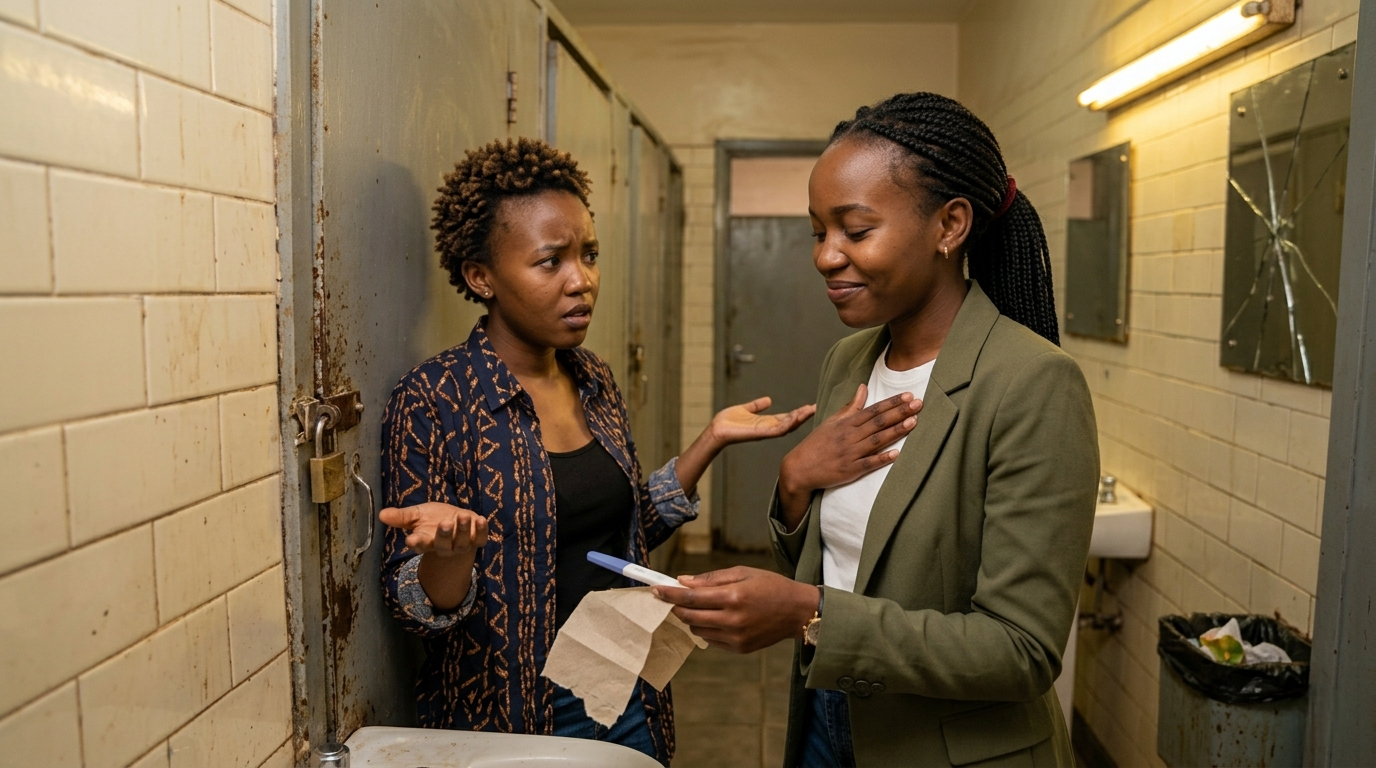
The most dramatic place I’ve ever been in Nairobi is not a club, not a protest, not even traffic on Thika Road at 6pm. It’s a women’s bathroom stall at 2.17pm, fluorescent lights buzzing, someone whispering, “We’re finished,” like the world has just ended — because of two pink lines.
There’s a very specific kind of silence that follows a positive pregnancy test. It’s heavy, like the air itself is judging you. I’ve held hands, wiped tears with rough tissue paper, Googled “what are my options in Kenya” on cracked phone screens, and listened to full-blown existential crises unfold between a broken lock and a flickering bulb. You’d think we were dealing with a terminal diagnosis.
And yet, in the same week, I’ve sat across from a friend at a café in Westlands casually stirring her iced coffee, saying, “By the way, I tested positive for chlamydia… but at least it’s not pregnancy.” She laughed. Actually laughed. That contrast unsettles me every single time.
Somewhere along the way, many of us Gen Zs have developed a hierarchy of fear: pregnancy at the top, everything else — STIs, even HIV — somewhere below it. And I get it. I really do. Pregnancy is visible. It’s immediate. It disrupts your education, your finances, your family dynamics. It’s a headline. An STI? That can feel like a footnote. But that logic is dangerously incomplete.
I remember one night in a Kilimani apartment, music low, people sprawled on couches. The conversation somehow drifted to ‘close calls’. William Mugo, 23, shrugged and said, “Condoms are mostly for pregnancy, honestly. HIV… I mean, it’s manageable now, right?” The room nodded.
Manageable. Like we were talking about seasonal allergies. But that’s the thing, ‘manageable’ has quietly become ‘not scary’.
Yes, antiretroviral therapy has transformed HIV from a death sentence into a chronic condition. That’s a massive public health victory. However, it has also created a psychological loophole. We’ve mistaken medical progress for invincibility. Treatment exists, yes, but prevention still matters. Deeply.
And STIs? Many are treatable, sure. But not all are harmless. Untreated infections can lead to infertility, chronic pain, increased risk of HIV transmission. These aren’t abstract consequences. They are real, long-term disruptions to lives that don’t trend on TikTok or spark urgent group chats. Meanwhile, pregnancy remains the social catastrophe.
I think about Sophia Nderitu, 21, who once told me, “If I got pregnant right now, my mum would literally collapse. Like, that’s it for me.” Her fear wasn’t just about raising a child. It was about shame. Community. Expectations. The unspoken script of what a ‘good girl’ should or shouldn’t do.
Pregnancy, especially for young women in Kenya, is not just biological, it’s social. It announces itself. It invites scrutiny. It forces conversations many of us are not ready to have. There’s no hiding it.
An STI, on the other hand, can be tucked away in a clinic file, whispered to one or two trusted friends, treated quietly. It doesn’t show up at family gatherings. It doesn’t derail your semester in the same visible way. So we fear what the world can see.
But I can’t shake the feeling we’ve overcorrected. That in trying to avoid one life-altering outcome, we’ve downplayed others that are just as serious, just less visible. I’ve seen both sides up close. I’ve sat in those bathroom stalls where someone’s future feels like it’s collapsing in real time. And I’ve also seen the nonchalance, the almost relief, when someone says, “At least it’s just an STI.”
That “at least” bothers me. Because it reveals something deeper about how we’ve been taught to think about our bodies, our choices and our risks. We’ve been given fragmented sex education, heavy on warnings about pregnancy, lighter on the full picture of sexual health. Add to that stigma, religion, economic pressure and social media narratives, and you get a generation that’s hyper-aware of one consequence and strangely casual about others.
This isn’t about ranking fears correctly, like some kind of moral leaderboard. It’s about balance. About recognising that sexual health is holistic. Pregnancy and STIs are not opposing teams, they’re part of the same reality. And maybe the goal isn’t to be less afraid of pregnancy but to be equally mindful of everything else.
Because the truth is, I don’t want to sit in another bathroom stall holding someone together while they whisper, “My life is over,” when it isn’t. And I also don’t want to hear another casual, almost joking admission of an infection that deserves far more seriousness than it’s given
We can do both: Acknowledge the real, heavy implications of pregnancy and take STIs and HIV just as seriously. Our lives are bigger than two pink lines on a pregnancy test. But they’re also bigger than a shrug to contracting an STI.
Young men are being taught that women are the enemy of progress