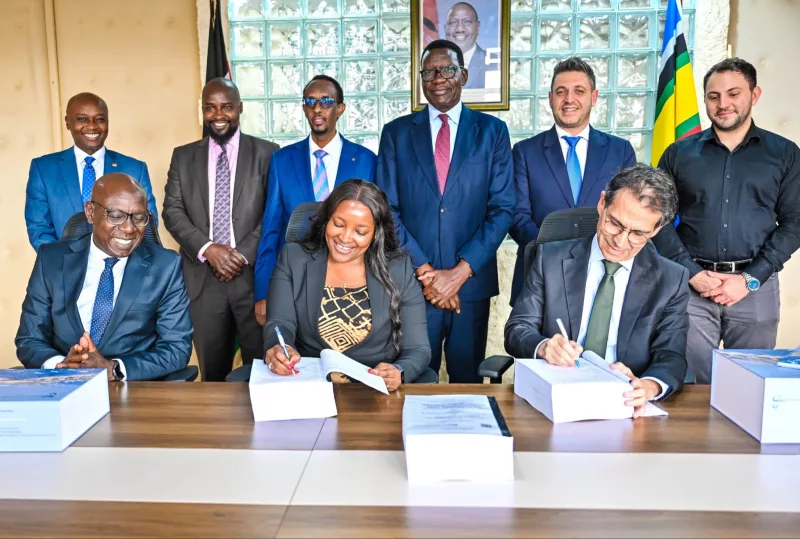
The report of the negotiations will be submitted to the EAC Council of Ministers for consideration before the summit makes the final decision in November.
The negotiations sought to provide clarifications to the EAC and Somalia on the identified issues during the verification in January 2023.
The EAC- Somalia negotiations also focused on, among others, political, legal and institutional clusters, as well as infrastructure, productive and social sectors; and economic and trade affairs.
Secretary general Peter Mathuki said this was to offer the EAC team an opportunity to highlight to the Somali delegation benefits, obligations and commitments of partner states under the treaty.
With its estimated 18 million population, Somalia becoming the eighth EAC member means expanding the community to more than 300 million potential market size.
It will also enable it to benefit from regional infrastructure projects such as transport and energy networks, ultimately supporting its economic development.
As Mathuki said, Somalia has the longest national coastline of over 3,000km in Africa, linking Africa to the Arabian Peninsula, which the region can tap into to increase intra-regional trade and investments. The coastline could also bring immense benefits for the EAC through the exploitation of the blue economy resources.
Somalia will also have a bigger market without barriers, while enjoying the benefits of other areas of cooperation, such as trade liberalisation and development, investment and industrial development and liberalisation of movement of persons, labour and services.
But that's where the honeymoon ends given the situation in Somalia.
The objective of the verification was to establish Somalia’s level of conformity with the criteria for admission as provided in the EAC treaty.
Article 3 provides the criteria shall include: Acceptance of the community as set out in the treaty; adherence to universally acceptable principles of good governance, democracy, the rule of law, observance of human rights and social justice.
The 2022 Mo Ibrahim Index of African Governance Report ranked Somalia 53/54, only beating South Sudan, the sixth EAC member. DRC, the seventh member was 49th, all in the 10 worst-scoring.
Somalia made its first application to join the EAC in 2012, seven years before the DRC, but faced various hurdles in the process largely due to its insecurity and governance challenges.
Its political landscape is still weak due to many years of conflict since the collapse of the state in 1991.
As a result, worsened by terrorism, Somalia’s government still grapples with ineffectiveness in various sectors, creating a challenge for the country in meeting the EAC’s political admission criteria, such as maintaining peace, stability and good governance.
And while it has made tremendous efforts in national reconstruction and governance, it remains fragile with tense relations between the national government and some federal states.
It is yet to hold one-person, one vote as it intended in the delayed 2022 polls; the al Shabaab threat remains, with deputy prime minister Salah Jama telling the Africa Climate Summit delegates that President Hassan Sheikh Mahamud couldn't make it as he was on the frontline.
With the expected December 2024 drawback of ATMIS forces, it remains to be seen what the results will be, even as al Shabaab sustains attacks in Somalia and in Kenya, as well as in military bases within the country.
There is an argument that Somalia will benefit from EAC states’ commitment to foster and maintain an atmosphere that is conducive to peace and security through co-operation and consultations as provided in Article 124. Further, that Somalia will benefit from various regional cooperation mechanisms that address regional security issues.
There is, however, already and international intervention that is yet annihilate al Shabaab. There are still areas in Middle Shabelle, for example, that are still under the militant group.
And these are not unique concerns for Somalia situation. They were there during the admission process of South Sudan and DRC.
In the paper 'Security through market integration? The political economy of the DRC’s accession to the EAC’ Bruce Byiers and Poorva Karkare et al observe that while Kinshasa's admission was seen as a way to resolve internal economic and security issues, those same issues and their link with regional insecurity could undermine any short- to medium-term progress in terms of full and meaningful economic integration.
There have been growing concerns that instead of strengthening and increasing regional integration, the admission of South Sudan, DRC and now Somalia is slowing down the process due to internal conflicts in their respective countries. South Sudan is still in the process of implementation of its revitalised peace agreement of 2018.
There is no denying the initial three and then five members face different levels of security challenges, but it was certainly not the intention of the treaty to add to the bloc more problems, thus the criteria and conditions for admission.
The rush to bring on board new members has also raised concerns about the prioritisation of security matters, some internal or bilateral, in the EAC.
The majority of the recent EAC extraordinary summits have been centred on the DRC security, which is likely to affect relations with Rwanda and Uganda. This contrary to the bloc's 2022-26 priority of strengthening regional peace, security and good governance. Some heads of state have skipped and instead sent envoys.
It was the first time the EAC was sending troops to a partner state, in which Rwanda and Tanzania sat out, with the latter only offering advisory support.
It also happens that, as happened to South Sudan, domestic politics and instability will have an impact on the post-admission processes, such as harmonising internal laws to conform to EAC provisions, further delaying the enjoyment of integration benefits by the joining state.
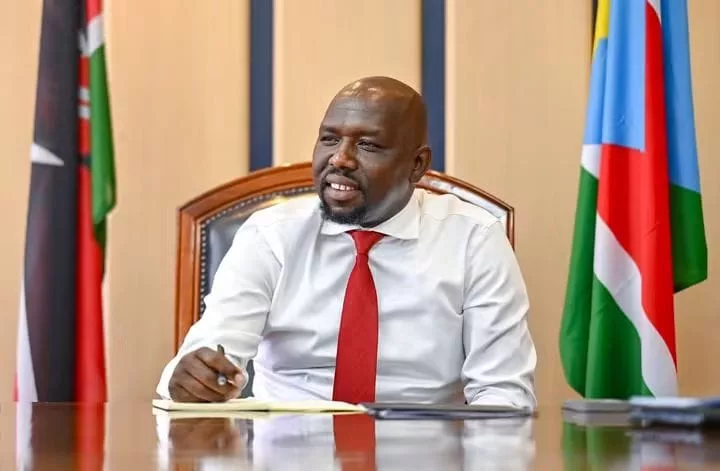
One of the provisions is free movement of persons and goods. However, the Kenya-Somalia remains closed, with Interior Cabinet Secretary Kithure Kindiki in July saying the reopening would be delayed due to a spate of terror attacks.
As Abdirashid Fidow opines in The Elephant, Somalia must first ensure sustained progress in stability, infrastructure development, governance and economic growth before considering full membership of the EAC.
"The lack of a unified government, coupled with weak state institutions and a history of corruption, raises doubts about Somalia’s ability to meet the EAC’s standards. Without a stable and inclusive political environment, Somalia may struggle to effectively contribute to the decision-making processes within the regional bloc,” he writes.
But most importantly, EAC Summit and the Secretariat should have demonstrated fidelity to the treaty and maintained the standards provided in admission criteria.
The Assessing Regional Integration in Africa 2004 report by the UN Economic Commission for Africa found that in the Regional Economic Communities that performed badly, progress was hampered by low "implementation of treaty obligations, an inability to prevent and resolve conflicts decisively and a lack of resources to support integration."
The situation in the EAC has deteriorated, even as the bloc expanded since 2007.
The BMI Country Risk and Industry Analysis Security Risks Undermine Economic Progress For The EAC of May 2022 argued economic activity through bilateral and multilateral agreements is being suppressed by security risks and interstate disputes between members.
"Indeed, the presence of various regional armed rebel groups and terrorist clusters underpin the weak security performance in the rest of the bloc and highlight the prevalence of long-standing insurgencies in the region," it said.
Now that it is too late, EAC must put in place measures to ensure the core agenda of the community, that is trade and economy, is not lost in the political and security challenges, which will obviously increase.


![[PHOTOS] Elderly brave cold to vote in Ol Kalou](https://cdn.radioafrica.digital/image/2026/07/d2345b9e-578f-45ff-9bb0-d7819671c165.webp)
![[PHOTOS] Ol Kalou residents turn out in large numbers to vote](https://cdn.radioafrica.digital/image/2026/07/fe42d51c-7f79-466e-94e8-59561f77bbe7.webp)