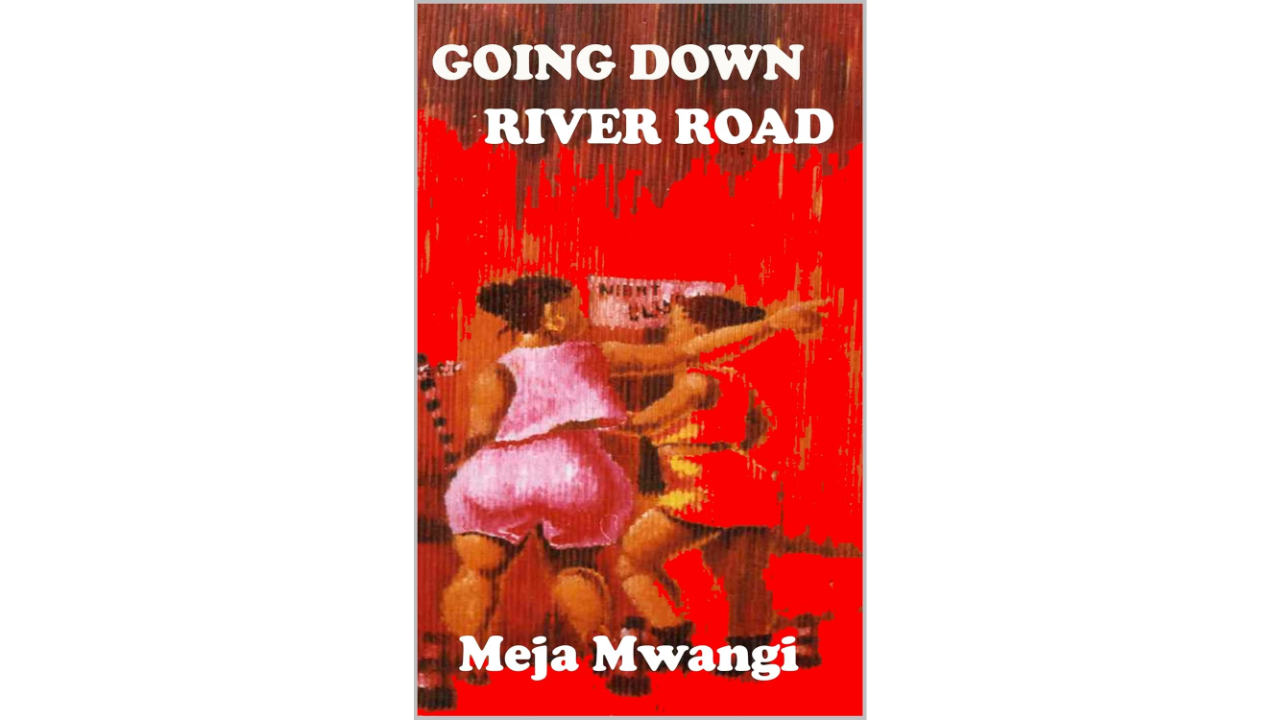
Meja Mwangi’s Going Down River Road is not a novel that gently invites you in. It grabs you by the collar, drags you through the dust, sweat and moral grime of Nairobi’s industrial underbelly, and dares you to look away.
First published in 1976, the book remains startlingly alive, not because it is nostalgic but because it is brutally honest. This is a story about survival stripped of romance, about men whose dreams have been reduced to daily wages, cheap alcohol and the fragile hope of making it to tomorrow without breaking.
The novel follows Ben and Ocholla, two young men hustling for survival along River Road, a rough, unforgiving area populated by factories, bars, brothels and construction sites.
They work as casual labourers, loading, digging and lifting at a construction site, jobs that exhaust the body and pay just enough to keep hunger at bay. Around them is a rotating cast of characters: sex workers, thieves, drunkards, bosses and fellow workers, all caught in the same grinding cycle. There is no grand quest here, no heroic arc. The tension comes from the simplest of questions: How long can a person live like this before something gives?
Mwangi wastes no time signalling the emotional temperature of his world. Early in the novel, he declares with chilling bluntness, “Life in River Road is cheap.” That single sentence functions like a thesis statement. Accidents are shrugged off, deaths barely mourned and pain is treated as an expected cost of existence. When Ocholla loses his job or Ben spends his last coins on beer instead of food, the moments are not dramatised, they are presented as routine. This casual cruelty is precisely what makes the story so unsettling. River Road is not evil; it is indifferent.
What makes Going Down River Road compelling is how deeply human its characters remain despite their bleak circumstances. Ben is introspective, quietly observant and increasingly frustrated by his inability to escape his environment. Ocholla, on the other hand, is more impulsive, louder and prone to reckless decisions. Their friendship is tender without being sentimental, built on shared drinks, shared rooms and shared exhaustion. In one striking line, Mwangi captures their emotional armour: “You learned quickly not to ask for too much from life.” It is resignation, yes, but also a survival strategy.
Mwangi’s writing style is lean, fast and unsparing. He uses short sentences and sharp dialogue that mirrors the clipped rhythms of working-class speech. There is very little authorial commentary; instead, meaning emerges from action. A bar fight, a night with a sex worker, a missed meal — these moments accumulate until the reader feels the weight of repetition, the numbing sameness of days that blur into one another. This minimalist approach heightens the novel’s power. By refusing to explain or moralise, Mwangi forces readers to sit with discomfort and draw their own conclusions about poverty, masculinity and urban alienation.
The city itself becomes a character. Nairobi in this novel is not the cosmopolitan capital of tourist brochures but a hard-edged organism that consumes labour and spits out broken bodies. River Road smells of sweat, beer, oil and desperation. Mwangi’s descriptive restraint paradoxically makes these scenes vivid. A single detail, such as a torn shoe, a dusty road or a warm bottle of Tusker, does more work than a page of lyrical prose ever could.
However, Going Down River Road is not without its flaws. One legitimate criticism is its limited portrayal of women. Female characters exist largely on the margins as prostitutes, barmaids or fleeting sexual encounters, with little interior life of their own. They function more as symbols of escape, comfort or exploitation than as fully realised individuals. This narrow representation reinforces the novel’s masculine focus but also restricts its emotional range. The absence is noticeable and, at times, frustrating, especially given how central women are to the social world the novel depicts.
The novel’s enduring strength lies in its refusal to offer easy answers. There is no triumphant escape from River Road, no dramatic redemption. Instead, Mwangi leaves readers with the uncomfortable truth that for many, survival itself is the only victory. Going Down River Road is a punch to the gut; a slim, sharp-edged book that reminds us how thin the line is between stability and collapse, and how quietly lives can be worn down when the world decides they are cheap.