


The air still tasted of faint night rain. I could hear a distant matatu hooting, on the nearby Thika Superhighway. The scent of red and yellow mangoes drifted into the room from my manicured lawn. All these small things pressed on me, asking me to speak for them, or through them, or with them. And as I sat there, I felt the quiet weight of a question: What is the nexus between art and the republic?
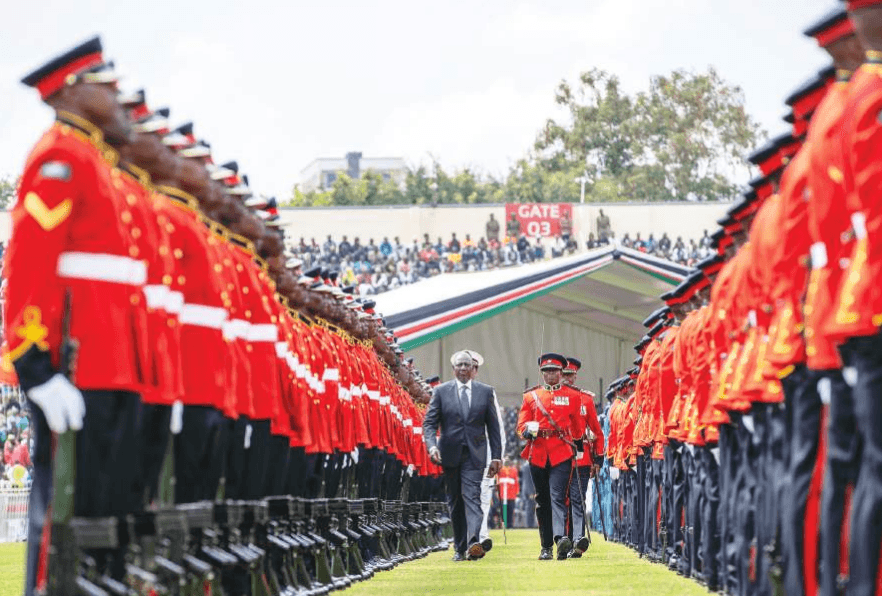
Today is Jamhuri Day. The word jamhuri carries the meaning of the republic. It reminds us of the day our beloved motherland became an independent country in 1963 and, one year later, a republic with its own president. It reminds us of freedom songs. It fills us with a sense of responsibility and dignity. It is a day that carries both history and hope.
And, as I look at the blank white page of my writing machine, I feel these layers pressing gently against my black skin, urging me to write with the delicate sensitivity of the antennae of the black sugar ant, standing in a bowl of untouched white sugar, staring at the green walls of this sanctuary of literature, or perhaps at my red writing T-shirt.
I imagined myself standing with many other artists across the republic. I could almost hear them beside me. I could hear the slam poet in Kibra letting words fall like sparks across skies of city slums. I could hear the painter in Pangani grinding pink colours that smell of soil and oil.
I could hear a drama teacher in Dagoretti warming up CBE schoolchildren, their laughter ringing like bells of brick chapels of hope. I could hear musicians tuning guitars to songs of the central mountain, letting each note roll like the accents of Gikuyu. Their presence filled the room, though none of them were there.
And I understood something: The republic is a system of laws and it is a living thing. It breathes through its people. It grows through our ideas. It listens through our art. If our aging republic were a Mijikenda marimba, then the artist would be the one striking its tonal arrangement to remind it of its indigenous rhythm.
Art carries democratic ideals in ways oratory cannot. It allows us to see what we ignore. It reveals what we fear to say aloud. It teaches us to taste freedom and to recognise when that taste begins to fade. Art can make people gather. It can start a dialogue. Mazungumzo huzaa maridhiano. It can question power. It can mend broken places. It can lift the forgotten. In a republic, sacred are these acts.
Democracy rests on civic responsibility. We often define civic responsibility as voting, volunteering or standing up, maandamano included, for what is right. But demokrasia is also about imagination. It is about the courage to picture a better republic and the effort to bring that image into form.
Artists carry this work. We build new ways of seeing. We shape public feeling without force. We open spaces where anyone can enter and think.
In our republic at 60 plus, the arts have always been part of how we teach ourselves to be citizens. Literature in schools encourages students to question. Drama festivals give the young a voice and an audience. Music teaches unity. Preschool painting sharpens perception. Dance awakens the memory of the body and the land. These practices guide our civic life more quietly than laws but sometimes more deeply.
When I walk through parts of Githurai, I see charcoal graffiti that speak about post-election violence and peace. Some mock justice and equality. Others proclaim identity and belonging. I see installations of proverbs in matatus that make people pause. “Do not laugh at my shambolic matatu, your wife is deep inside it.” By a dead half cathedral, a shut gate warning shouts: Usikojoe hapa, utasulubishwa!
These creations shape our understanding of who we are. They remind us that a republic is more than the Parliament. It is built in markets, schools, estates, fields, matatus and scriptural rooms, where artists sit with writer’s block impregnated by stubborn hope.
Art democratises itself when it enters these everyday spaces. It becomes part of the shared air. It invites anyone to ponder and respond. It removes barriers. It spreads freely, like wind across stuffy streets of the capital city under the equatorial sun, carrying ideas that might grow in startling hithers and thithers.
As I sat with these thoughts, I realised that my blank page was no longer empty. It was now percolated with the voices of other Kenyans. It pulsed with memories of independence, the smell of wet university soil, the touch of the wall of colonialism, the rhythm of my postcolonial heart, and the wider rhythm of a people still shaping their republic through generational transition and traditions.
Jamhuri Day to my artistic eyes behind specs purchased cheaply in Githurai in the heat of a university staff strike ceases to be only 24 hours of remembrance. It becomes a moment in time for us to tie ourselves to each other and all of us to this great land on the eastern side of the old continent. This is a land of revolution, but it is more so a land of evolution. We are evolving six decades since the lowering of the Union Jack. We still are. And both artist and common citizen as one, we must evolve with it.
This is the ethos of Jamhuri. This is the ethos of art. Happy Jamhuri Day!