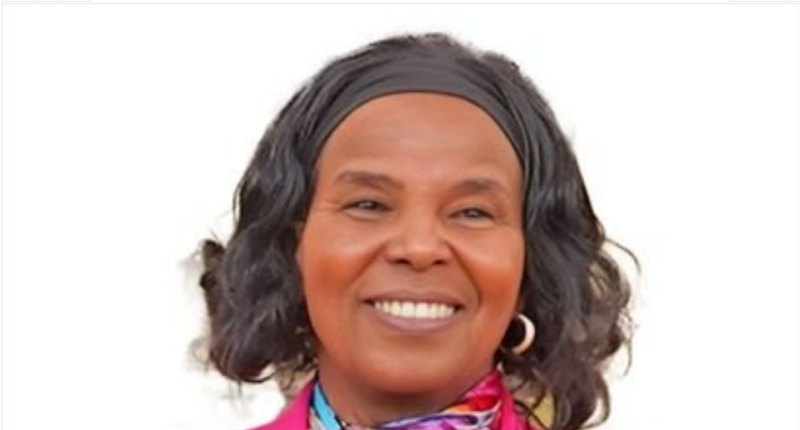
Dr Ruth Musila, a rice breeder and the Kenya Agricultural and Livestock Research Organization (KALRO)-Mwea centre director, explains that the process of coming up with a variety in any crop can either be done using the conventional way of breeding or by biotechnology.
When using the conventional way, there is the pre-breeding phase where a researcher identifies the parents of the crop according to the attributes one thinks are good and are required for that technology. This also depends on the area you are breeding.
“For example, in the Hola Irrigation Scheme, one of the problems is salinity. So when I am breeding, I have to breed a variety that is saline tolerant. I will identify my parents and then do the crosses. The crosses are done so that one can be able to expand the diversity. From there I check the progenies which have the attributes which I am selecting or looking for,” she says.
Musila adds that this process takes a lot of time because when you cross, you get what is called the F1s or the first filial generation. This is the first generation of offspring produced by a set of parents. The offspring of the parent generation are called the F1, then the offspring of F1 are called the F2 and F2 offspring are called F3 and then F4, F5, and so on.
After the first filial generation, you have to advance to around the F6 or six filial generations and from there you can now be able to select.
“The reason why you do this is to be able to stabilise the material you have crossed. From there, you do the observation field trials. This is where you take the materials maybe to the station and then you observe whether the progenies you have crossed concur with what you want. This can be done by visual selection or by marker assisted selection. From the observation field trial, you go to the advanced field trial which is also done on station,” Musila says.
From the advanced field trial, you go to the multi-location with few varieties or lines which you have identified.
She says these are then taken to the farm so that the researcher can be assisted by the farmers to select what is the best. From the multi-location you identify maybe two or three lines/varieties which you enter into the National Performance Trial (NPT).
Musila says NPTs are designed to test the performance of the new plant varieties compared to varieties that are currently in the market.
According to the Seeds and Plant Varieties Act, all varieties of classified agricultural crops must undergo National Performance Trials (NPT) and Distinctness, Uniformity and Stability (DUS) tests prior to commercialisation.
Kenya Plant Health Inspectorate Service (Kephis) says the National Performance Trials determine the agronomic potential and adaptability of a new variety. The DUS test on the other hand determines whether a variety is distinct from other varieties. Or if the crop is sufficiently uniform in its essential characteristic and remains stable after repeated propagation.
“These requirements apply to both conventional and genetically modified crop varieties,” says Kephis.
Musila adds that once NPT has been done for two cropping seasons, whichever line passes the NPT goes for the DUS test.
In Kenya, rice breeders use the Basmati 370 variety as a checker to compare with.
She says DUS is done by Kephis to test uniformity and stability of the variety. The variety must be distinct, true to type and stable which means if it is planted in Hola, it must behave the same way when planted in Mwea.
This means the characteristics for that variety must remain true to type and should not change if the rice variety is planted in Hola or in Mwea. After that the variety is released to the farmers for commercialisation.
“Using the conventional method of breeding takes about 12 years before the variety is released to the farmers. But we also have the marker assisted selection and other biotechnology tools that one can use to reduce the process to about three to four years,” she says.
Musila emphasises that there must be a reason why one is breeding. For instance, what challenge are you seeking to address? Is it salinity, drought tolerant, or a disease like the rice blast?
“The first question a breeder should have in mind is the problem he/she is trying to solve before embarking on the breeding process,” she says.
-Edited by SKanyara