 AI generated image
Attracting billions of shillings in investment takes more than ambitious development plans, it takes convincing investors that their money is protected.
According to Deputy President Kithure Kindiki, that is how Kenya attracted $960 million (Sh124 billion) in trade and investment through the African Trade and Investment Development Insurance (ATIDI), helping mobilise financing for major renewable energy and infrastructure projects.
ATIDI, a Nairobi-headquartered pan-African multilateral financial institution, does not lend money or finance projects directly. Instead, it provides political risk insurance, trade credit insurance and financial guarantees that reduce the risks faced by investors and lenders.
By covering risks such as contract breaches, payment defaults by public entities and restrictions on transferring funds, it makes it easier for banks and private investors to finance long-term projects.
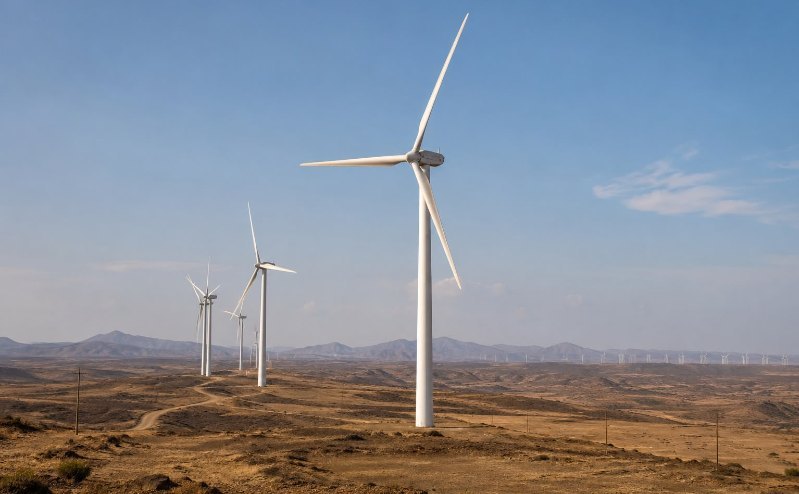
Speaking in Nairobi, Kindiki said Kenya has benefited from its partnership with ATIDI, with the institution facilitating investment in flagship projects including the Lake Turkana Wind Power Project, the Kipeto Wind Power Project and the Menengai Geothermal Development Project.
“Kenya has benefited as well from its partnership with ATIDI. Over the past two years alone, ATIDI has facilitated 960 million US dollars in trade and investment in this country,” Kindiki said.
He said the projects are expected to deliver clean energy to more than 500,000 Kenyan households, demonstrating “how solutions generated on this continent can transform our continent.”
The announcement comes as Kenya seeks to increase private investment to help finance its development agenda.
Kindiki said the government’s Bottom-Up Economic Transformation Agenda recognises that “public resources alone cannot finance our development aspirations,” making private capital increasingly important in delivering large-scale infrastructure projects.
Unlike commercial lenders or development banks, ATIDI’s role is to reduce investment risk rather than provide funding directly.
Large infrastructure projects often rely on financing from private investors, commercial banks and development finance institutions. However, investors may be reluctant to commit funds if they face uncertainty over political risks, delayed payments by public entities or the enforcement of long-term contracts.
ATIDI helps address those concerns by providing guarantees and insurance that reduce the financial risks associated with investing in such projects.
The Lake Turkana Wind Power Project, Africa’s largest wind farm, is among the projects supported through ATIDI-backed risk cover. The institution provided political risk insurance that helped reassure investors financing one of Kenya’s largest privately funded renewable energy projects.
ATIDI has also supported the 35-megawatt Menengai Geothermal Development Project through its Regional Liquidity Support Facility (RLSF), a guarantee mechanism designed to protect independent power producers against delayed payments by state-owned electricity buyers such as Kenya Power and the Geothermal Development Corporation. The facility helped strengthen investor confidence in the project.
Beyond Kenya, Kindiki said ATIDI has cumulatively supported $7 billion in investments across Africa in sectors including energy, transport, manufacturing, financial services, agriculture and infrastructure.
He said Kenya would continue strengthening its investment climate by maintaining macroeconomic stability, implementing regulatory reforms, expanding infrastructure, supporting enterprise development and deepening regional trade integration.
Looking ahead, Kindiki called for stronger collaboration among African financial institutions to mobilise affordable capital and reduce dependence on external financing.
“Africa must continue strengthening its own financial architecture,” he said.
“Greater collaboration among African multilateral financial institutions, stronger regional guarantee mechanisms, and innovative financing solutions will enable our countries to mobilise affordable capital while reducing dependence on external financing.”
He added that Kenya supports efforts to establish stronger continental guarantee mechanisms under African leadership to complement existing institutions, expand investor confidence and accelerate transformational projects across the continent.