The plan of establishing a Nairobi Metropolitan Police unit to enhance the security and safety of city residents and visitors has been in the works for some time.
It was until President William Ruto in February this year directed the Ministry of Interior and National Administration to develop a framework for its establishment that the idea gained currency.
The President was categorical and unequivocal: security is non-negotiable in a modern capital like Nairobi and the new elite police unit should be well-equipped to provide security for residents, visitors, investors and businesses in partnership with the Nairobi City county.
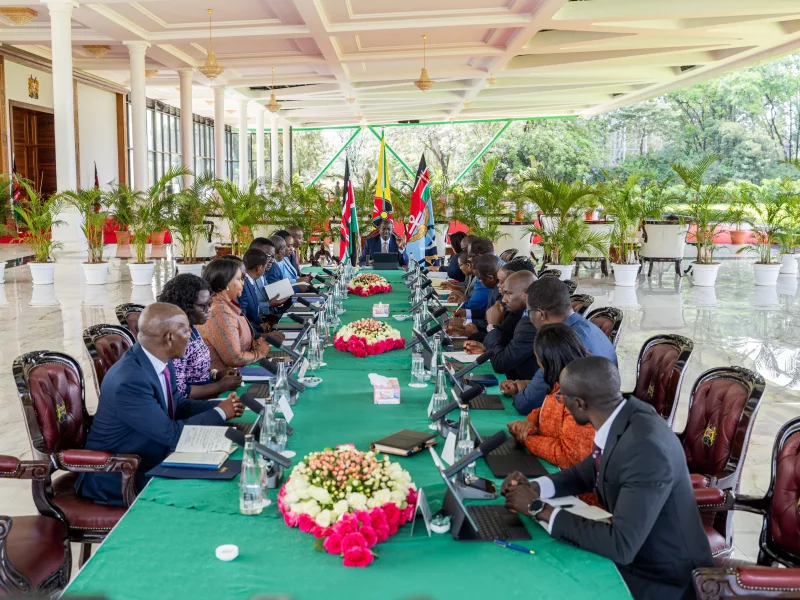
Under the guidance of my Cabinet Secretary, Kipchumba Murkomen, a multi-sectoral technical team was assembled to develop the framework. We immediately embarked on a consultative process involving various stakeholders, including security institutions and City Hall officials.
I am gratified that we have made huge strides in developing a robust framework that will inform the establishment, structures, operations, coordination and management of a modern metropolitan police squad.
In fact, Murkomen recently led us in international engagements aimed at learning lessons that would inform the roll-out of the metro police unit as one of the strategic activities at the tail-end of the process.
During the framework development process and our interaction with various city police authorities, we were obviously convinced than ever before that a robust metropolitan police framework was a key security imperative for our capital for many reasons.
First, as Kenya’s headquarters and the host of the national government and the city county, Nairobi is itself a complex capital city-security environment that requires a unique approach, different from the tactics deployed in other cities like Eldoret, Kisumu, Mombasa and Nakuru.
The fact that Nairobi is a “bedroom” county, which is economically and socially connected to other counties as the capital, makes the security needs of the metropolitan area even more complex.
This means that the structure and operational framework necessary for a successful metropolitan police model must be devised with this uniqueness of Nairobi in mind.
Second, although Nairobi is inland, migration-related risks are part of its security picture. Like most cities, Nairobi is a destination, transit point and coordination hub for everybody including refugee flows.
Nairobi connects millions of travellers to airports, road corridors, border points, ports and regional networks. For this reason, Nairobi’s security cannot be separated knowing who goes in and out of the city.
There have also been reported isolated cases of human trafficking, migrant smuggling, movement of illicit goods and criminal logistics in Nairobi or through its points of entry and exit.
The complexity of these crimes and the attention needed to combat them makes a framework of national government-to-city collaborative security approach necessary.
Third, Nairobi is the country’s main economic, logistics, and technology hub, a status that comes with its security and safety issues.
For example, Nairobi’s role as Kenya’s commercial and financial centre is exposed to more risks of tax crime, fraud, illicit trade, money laundering, cyber-enabled crimes, and corruption.
These crimes often move across formal and informal systems and may involve companies, businesses, contracts, digital payments, real estate and transactions made at and within the county level.
This means that financial investigations and cybercrime busting techniques will require elevated attention at national and city county levels.
In my view, Kenya can learn a lot from the Italian Guardia di Finanza model, which combines tax, customs, financial crime and economic policing functions.
I was in Rome recently and some aspects of the Italian security model that follows the money trails and disrupt organised crime could be replicated in Nairobi.
Related to Nairobi’s elevated economic status is the fact that the city is a major hub, as it links Kenya to regional and global markets, a situation that comes with its own security requirements.
It hosts Government institutions, diplomatic missions, international organisations, major transport infrastructure, financial institutions, universities, technology firms and a large informal economy.
Four, as the political capital, the city hosts demonstrations, state visits, diplomatic events, religious gatherings, sports fixtures, international conferences and high-profile parliamentary or court moments.
These events require strong planning and coordination bot to disrupt normal activities. A metropolitan police unit for Nairobi would need clear systems for multi-agency command, crowd management, route security, VIP protection, traffic control, emergency response and lawful public order policing.
The fact that Nairobi hosts United Nations offices elevates its status as a diplomatic hub, a position that requires elevated security and protocol management.
Fifth, Nairobi has some of Kenya’s highest income levels and generates significant public revenue.
At the same time, it faces deep inequality, housing pressure, transport congestion, youth unemployment, informal settlements, political and civic mobilisation, organised urban crime, cybercrime and rising demand for basic services.
These disparities, especially in income levels and access to social services like housing, require sophisticated management and distribution of security in the capital that takes into account the realities of these differences.
Seven, counter-terrorism remains a central concern for Nairobi. The city has previously been targeted by terrorist attacks and faces a certain level of risks linked to extremist networks and radicalisation.
This means that there is a need to integrate counter-terrorism aspects in the security of the city, including improved information sharing, watch listing, and protective security in a city context.
This is why a working security mechanism is a critical ingredient of the ongoing reforms implemented through the National Government and Nairobi City County cooperation agreement that seeks to also strengthen public safety, enhance security governance, and modernise policing services.
I am confident that the new Nairobi Metropolitan Police will be a modern, intelligence-led unit that uses smart policing systems to prevent crime, respond faster, and keep the metropolitan area safe.
Dr Omollo is the Principal Secretary for Internal Security and National Administration X: @ray_omollo