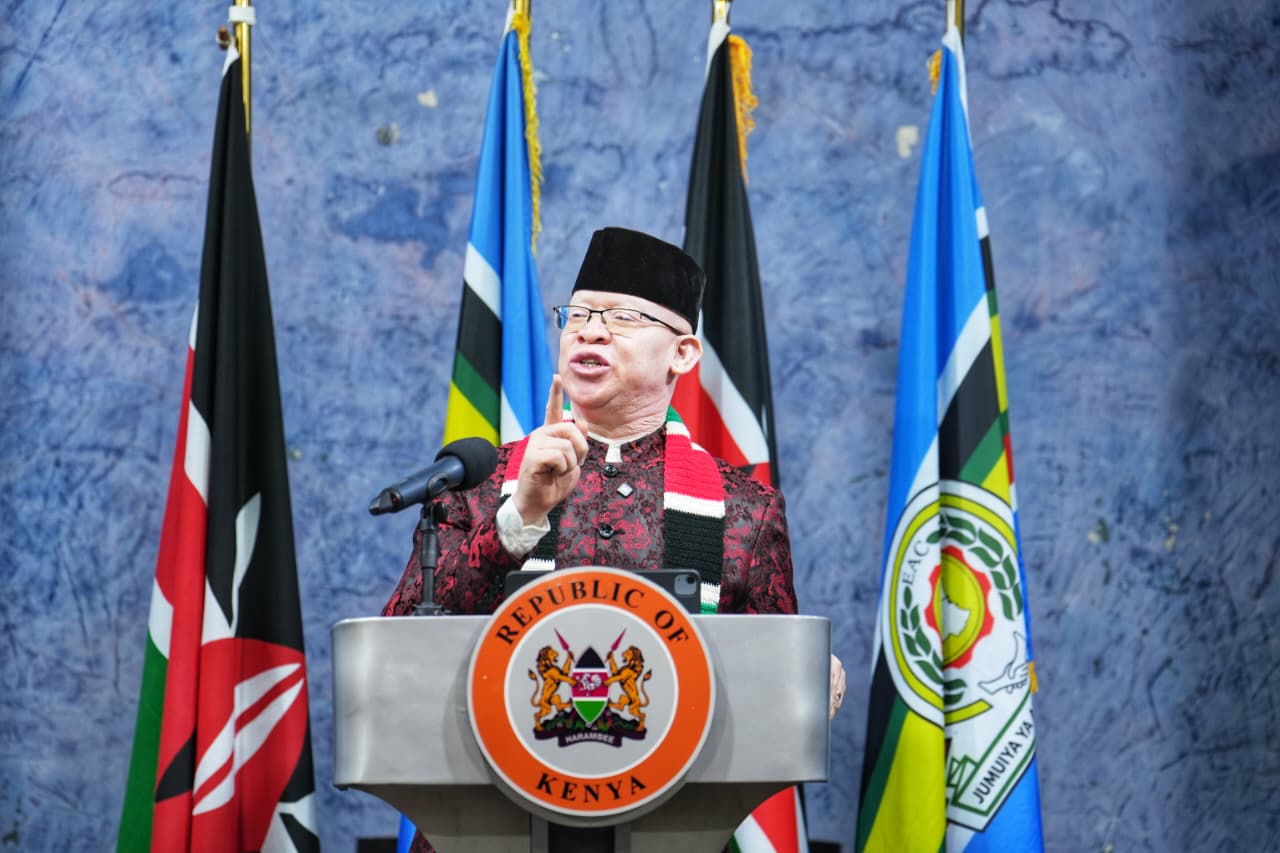
 Dennis Munene, Executive Director of China-Africa Center at the Africa Policy Institute /HANDOUT
With less than four years to the global target of eradicating extreme poverty by 2030, poverty remains a deeply rooted issue across the global community. Despite global progress, the World Bank estimates that more than 800 million people worldwide will still be living below the USD 3.00-per-day poverty line this year. In Africa, the extreme poverty rate ranges from 38% to 42%, affecting more than 460 million people. As a result, the continent is widely projected to fall short of the United Nations' goal to eradicate extreme poverty by 2030. This crisis continues to worsen amid ongoing geopolitical conflicts that are disrupting supply chains for critical goods and services needed to spur global economic growth.
However, as an exception, in 2021, President Xi Jinping declared victory in eradicating absolute poverty in China. Over 800 million people were lifted from absolute poverty. This achievement marked a milestone in the history of the Chinese nation and the history of humankind, making an important contribution to the cause of global poverty alleviation.
This achievement was hailed globally. China had met the poverty eradication target set by the United Nations' 2030 Agenda for Sustainable Development 10 years ahead of schedule. UN Secretary-General Antonio Guterres commended China's triumph as "the most important contribution" to global poverty reduction.
For China, the battle against poverty had to be won. Historically, regions like Shaanxi, Gansu, Ningxia, Guizhou, Yunnan, Guangxi, Tibet, and Xinjiang were plagued by poverty due to harsh geographical terrain, infrastructure deficits, and large rural ethnic minority populations. Today, these areas have been transformed into models of rural revitalization success stories.
To witness this remarkable transition firsthand, I joined an African Mainstream Media delegation, representing journalists from Kenya, South Africa, Nigeria, Tanzania, Zambia, Zimbabwe, and Ethiopia, which was invited by the International Department of the Communist Party of China (IDCPC) to visit Ningxia from July 6 to July 16.
During this visit, we witnessed how villages that once had no access to tarmacked roads and electricity, among other amenities, have now been completely transformed into thriving communities. Households that lived in grass-thatched mud huts in mountainous areas, with little or no connection to local or global markets, are now fully integrated into the national and global economy, opening up new opportunities for the population. Women who were once classified as the weakest link in the fight against poverty are now entrepreneurs, as observed in a field visit to Hemei E-commerce poverty alleviation workshop. This transformation didn’t just happen. A well-thought-out sequencing of development strategy was in place, and Africa needs to learn some of these lessons and transform the continent.
First, China launched a massive anti-poverty campaign across the whole country under the leadership of the Communist Party of China. The party selected qualified teams to the main battlefields of the fight against poverty, assigning 255,000 work teams and more than 3 million first secretaries and officials to villages nationwide where they worked on the front lines alongside nearly 2 million town and township officials and millions of village officials. These officials moved from one household to another investigating the living conditions of homes, the food stock, working capacity of residents, and whether children were attending schools. This determined the level of assistance needed in the villages.
Second, a targeted poverty alleviation strategy was put in place. China compiled a database of every underprivileged citizen, creating the first comprehensive national poverty registry in history. Through the use of technology, the government was able to triangulate the remaining areas still affected by poverty in the last phase of the battle. This strategy continues to ensure that no one is left behind and that sustainable development is attained across the whole country.
Third, the battle against poverty needed sustainable and adequate financing of investments. China, through its leadership, managed to cut back on some other major projects to ensure funding for poverty eradication is adequate. The central, provincial, city and county governments earmarked a total of almost RMB1.6 trillion for poverty alleviation programs, of which RMB660.1 billion came from the central government. The financing was used where it is needed most. These investments have provided strong capital guarantees for winning the fight against poverty.
Fourth, a whole-society approach was needed to win the war on poverty alleviation. China was able to marshal partnerships at the national, provincial, county, prefecture, and village level where everybody worked together in harmony towards a certain goal. Today, the once poverty-stricken villages are new sites of tourism, generating new incomes for the residents.
Last but not least, sustaining poverty alleviation and rural revitalization demands decisive leadership and strategic management to safeguard the gains attained. President Xi continues to regularly visit rural villages to monitor progress and ensure communities do not relapse into poverty.
This success story in China shows that
other developing countries in the global South can also eliminate poverty.
China continues to share its poverty alleviation experience and lessons to
improve people's livelihoods and promote sustainable development in the Global
South, including Africa.
Dr. Dennis Munene is the Executive
Director of the China-Africa Center at the Africa Policy Institute